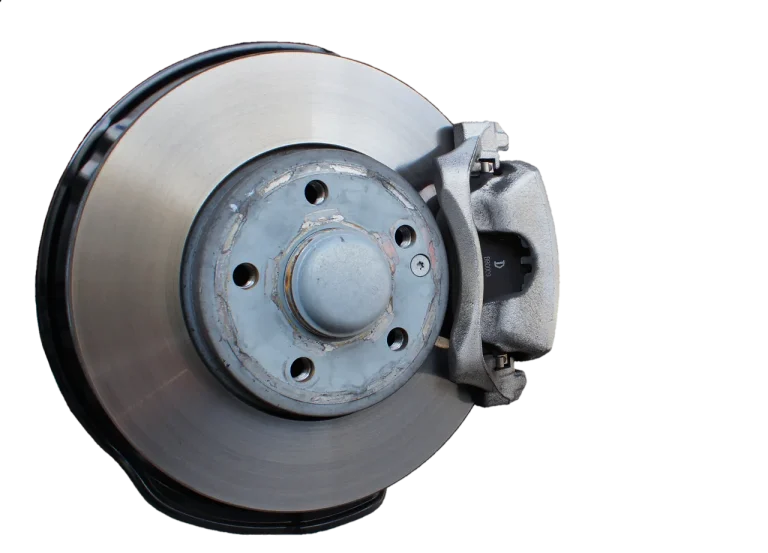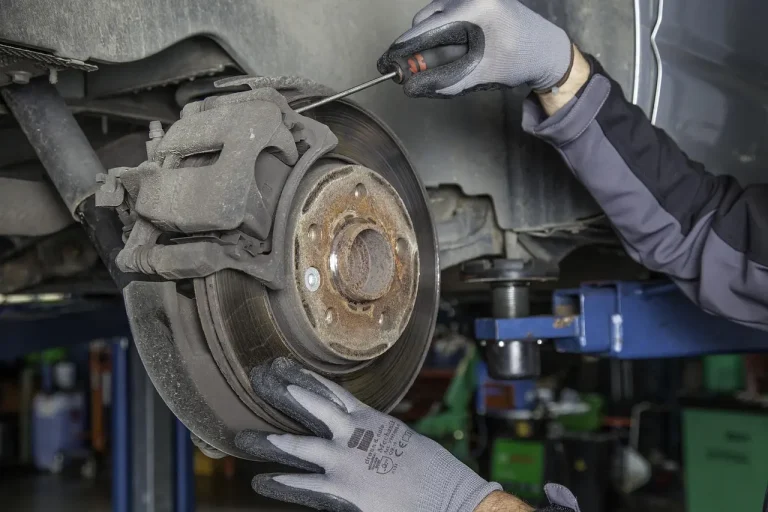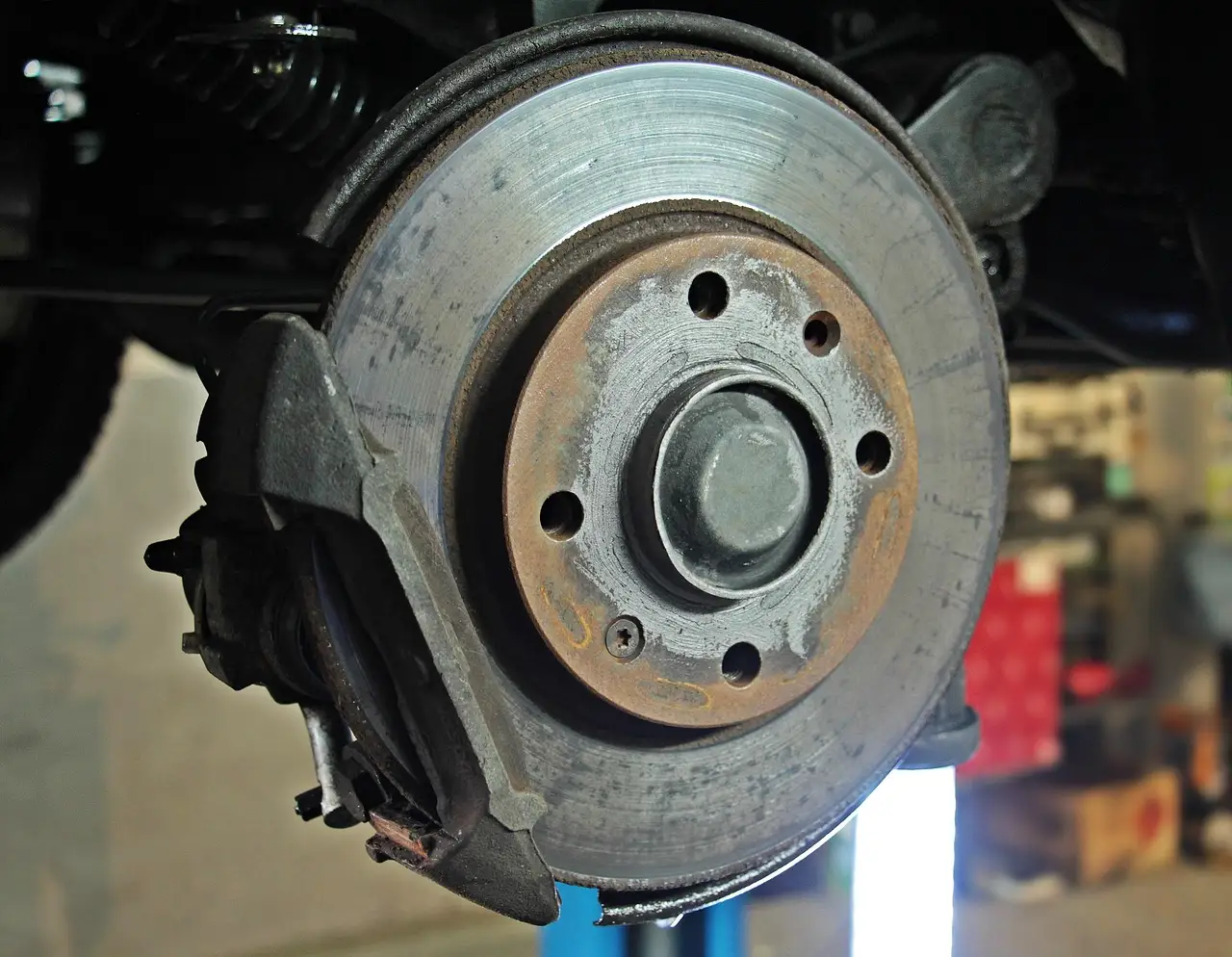
What Is Included in a Brake Rotor Replacement Cost Estimate?
A brake rotor replacement cost estimate should itemize rotor parts, labor, brake pads if needed, shop supplies, taxes, and any machining or disposal fees; the total usually rises if calipers, pads, or hardware are added. Missing or vague line items can hide extra charges and make comparison shopping impossible. This guide breaks down each quote line by line so you can separate required work from upsells before you authorize repairs.
Itemized breakdown of parts, labor, and fees
A clear brake rotor estimate should separate parts, labor, fees, and inspection findings. If the quote lumps everything into one number, ask for a line-by-line version so you can see whether you are paying for rotors only, a pad-and-rotor service, or extra work found during inspection.
What should be listed separately?
At minimum, a useful estimate lists rotors, labor by axle or job, any brake pads, hardware, shop supplies, taxes, and disposal or machining charges. It should also note whether the price covers the front axle, rear axle, or both. Front and rear work often cost different amounts.
Rotor replacement estimates can also change if the technician measures pad thickness, finds scoring, or sees rotor thickness at or below the manufacturer minimum. Those findings affect the scope of the job and should appear on the quote, not only on the final invoice.
What should trigger a question?
Ask for clarification if the estimate says only “brake service,” “inspection,” or “complete brake job” without naming the parts included. You should also ask when a quote includes pads but does not say whether wear sensors, pad shims, or caliper hardware are part of the price.
If a shop recommends rotor replacement without listing thickness readings, scoring, or heat damage, the reason for replacement may be too thin. A good estimate explains the condition that pushed the work past resurfacing or reuse.
Rotor estimate table
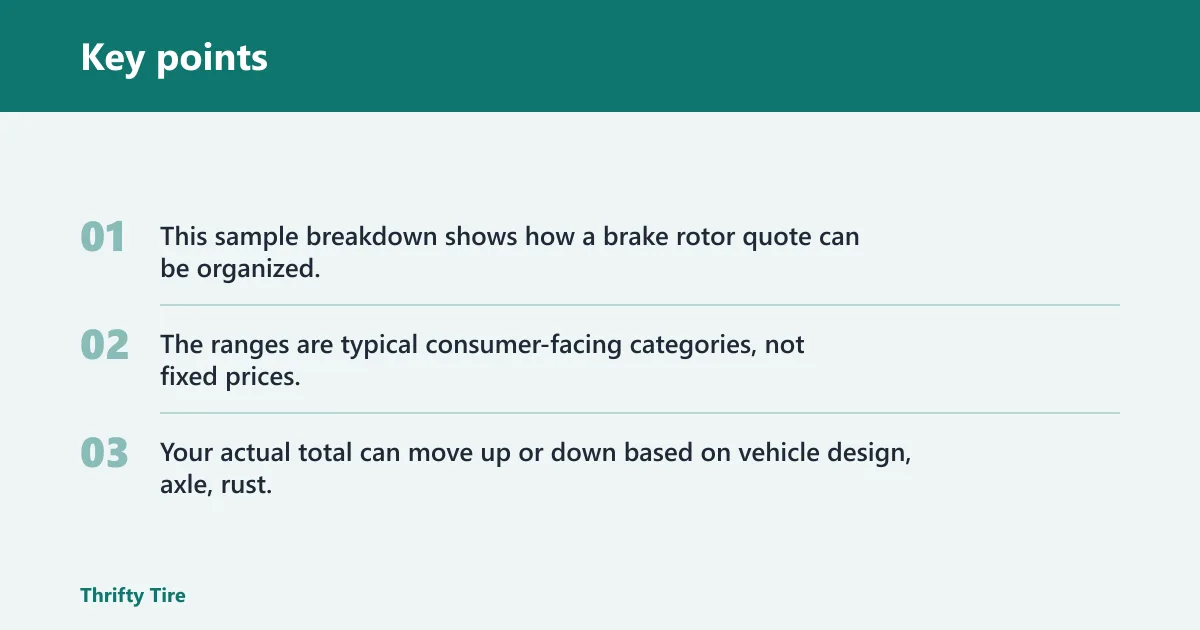
This sample breakdown shows how a brake rotor quote can be organized. The ranges are typical consumer-facing categories, not fixed prices. Your actual total can move up or down based on vehicle design, axle, rust, and whether pads or hardware are included.
| Line item | Typical cost range | Why it appears or should be questioned |
|---|---|---|
| Front rotors, pair | $80-$300 | Usually listed by axle because rotors are commonly replaced in pairs. Question a single-rotor quote unless the vehicle design truly allows it. |
| Rear rotors, pair | $70-$280 | Rear rotors can cost less or more than front rotors depending on size, parking brake design, and whether the rotor is vented or solid. |
| Brake pads, axle set | $50-$180 | Included when pad wear is low, uneven, or near the wear limit. Question this charge if the pads are still thick and the estimate says rotor-only work. |
| Labor, per axle | $120-$300 | Covers removal, inspection, install, torque, and road test. Labor rises with seized fasteners, rust, or extra teardown on some vehicles. |
| Brake hardware kit | $15-$60 | May include slide pins, retaining clips, pad shims, and caliper hardware. Legitimate when the old pieces are corroded, bent, or worn. |
| Rotor machining or resurfacing | $20-$50 each | Only applies if the rotor is thick enough and the shop has machining equipment. Question it if the rotor is below minimum thickness. |
| Shop supplies | $5-$25 | Can cover brake cleaner, small consumables, and similar items. Reasonable when listed modestly; question large percentage-based charges that are hard to verify. |
| Taxes and disposal fees | Varies by location | Taxes are legitimate. Disposal or recycling fees may also appear, especially for old rotors or brake fluid, depending on local rules. |
Does a brake rotor quote include pads and labor?
Sometimes yes, sometimes no. A rotor quote may be rotor-only, or it may be a pad-and-rotor package that also includes labor on that axle. You need the estimate to say which version you are being quoted so you do not compare unlike services.
Rotor-only versus pad-and-rotor service
Rotor-only pricing covers the discs and the labor to install them. Pad-and-rotor service adds new pads, often because the old pads are near the wear limit, uneven, contaminated, or already causing noise or vibration. The second option usually costs more, but the labor overlap can reduce the added labor compared with doing pads later.
On many brake jobs, the caliper has to come off either way, so the labor difference between rotor-only and pad-and-rotor service may be smaller than shoppers expect. The parts line, not the labor line, often drives the increase when pads are added.
What pad notes to check
Look for pad thickness readings, wear sensor status, and any note about tapering or uneven wear. If the pads are still serviceable, the shop may recommend keeping them. If they are thin or uneven, new rotors alone may not solve the problem for long.
Suppose a quote lists front rotors, new pads, and a wear sensor for one axle. That is a normal pad-and-rotor bundle if the sensor is worn or triggered. If the same quote adds rear pads without a wear note, ask what inspection finding supports that extra line.
How labor is charged
Labor is a major part of the bill because brake work takes time to remove wheels, inspect components, clean mating surfaces, install parts, torque fasteners, and test the result. Shops may price labor per axle or use flat-rate labor hours, and both methods should be explained on the estimate.
Flat-rate hours and per-axle pricing
Flat-rate books assign a labor time to the job, while some shops simply quote a set price per axle. Either way, front and rear labor may differ because one axle can take longer than the other. Vehicles with larger brakes, electronic parking brakes, or tight packaging often take longer than simpler designs.
Ask whether the estimate includes inspection time or only installation time. A basic inspection may be built into the job, but deeper diagnosis, rotor measurements, or brake fluid checks may be separate if the shop needs extra time before repair.
Rust, seized fasteners, and delays
Rust and seized hardware can add labor quickly. A frozen caliper bracket bolt, stuck slide pin, or corroded rotor hat may require extra cleaning, heat, or replacement parts. If the quote says “possible additional labor due to corrosion,” that note is legitimate because the technician cannot know the delay until teardown.
A common first-timer mistake is comparing only the initial labor number and ignoring the fine print. If one shop includes a rust allowance and another does not, the lower estimate may not stay lower once the work starts.
Why brake quotes change
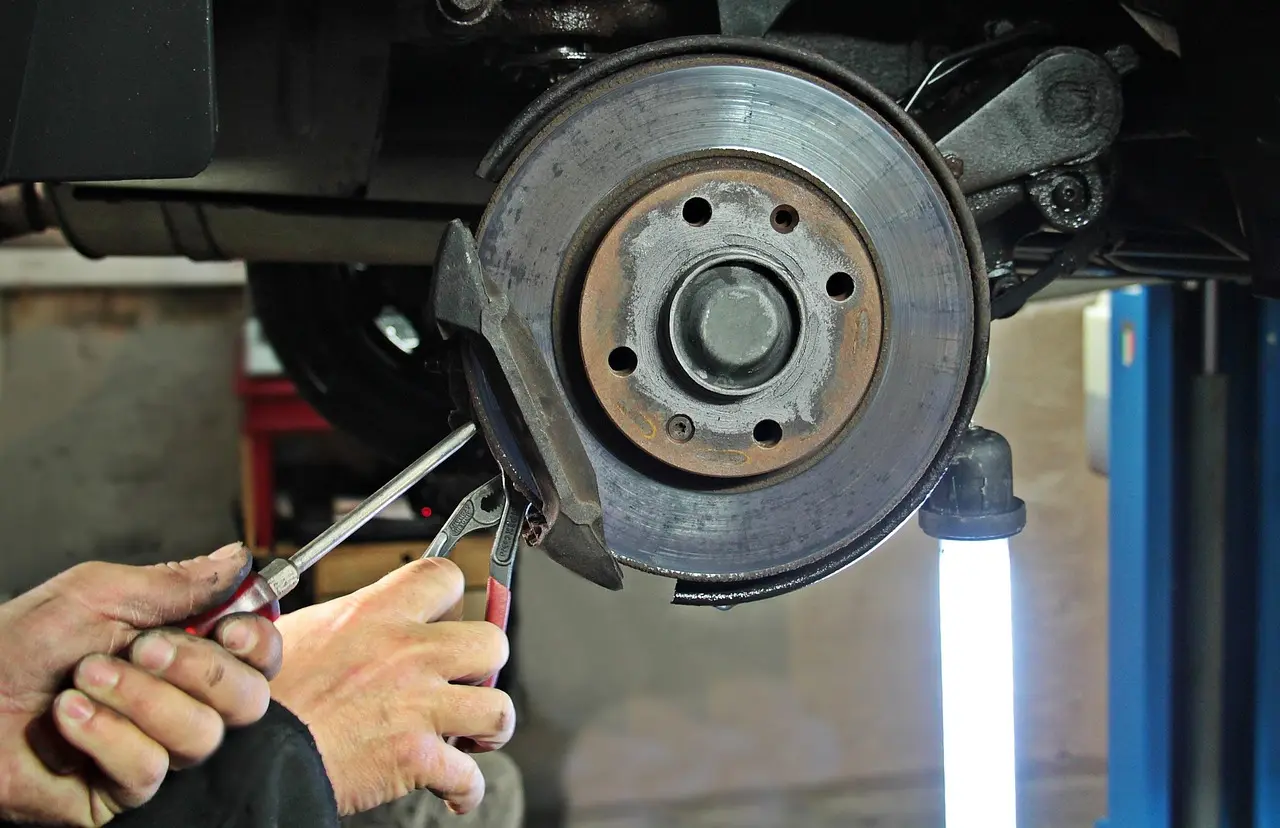
Rotor estimates vary because vehicle design, axle location, rotor type, and inspection findings all affect the job. Front and rear brakes can use different rotor sizes, different hardware, and different labor times, so the quote should name the axle instead of giving a vague single price.
Front versus rear differences
Front rotors often cost more because front brakes handle a larger share of stopping force and are frequently larger or thicker. Rear rotors can still be expensive if they are part of a parking-brake assembly or if the vehicle uses a more complex rear brake design.
Front and rear rotors may also differ in whether they are vented or solid. Vented rotors have internal cooling vanes and are commonly used on front axles. Solid rotors are thinner and are often found on lighter-duty rear applications, though vehicle design controls the choice.
Vehicle design and rotor type
Some vehicles require special procedures for electronic parking brakes, integrated wheel bearings, or rotors that double as drum-style parking brake surfaces. Those designs increase labor or parts cost because the technician has to remove more components or calibrate the system after installation.
Rotor size matters too. Larger rotors use more material, and performance-oriented designs can cost more than basic replacements. That is one reason two cars with the same model year can produce different estimates if trim level or brake package differs.
Wear found during inspection
Inspection findings can change the quote in a real way. If pads are worn down, the rotor may be scored. If rotor thickness is at or below the minimum, resurfacing is off the table. If the caliper hardware is corroded, the shop may recommend replacement instead of reuse.
Brake rotors should not be machined below the manufacturer minimum thickness, if that limit is available for the specific rotor. That limit is stamped or listed by the manufacturer, and once the rotor falls below it, replacement is the safer option. A quote should reflect that decision clearly.
What fees should I expect on a brake repair estimate?
Expect taxes, shop supplies, and possibly disposal or recycling fees. You may also see hardware charges, brake cleaner or consumable fees, and a separate line for machining if the shop resurfaces rotors. Those fees are legitimate when they are specific and modest, not vague or inflated.
Shop supplies and hardware charges
Shop supplies usually cover small consumables used during the repair. Hardware charges are different. Those can be real parts, such as caliper hardware, slide pins, retaining clips, and pad shims. If the estimate lists “hardware” without naming the pieces, ask for detail.
Some shops also charge for bleeder service if the brake system needs to be opened for fluid work. That is not part of a simple rotor replacement unless the repair requires caliper removal beyond normal service or the brake system needs bleeding because of another issue.
Taxes and disposal fees
Taxes are not optional. They should apply to taxable parts and labor according to local rules. Disposal fees may show up if the shop disposes of old rotors, contaminated brake fluid, or other waste that must be handled properly.
Brake fluid service and when it applies
Brake fluid service is separate from rotor replacement unless the inspection finds contaminated fluid, air in the lines, a leaking component, or a repair that opens the hydraulic system. It is often recommended on a maintenance schedule, but a rotor job does not automatically require it.
What extra work changes price
Extra work is often added after inspection, but it should be tied to a clear condition. The biggest price changes usually come from worn pads, damaged or corroded hardware, uneven wear, or brake parts that are too thin to reuse. Legitimate add-ons should explain the problem they fix.
Worn pads and wear sensors
If pads are near the wear limit, replacing them with the rotors is often sensible because the labor overlap is high. A worn wear sensor should also be replaced if the vehicle uses one. That sensor can trigger a warning light or lead to noise if it is already contacting the rotor.
Caliper hardware and slide pins
Caliper hardware, slide pins, retaining clips, and pad shims matter because they help the pads move evenly and keep brake feel consistent. If the pins are seized or the clips are corroded, the technician may recommend replacement to prevent uneven wear or dragging brakes after the new rotors go in.
When to question the recommendation
Question a recommendation if the added work is broad, unsupported, or not tied to an inspection note. For example, “replace everything while we are in there” is less helpful than “replace front pads because thickness is 2 mm and the rotors are scored.” Specific reasons are easier to verify.
Picture a sedan with a steering wheel shake at highway speed, front rotors listed as warped, and pads still above the wear limit. In that case, a rotor-only quote may make sense if the rotors are thick enough and the pads are smooth, but the estimate should still note the thickness measurement and any hardware that needs replacement.
- Check whether the quote names the axle: front, rear, or both.
- Separate rotor parts from pad parts and labor.
- Look for inspection notes on thickness, scoring, wear, or rust.
- Review fees for shop supplies, taxes, machining, or disposal.
- Ask whether any add-on is required, recommended, or optional.
- Compare at least one other quote before authorizing major brake work.
Frequently asked questions
What is included in a brake rotor replacement cost estimate?
A complete estimate should usually list the rotors, labor, any brake pads if they are being replaced, shop supplies, taxes, and any possible machining or disposal fees. It should also note whether the quote is for the front axle, rear axle, or both, since that can change the total.
Why do rotor replacement estimates vary so much?
Estimates change with vehicle make and model, axle location, rotor size, rotor design, and what the technician finds during inspection. Rust, seized hardware, thin pads, and rotor thickness below minimum can all add parts or labor that were not visible before teardown.
Should brake rotors be replaced in pairs?
Yes, rotors are usually replaced in pairs on the same axle so braking stays even side to side. Replacing only one rotor can create uneven friction, vibration, or pull. A single-rotor replacement is unusual and should be explained by the shop before you approve it.
Can rotors be resurfaced instead of replaced to save money?
Sometimes. Resurfacing can cost less when the rotor is thick enough and the surface damage is mild. But if the rotor is below minimum thickness, heavily scored, or heat-damaged, replacement is the safer choice. The estimate should say which path is allowed and why.