Why Are Front Brakes More Expensive to Replace?
By Marcus Hale, automotive editor
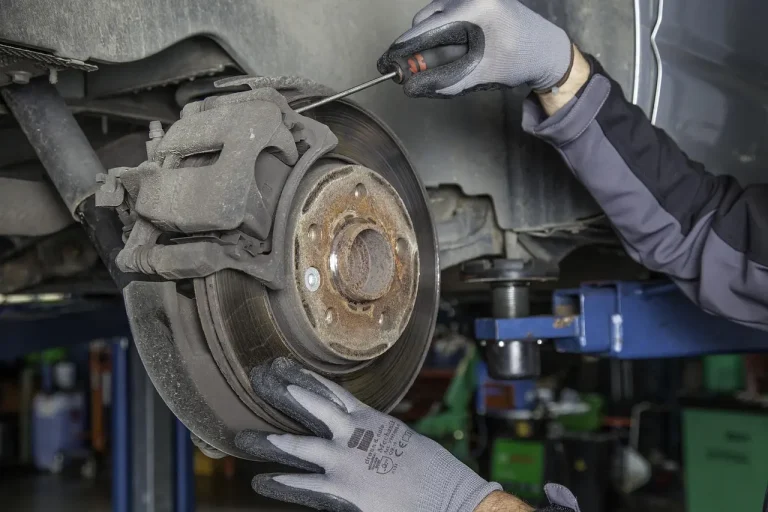
Front brakes often cost more to replace because they do most of the stopping work, so their pads, rotors, and labor are usually larger and wear faster than the rear set. Ignoring worn front brakes can lengthen stopping distance and damage rotors or calipers. This guide explains what pushes front brake jobs higher, when they do not, and how to compare front and rear estimates. For wear symptoms and inspection guidance, see NHTSA brake safety guidance and manufacturer maintenance schedules in your owner’s manual. For rotor reuse limits, the final word is the vehicle maker’s service information, which sets minimum thickness and runout specs by model.
Why front brakes cost more
Front brakes often cost more because braking force tends to shift forward during stopping, and the front axle usually carries most of the load. Front pads and rotors are often larger, and larger parts use more material and can take more labor to fit. Still, a rear job can cost more when the rear hardware is more complex. That can mean a basic front pad swap on a midsize sedan is cheaper than a rear service that includes parking-brake hardware, while a front job on a full-size truck can run higher because of larger rotors and heavier calipers.
Braking force shifts forward
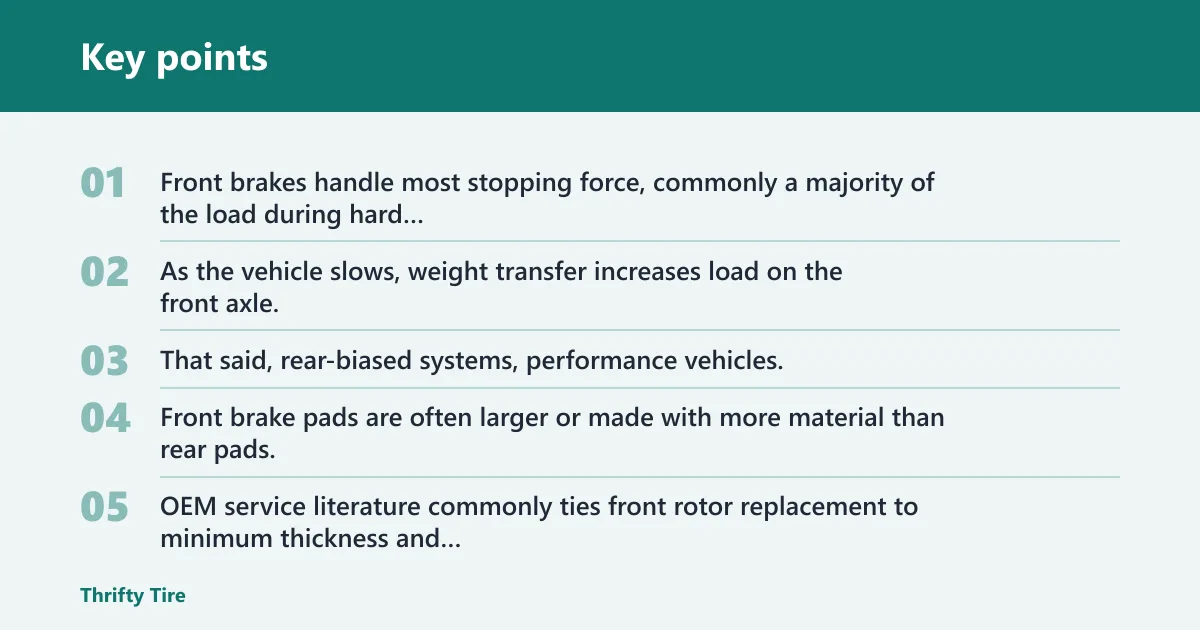
Front brakes handle most stopping force, commonly a majority of the load during hard braking, but the exact split varies with vehicle design, brake-bias tuning, tire grip, load, terrain, towing, and ABS/ESC calibration. As the vehicle slows, weight transfer increases load on the front axle, so the front pads do more work and wear faster than the rear pads on the same vehicle. That said, rear-biased systems, performance vehicles, and heavily loaded SUVs can shorten rear life enough to narrow the gap.
Front parts are often larger
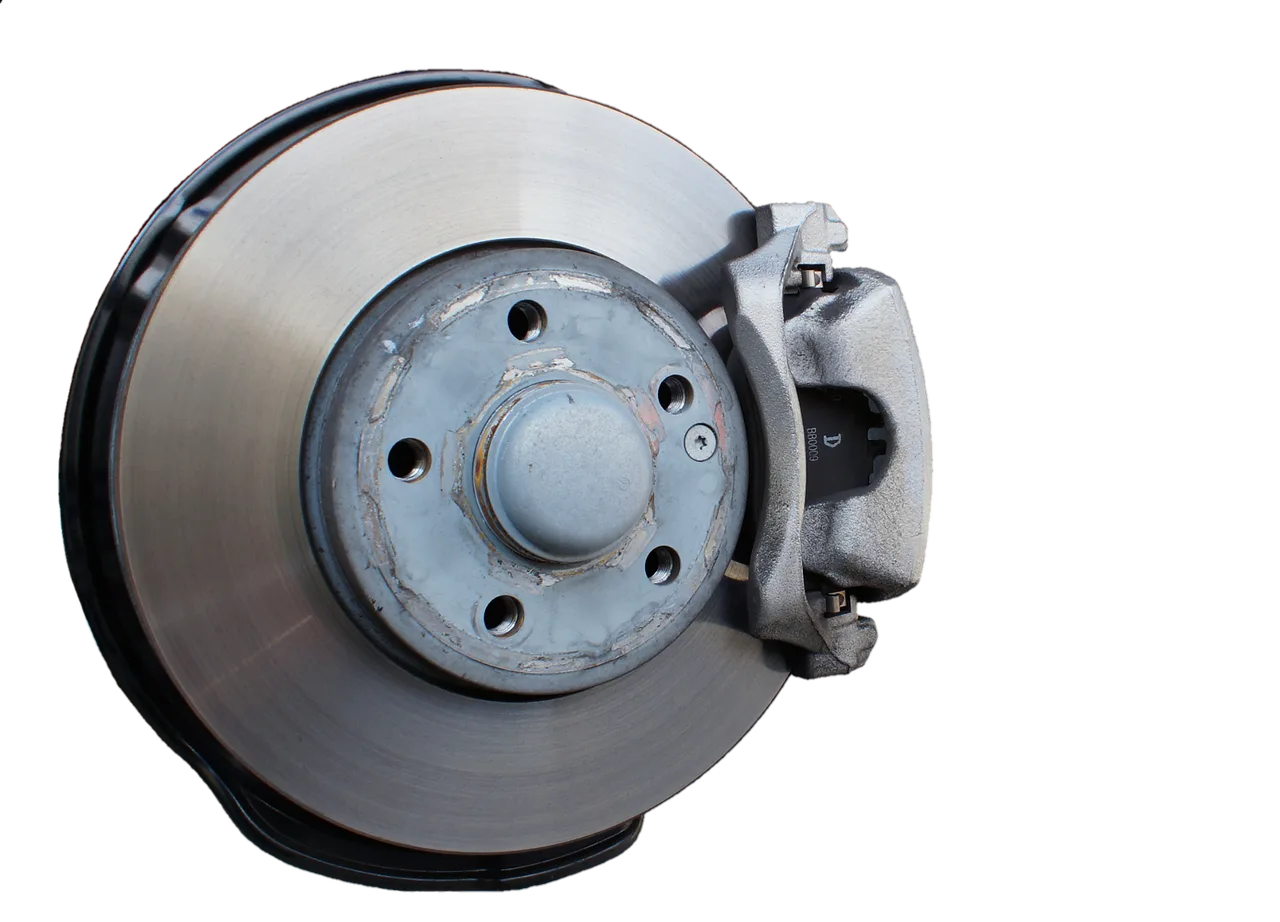
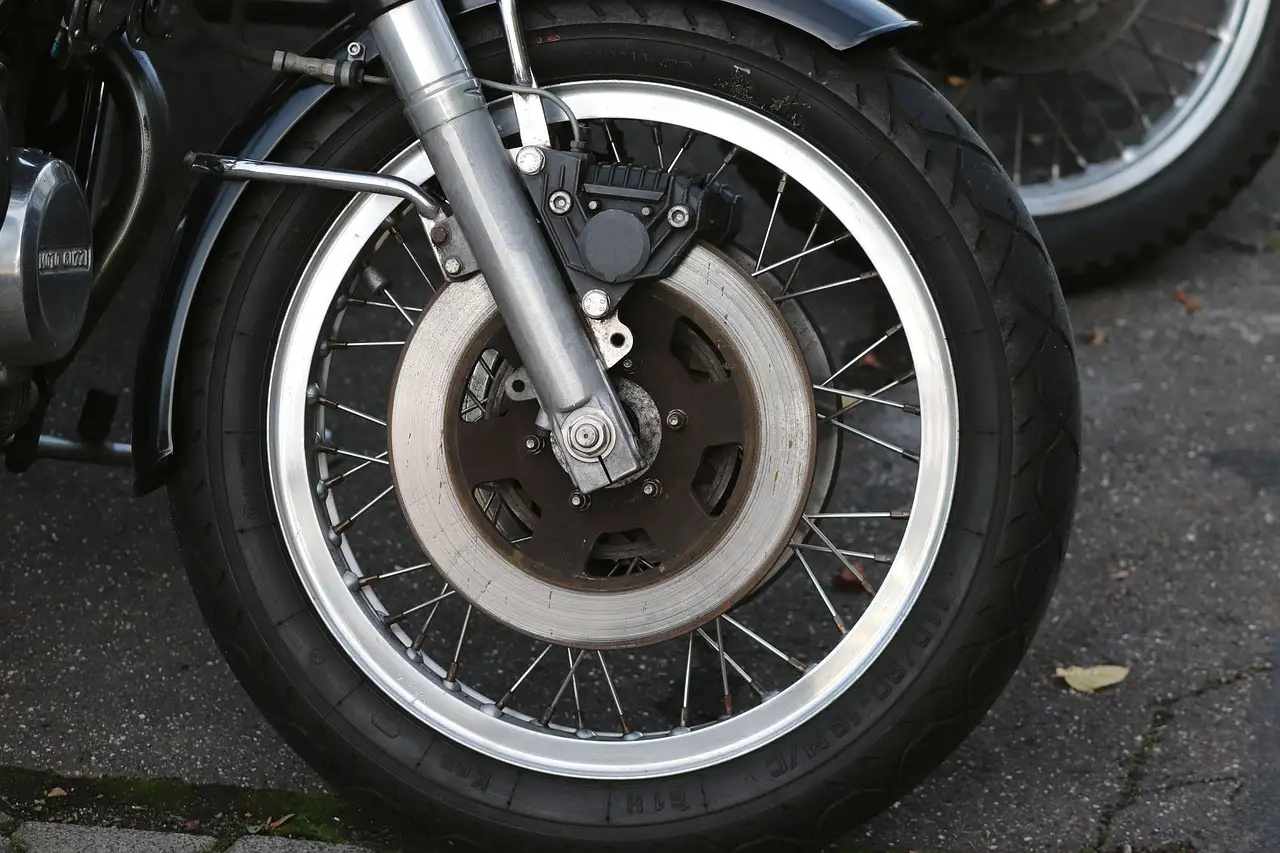
Front brake pads are often larger or made with more material than rear pads. OEM service literature commonly ties front rotor replacement to minimum thickness and condition limits, which are specific to each vehicle and rotor design. Bigger rotors also add cost when they are replaced with the pads, especially when the front axle uses vented rotors or larger calipers. Brake pulsation is often caused by rotor thickness variation or uneven pad deposits rather than literal rotor warping.
Front jobs often need more material
When the front axle carries more braking load, the pad compound and rotor design may need to be more heat-tolerant. That can raise parts cost, especially on heavier vehicles or models with vented front rotors. City driving, towing, stop-and-go use, mountain descents, and frequent heavy braking all shorten front brake life. On a half-ton pickup or three-row SUV, a front brake job can be materially more expensive than on a compact car simply because the parts are larger and the thermal load is higher.
Front brake cost breakdown
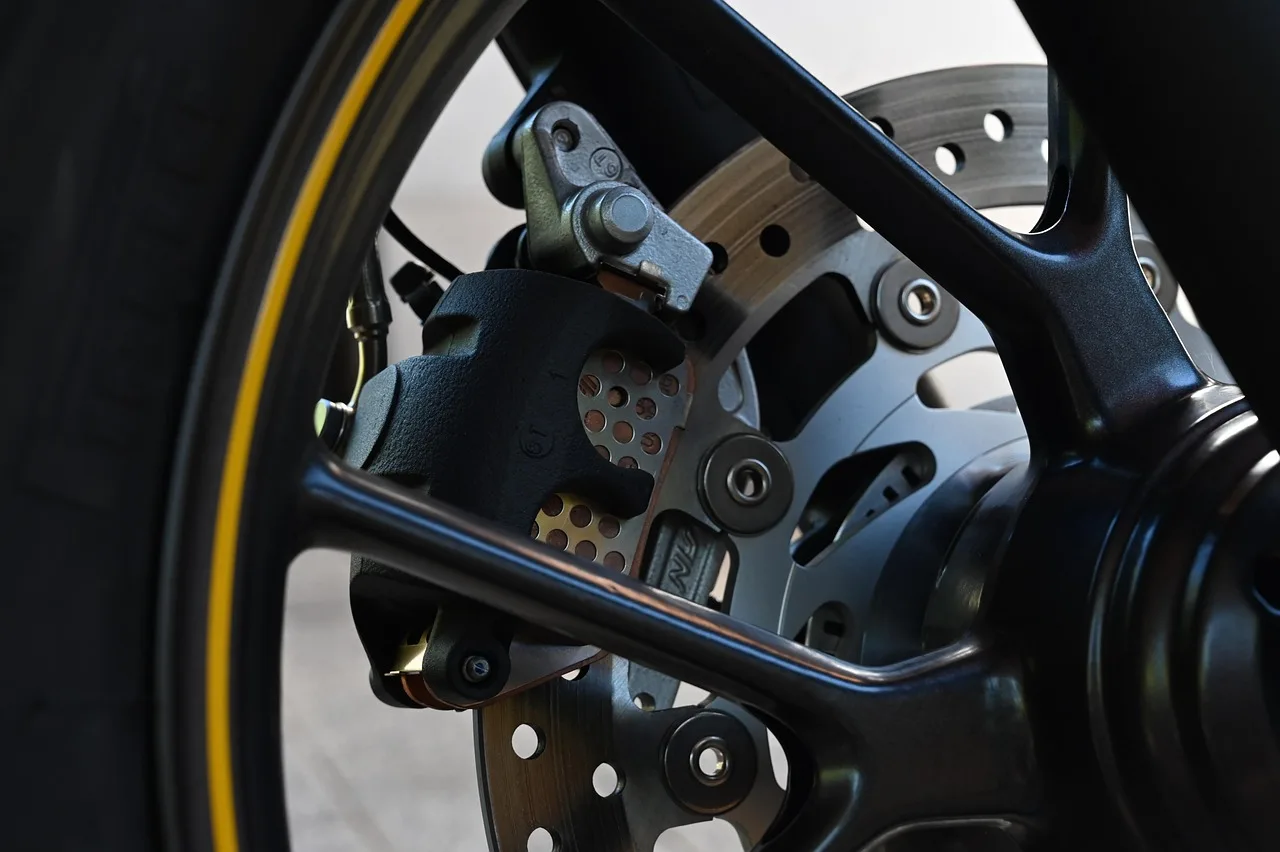
A front brake estimate is usually a mix of parts, labor, and any extra hardware the shop finds during inspection. Pads alone are one price. Pads plus rotors are another. Labor changes by vehicle design, and worn clips, slide pins, or calipers can add more. The same axle can cost more or less depending on access and condition. Repair-cost data from RepairPal’s estimator also shows that brake pricing varies widely by vehicle family, not just axle position.
Pads, rotors, and hardware
Front brake pads commonly wear faster than rear pads and are often replaced sooner on the same vehicle. Rotors may be replaced with the pads, especially if they are scored, heat-spotted, or below thickness spec. OEM rotor-reuse criteria generally come down to three checks: thickness, runout, and surface condition. If the vehicle has gone too long and the pads have reached metal, rotor damage can push the bill up fast.
Labor by axle
Labor is not the same on every brake job. Some front suspensions give easy access, while others require more disassembly or extra time for caliper service. That is why one vehicle can have cheaper front pads than rear pads, even though front brakes wear first. A front pad-and-rotor job on a front-wheel-drive sedan may be straightforward, while a rear job on an SUV with an electronic parking brake may need scan-tool steps and piston retraction procedures before parts even come off.
Common add-ons that raise the bill
Brake fluid service, hardware kits, seized slide pins, caliper replacement, and rotor machining or replacement all change the total. Many manufacturers call for periodic brake fluid replacement because moisture-contaminated fluid can damage internal brake components over time. Waiting until grinding can also add $150–$300 per axle, but that figure varies by vehicle, shop rate, and how far the damage has spread into rotors, calipers, or parking-brake hardware.
Front brake pads vs rear pads
Front brake pads usually wear faster than rear pads because the front brakes handle more stopping force. Rear pads often last longer, and on the same vehicle they may need replacement later than the front set. Cost follows that pattern in many cases, but pad material, rotor size, brake bias, terrain, towing, and electronic parking-brake systems can narrow or widen the gap.
How pad material changes price
Organic, semi-metallic, and ceramic pads do not cost the same. The compound affects heat tolerance, noise control, dust, and life. A quieter ceramic pad may cost more up front than a basic organic pad, while a more aggressive semi-metallic pad can suit heavier use but may wear differently. Material choice changes both price and service interval, and it can interact with rotor wear: a severe-duty pad can be the right choice on a towing vehicle but still increase rotor wear compared with a softer compound.
When rear pads last longer
Rear pads often last longer than front pads, but the mileage gap varies a lot by vehicle. Maintenance guides and brake-safety resources point to front pad replacement happening earlier than rear, yet the exact interval depends on brake bias tuning, driving cycle, load, and terrain. On many daily drivers, a front set may come due first; on certain performance cars, hybrids, or vehicles with regenerative braking, rear wear patterns can look different than the usual rule of thumb.
Front vs rear brake cost table
The table below separates the main cost drivers so you can compare a front estimate with a rear estimate before you approve work. It also shows where the front job is often higher and where the rear job can catch up or even exceed it. Use it as a decision tool: the largest jump in price usually comes from service scope, not axle position alone.
| Axle | Pad set | Rotor set | Labor intensity | Common add-ons | Typical reasons the line item is higher or lower |
|---|---|---|---|---|---|
| Front | Usually higher | Often higher | Moderate to high | Hardware kit, caliper service, brake fluid, wear sensors | Front pads do most braking, are often larger, and may use vented rotor designs; heavier heat load can raise material cost. |
| Rear | Usually lower | Often lower | Low to moderate | Parking-brake parts, caliper service, hardware, electronic reset | Rear pads often wear more slowly and may be smaller, but parking-brake hardware or tighter access can raise labor and parts cost. |
| Either axle | Depends on compound | Depends on condition | Depends on vehicle design | Rotor replacement, calipers, sensors, fluid | Pad material, rotor wear, seized hardware, and service access can change the total more than axle position alone. |
| Service scope | Front axle typical range | Rear axle typical range | What usually drives the range |
|---|---|---|---|
| Pads only | Lower cost on most vehicles | Often slightly lower than front | Pad material, hardware kit inclusion, labor access, and whether sensors or shims are replaced |
| Pads + rotors | Higher than pads only; often the most common quote | Can exceed front if parking-brake parts add time | Rotor size, minimum thickness, machining vs replacement, corrosion, and whether rotors come as a premium or economy part |
| Caliper add-on | Raises cost sharply if seizure or leaking is found | Can raise cost more on rear setups with parking-brake integration | Caliper core price, slide-pin repair, hose condition, brake bleeding, and labor to restore piston travel |
| Parking-brake / electronic rear add-on | Usually not applicable | Often the main reason rear is pricier | EPB service mode, scan-tool reset, integrated parking-brake hardware, and extra disassembly time |
At the counter, the key question is not only “front or rear?” It is “pads only, or pads and rotors, and what else is on the bill?” A front pad-only quote can be cheaper than a rear pad-and-rotor quote on some vehicles. The reverse can happen too, especially on vehicles with electronic parking brakes or unusually expensive rear rotor assemblies.
Do front brake jobs include rotors?
No. Front brake jobs do not always include rotors. A shop can reuse rotors if they are thick enough, run true enough, and are not damaged by heat or metal-to-metal contact. If the rotors are scored, cracked, or below spec, replacement is often the safer call and will raise the total. OEM service manuals are the deciding source here: they specify whether a rotor can be reused, machined, or must be replaced based on measured thickness and condition.
When rotors can be reused
Rotors can sometimes stay on the car when pad wear is caught early and the rotor surface still meets thickness and condition limits. That keeps the job closer to a pad-only price. In that case, labor may still be the biggest part of the bill, especially on vehicles with tight access. Reuse is not a guess; it should be backed by measured rotor thickness and runout against the maker’s spec.
When replacement is the safer call
If the brake pedal pulses, the steering wheel shakes while braking, or the rotor surface is deeply grooved, replacement is more likely. Once pads grind into the rotor, the rotor can be damaged enough that resurfacing is not enough. NHTSA’s brake safety guidance also treats vibration, grinding, pulling, and longer stopping distances as symptoms that warrant prompt inspection, not delay. That is where a small service becomes a larger axle bill.
How rotor damage raises cost
A rotor set adds parts cost immediately, and the added labor can be modest or meaningful depending on the vehicle. If the caliper piston or slide hardware is also affected, the bill climbs again. On some vehicles, a damaged rotor can also overheat a wheel bearing seal or trigger a second round of labor if the hub area has to come apart again.
When rear brakes cost more
Rear brake jobs can cost more on some vehicles. That usually happens because of parking-brake hardware, caliper issues, or limited access rather than because the rear axle does more stopping work. A rear job can also run high if the design uses integrated electronic parking brakes or unusual hardware.
Parking brake complications
Some rear brake assemblies include a parking-brake mechanism inside the rotor hat or inside the caliper. That extra hardware adds labor and can add parts if it is seized or out of adjustment. On those vehicles, a rear repair may cost more than the front even though the rear pads wear more slowly. This is especially common on late-model SUVs, crossovers, and trucks with electronic parking-brake actuators that must be serviced in a special mode.
Caliper or hardware issues
Rear calipers can seize, slide pins can stick, and pad hardware can rust in place. If that happens, a simple pad swap turns into a larger repair. Rear repairs can also take longer if the technician must service the parking brake before the caliper can be removed. A seized rear caliper on a salt-belt vehicle can turn a routine brake quote into a caliper, hose, and bleed job.
Vehicle designs that add labor
Some vehicles pack the rear brakes tightly around the hub, suspension, or parking-brake parts. That can make access harder and labor higher. A common first-timer mistake is to compare only pad prices and ignore the rear labor line, then get surprised when the rear estimate is higher than the front. That is why the best estimate breaks out parts, labor, and any electronic service steps separately.
Brake service checklist
Before you approve the repair, ask the shop to break out the estimate by axle and by part. That makes it easier to compare pad-only pricing against pad-plus-rotor pricing. It also helps you see whether the bill is high because of wear items, labor, or extra hardware that truly needs replacement.
- Ask for separate front and rear parts prices.
- Ask whether the quote is pad-only or pads plus rotors.
- Ask for rotor thickness or condition notes.
- Ask whether new hardware clips, sensors, or pad shims are included.
- Ask whether caliper service or replacement is needed.
- Ask whether brake fluid service is part of the estimate.
- Ask how parking-brake parts affect rear labor.
Picture a 2019 crossover with front squeal and a rear quote that looks lower at first glance. If the front estimate is pad-only and the rear estimate includes rotors plus parking-brake hardware, the rear job can be the larger bill. The axle position matters, but the service scope matters more. For related reading, see the pages on brake pad lifespan, rotor replacement, brake fluid service, squealing vs grinding diagnosis, and electronic parking brake service.
Frequently asked questions
Are front or rear brakes more expensive to replace?
Front brakes are usually more expensive because they handle most stopping force and wear out sooner. Front pads are also often larger, and front rotors can cost more. But rear brakes can cost more on some vehicles if the parking brake, calipers, or access add labor and parts.
Why are front brakes more expensive?
Front brakes are more expensive mainly because they do most of the work during braking, so they wear faster and often need larger pads and rotors. Labor can also be higher if the front assembly is bigger or harder to service. That does not make every front job the most expensive one.
Are front brakes more expensive than rear?
Often, yes. Repair-cost datasets and repair estimates generally show the front axle costing slightly more on many cars, but the spread is not fixed. The difference can flip if the rear job needs parking-brake service, calipers, or rotor replacement while the front job does not.
Do front brake pads cost more than rear?
Usually they do. Front pads are commonly larger, work harder, and may use different compounds or rotor designs. Rear pads often last longer, so they may be replaced less often too. Still, pad prices alone can be misleading if the rear quote includes extra hardware or electronic service steps.
Can rear brakes ever cost more than front brakes?
Yes. Rear brakes can cost more when the vehicle uses integrated parking-brake hardware, electronic parking brakes, or hard-to-service rear calipers. If rear rotors and hardware need replacement while the front only needs pads, the rear estimate can be higher. Access and design matter as much as axle position.
How much extra does delaying brake service cost?
Delaying service can turn a pad job into a pad-and-rotor job, and in some cases a caliper repair as well. The added cost varies by vehicle, shop rate, and how much collateral damage develops, so a fixed number like $150–$300 should be treated as a rough shop-side range, not a guarantee. The longer the metal-on-metal contact continues, the more likely the rotor and nearby hardware need replacement.