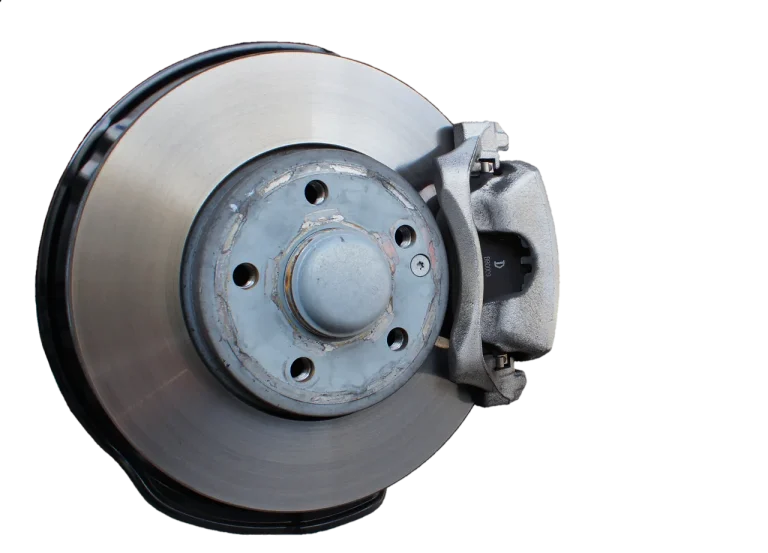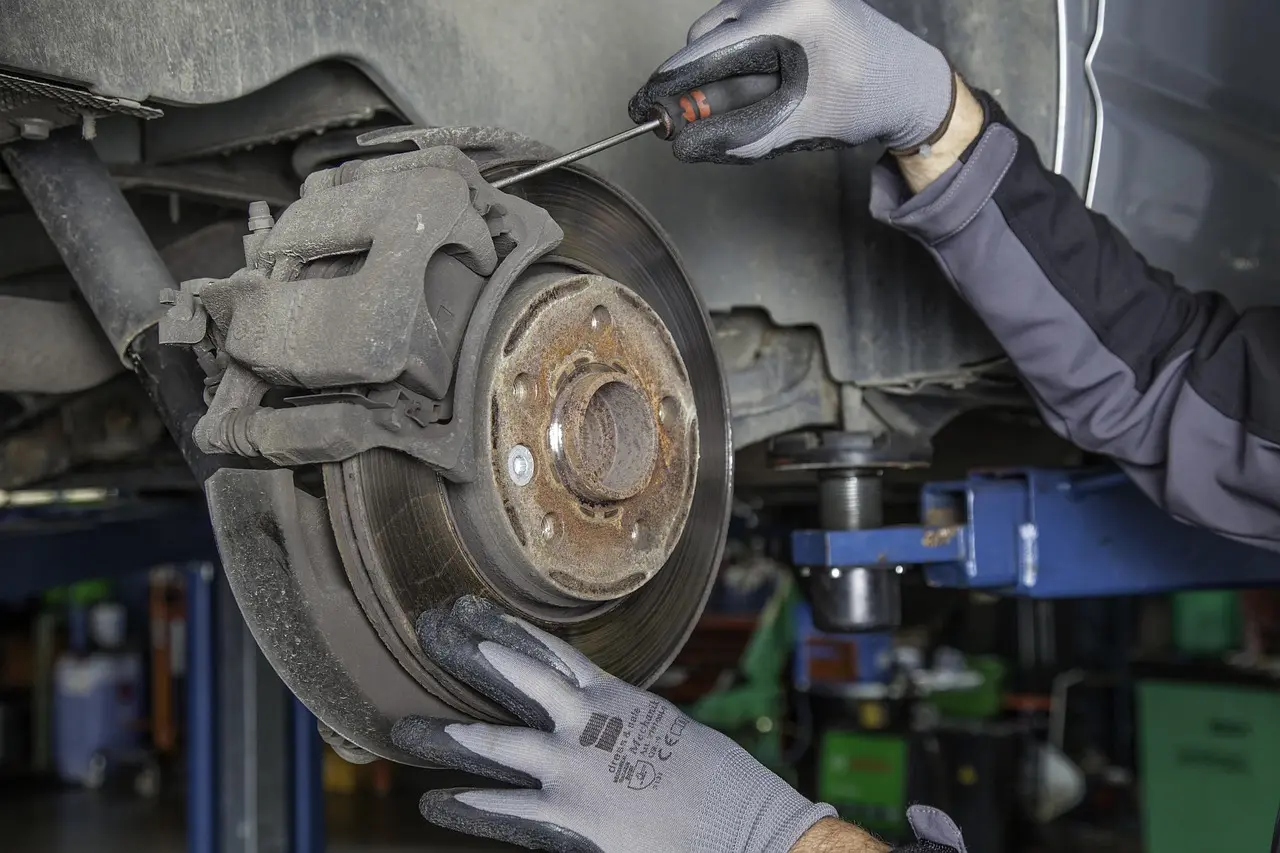
Should I Replace My Rotors or Just Pads?
Replace pads only if the rotors still meet minimum thickness and have smooth, even surfaces. Replace rotors too if they are below spec, deeply grooved, cracked, or warped. Skip the rotor check, and you can get noise, vibration, longer stops, and another brake labor charge. This guide explains the thickness and surface checks, the symptoms that point to rotor replacement, and when a pad-only job is a fair quote.
How to tell if rotors can be reused
The short answer based on rotor condition
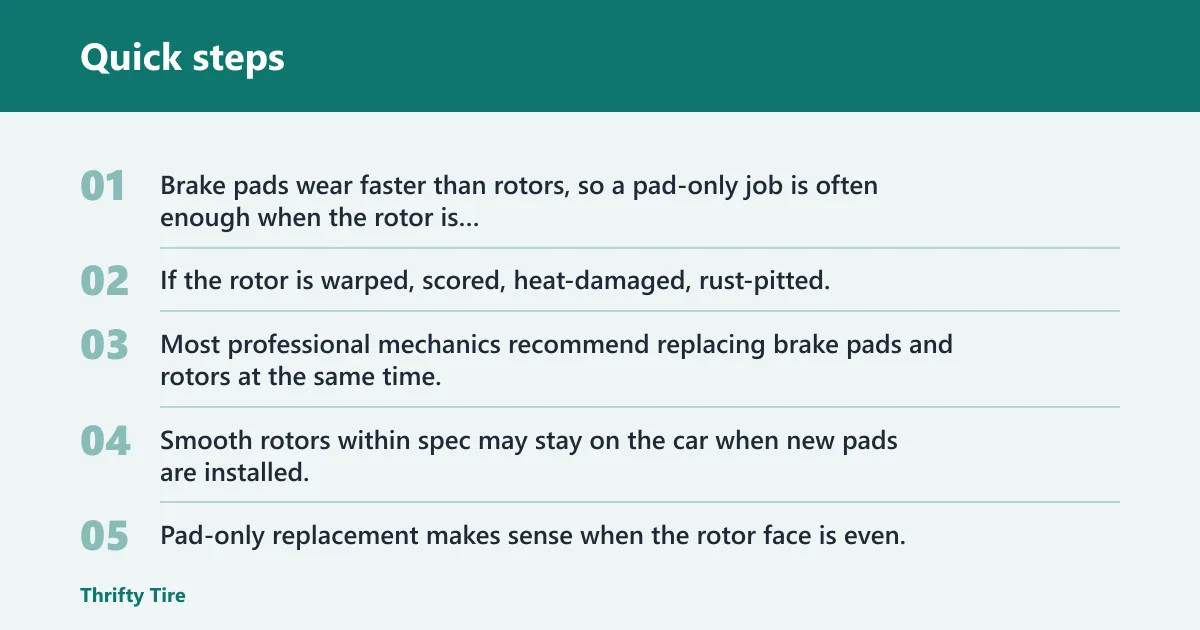
Brake pads wear faster than rotors, so a pad-only job is often enough when the rotor is smooth and within spec. If the rotor is warped, scored, heat-damaged, rust-pitted, or thinner than the service manual allows, replace it with the pads. That is the decision point that matters.
Most professional mechanics recommend replacing brake pads and rotors at the same time, but that is a preference, not a blanket rule. Smooth rotors within spec may stay on the car when new pads are installed.
When pad-only replacement is enough
Pad-only replacement makes sense when the rotor face is even, the thickness is still above minimum, and the surface is not badly marked. Pads can be replaced before rotor failure when wear reaches the Replace Now range at 3 mm or below, but the rotor still has to pass its own checks.
That matters because new pads on damaged rotors can reduce braking performance. An even rotor also gives the new pad material a better chance to bed in with a consistent transfer layer.
When rotors should be replaced with pads
If a rotor is warped, below minimum thickness, deeply scored, or damaged by heat or rust, it may need replacement rather than being reused with new pads. The same is true when the car already shows steering wheel vibration during braking or brake pedal pulsation and inspection confirms rotor runout or surface damage.
Rotors sometimes need replacement when they are warped or below minimum thickness. Deep grooves, steering-wheel shake, longer stopping distance, and grinding noises are signs the rotor is not fine.
Brake rotor decision table
This table gives the basic decision path a shop should use after inspection. The rotor’s surface condition and thickness should drive the quote, not mileage by itself.
| Rotor condition | What it means | Action |
|---|---|---|
| Smooth and within spec | No major grooves, no warp, and thickness still above the minimum | Replace pads only |
| Light grooves and enough thickness | Surface wear is present, but the rotor may still be reusable | Inspect carefully; resurface if allowed and still within spec |
| Warped, scored, heat-damaged, rust-pitted, or below minimum thickness | Rotor condition is no longer suitable for new pads | Replace rotors with pads |
What a shop should measure
A brake inspection should include pad thickness, rotor thickness, and visible rotor damage before a recommendation is made. Runout or warp also matters, because a rotor can look acceptable and still cause vibration under braking.
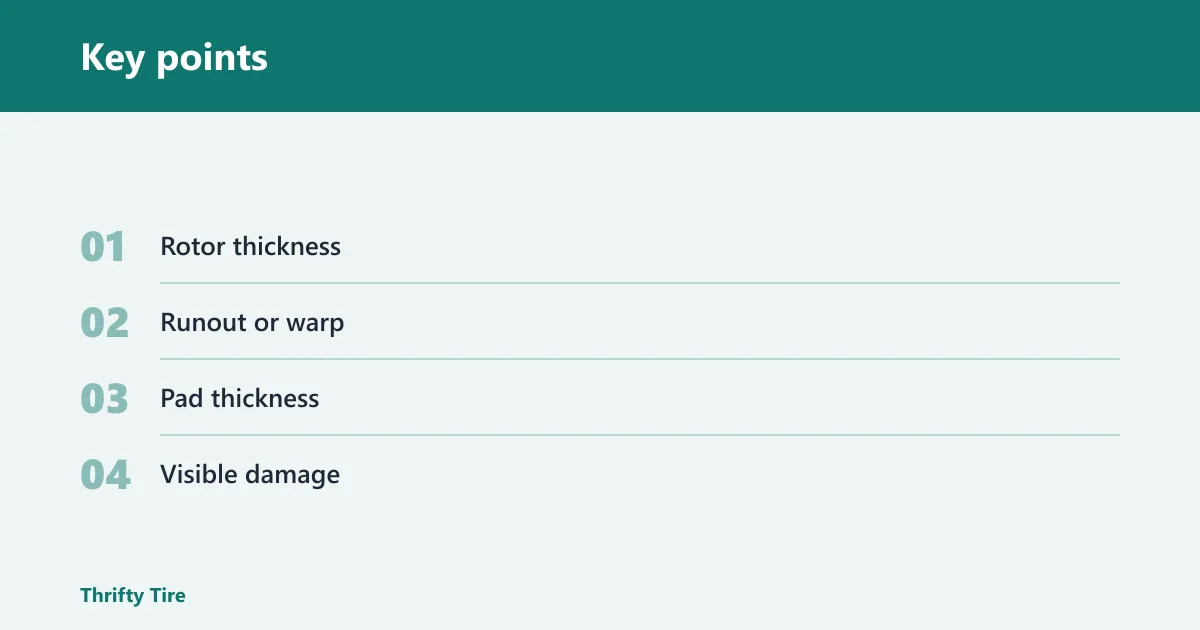
- Rotor thickness. Compare the measurement to the vehicle service manual or the rotor stamp.
- Runout or warp. Check for wobble, pedal pulsation, or a steering wheel shake during braking.
- Pad thickness. Confirm whether the pads are near the Replace Now range at 3 mm or below.
- Visible damage. Look for deep grooves, scoring, heat spots, cracks, rust pitting, and heavy rust scale.
Say your front pads are down to 3 mm, the rotor is still above minimum thickness, and the face is smooth. That is the kind of inspection result that usually supports pads only.
Suppose the rotor has light grooves and enough remaining thickness, but the shop is allowed to resurface it and the final cut will still stay above spec. In that case, resurfacing may be an option, but only if the manufacturer and rotor thickness allow it.
Do you need new rotors or just pads?
Look at the symptom pattern, then verify it with a measurement. Thin pads, squealing, and some grinding can point to pad wear. Steering wheel vibration during braking and brake pedal pulsation point more toward rotor trouble, especially when the front rotors are involved.
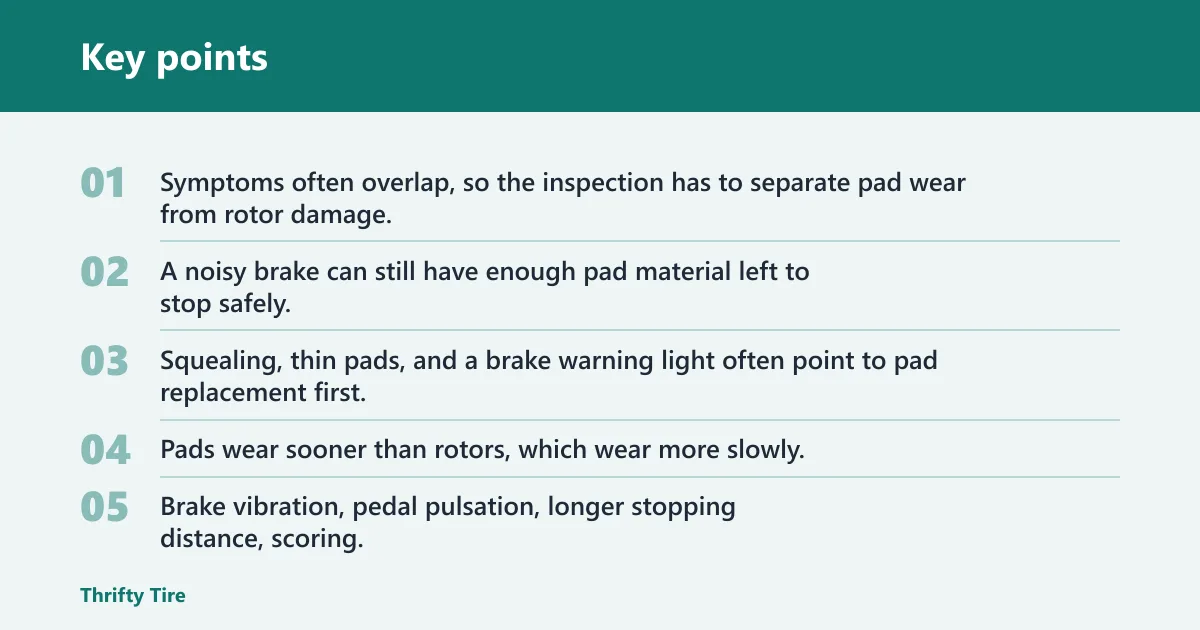
Symptoms often overlap, so the inspection has to separate pad wear from rotor damage. A noisy brake can still have enough pad material left to stop safely, while a quiet brake can still have a warped rotor that shows up only under load.
Symptoms that point to pad wear
Squealing, thin pads, and a brake warning light often point to pad replacement first. Pads wear sooner than rotors, which wear more slowly, so they are commonly the first part to reach the service limit.
Symptoms that point to rotor wear
Brake vibration, pedal pulsation, longer stopping distance, scoring, and grinding noises are stronger rotor clues. Brake pedal pulsation can happen in both front and rear rotors, so the check should not stop at the front axle.
When symptoms overlap
Noise and vibration together can mean both parts need attention. New pads on damaged rotors can feel noisy again fast, and an uneven rotor can make the bedding-in process inconsistent because the pad cannot lay down an even transfer layer.
When pads can go on the old rotors
Pads can go on the old rotors when the rotor face is smooth, the thickness is still above minimum, and there is no sign of warp or serious damage. That is the cleanest pad-only quote, and it is the one most likely to avoid repeat labor.
Why smooth rotors can stay in service
A smooth rotor gives the new pad a stable contact surface. If the rotor is still within spec, the new pads can bed in more evenly and the braking feel is less likely to change after the first few stops.
When resurfacing is acceptable
Resurfacing may be an option when rotors are within spec. It is not a substitute for replacement when the rotor is already below minimum thickness, and it is not the right answer for severe scoring or heat damage.
Why even wear matters for new pads
New pads need an even transfer layer on the rotor. If the rotor is uneven, the pad can bed in unevenly too, which can bring back noise, pulsation, or irregular wear sooner than expected.
When rotors should be replaced too
Replace rotors with the pads when the rotor is warped, scored, heat-spotted, rust-pitted, or below minimum thickness. That choice can cost more up front, but it can prevent a second labor charge, unstable pad wear, and a comeback for brake noise or vibration.
Warpage and pedal pulsation
A pulsating brake pedal is a common sign of worn rotors. Steering wheel vibration during braking can also signal deteriorating front brake rotors. Those symptoms should trigger a measurement, not a guess.
Scoring, heat spots, and rust pitting
Grooves and scoring reduce the contact quality between pad and rotor. Heat spots and rust pitting also change the surface enough that new pads may not bed evenly or stop smoothly.
Below-spec thickness and repeat labor risk
Minimum rotor thickness should be checked against the service manual or any rotor stamp or marking, if present. If the rotor is below spec, it should be replaced, not reused. Putting new pads on a thin rotor can lead to repeat labor if the rotor fails inspection later.
Does this change front and rear?
Front brakes often wear faster because they handle more of the braking load, so front pads may reach about 3 mm first. Rear rotors still need the same thickness, runout, and surface checks, because a pulsating pedal can come from both front and rear rotors.
Why front brakes often wear faster
Front pads commonly wear sooner than rear pads, and steering wheel shake during braking usually points to the front axle. That makes the front brakes the first place many inspections find a rotor problem.
Why rear rotors still need the same checks
Rear rotors can still warp, rust-pit, or go below minimum thickness. A rear rotor problem may show up as pedal pulsation even when the steering wheel stays calm.
Why one axle can need rotors sooner
One axle can show damage earlier because of braking balance, heat, corrosion, or uneven wear. That is why the quote may be pads only on one axle and pads plus rotors on the other.
Brake quote size and pad replacement cost
The replacement choice changes the quote because rotors add parts and labor. Pads only is usually the smaller job, but it is only the right quote when the rotor passes thickness and surface checks. Replacing rotors now can be cheaper than paying for pads twice if the old rotor ruins the new set early.
That is the cost side of the inspection. If the rotor is smooth and within spec, a pad-only quote is reasonable. If it is warped or thin, the better quote is the one that fixes both parts at once.
Frequently asked questions
Should I replace my rotors or just pads?
Replace pads only if the rotors still meet minimum thickness and have smooth, even surfaces. Replace rotors too if they are warped, scored, rust-pitted, or below spec. The answer should come from inspection, not mileage alone.
Do I need to replace brake rotors or just pads?
If the rotor face is smooth and the thickness is still within spec, pads alone may be enough. If the rotor is grooved, warped, or too thin, replace rotors with the pads to avoid noise, vibration, and uneven wear.
Should I always replace rotors with pads?
No. That is common advice, and many professionals recommend both at the same time, but smooth rotors within spec may stay in service. The key is whether the rotor passes thickness and surface checks.
Can I replace brake pads without replacing rotors?
Yes, if the rotors are smooth, not warped, and still above minimum thickness. Pads can be replaced before rotor failure when wear reaches the 3 mm range, but only after the rotor is checked carefully.
How do I tell if my rotors are too worn for new pads?
Check rotor thickness against the service manual or rotor stamp, then inspect the face for scoring, heat damage, rust pitting, and warp. Steering wheel vibration, brake pedal pulsation, deep grooves, and grinding noises are strong signs the rotor should be replaced.
Do pads and rotors need to be replaced together?
Not always. They need to be replaced together when the rotor is below minimum thickness, warped, or badly damaged. If the rotor is smooth and within spec, pads alone can be the right repair.