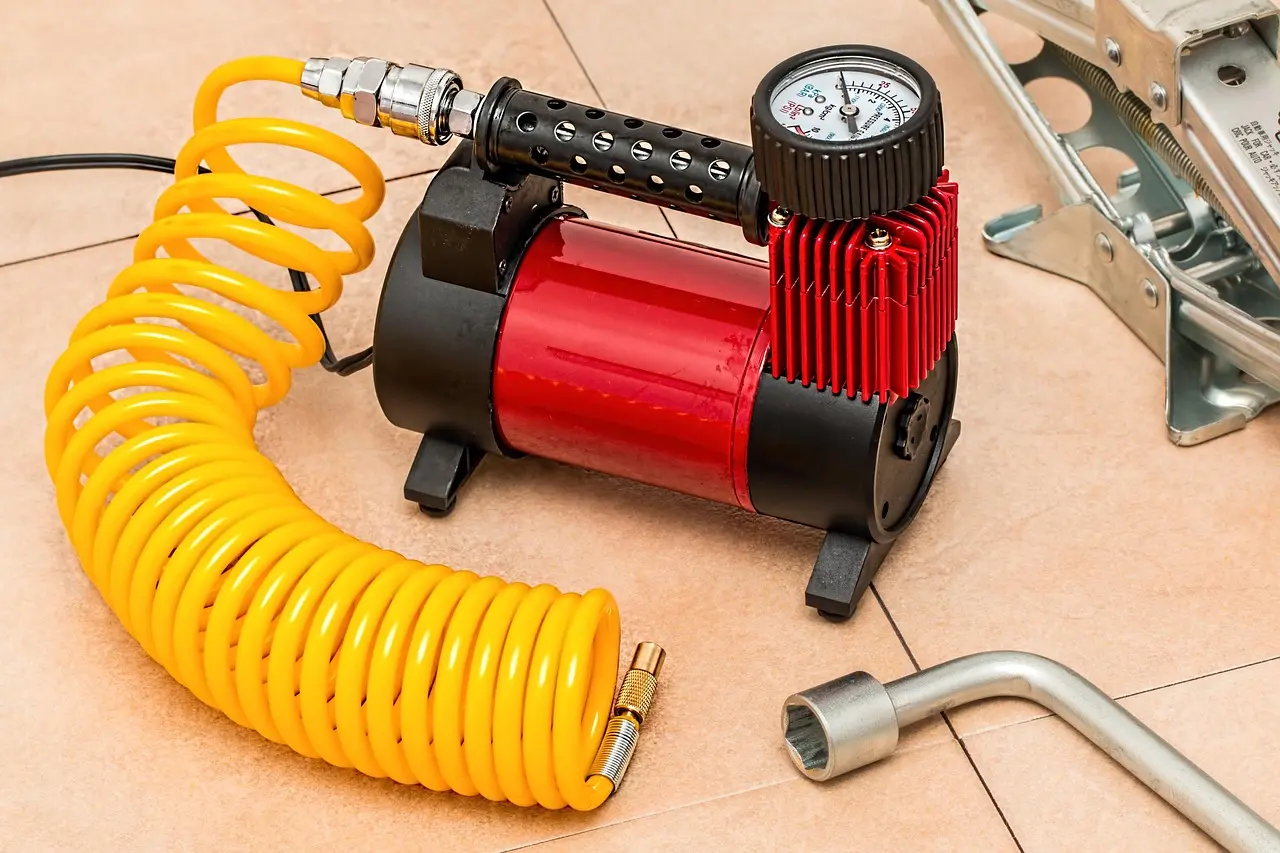
How to Check Tire Pressure at a Gas Station
Reviewed by an ASE-certified technician. Tire-pressure guidance here follows the vehicle placard and cold-tire recommendations from NHTSA, Tire Industry Association, and major automakers. For related help, see TPMS light meaning, how often to check tire pressure, tire sidewall markings, portable inflators, and finding a slow leak.
Check tire pressure when the tires are cold. Use the door-jamb placard PSI, then add air in short bursts until you land within 1–2 psi of target. Low pressure hurts wear, fuel economy, and wet grip, and NHTSA warns that underinflation can overheat tires and increase the risk of failure. Too much pressure can reduce the contact patch and traction, so overinflation is not a harmless shortcut. This guide gives you a quick station-side process, plus what to do when the air machine is awkward, inaccurate, or missing a gauge.
What PSI should your tires be?
The correct target is the PSI on the vehicle placard, usually on the driver door jamb. Use that number for cold tires, not the max PSI molded into the tire sidewall. Front and rear values can differ, so check both lines before you start adding air. NHTSA and tire manufacturers such as Michelin and Goodyear consistently state that the placard is the everyday inflation target for the vehicle, while the sidewall number is the tire’s maximum rating, not the recommended road pressure.
Find the placard first
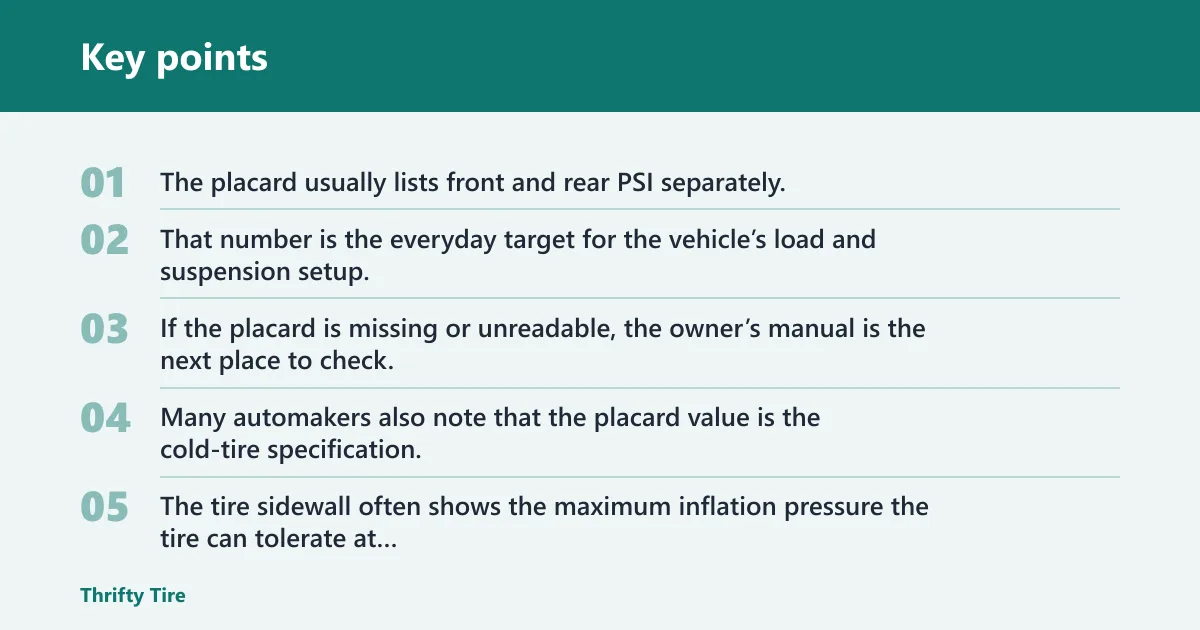
The placard usually lists front and rear PSI separately, along with the spare if the vehicle has one. That number is the everyday target for the vehicle’s load and suspension setup. If the placard is missing or unreadable, the owner’s manual is the next place to check. Many automakers also note that the placard value is the cold-tire specification, which is why it should be used before driving whenever possible.
Why the sidewall max is not the target
The tire sidewall often shows the maximum inflation pressure the tire can tolerate at its rated load. That is not the pressure you normally run on the road. Use the placard value instead, because it is matched to the vehicle. Tire Industry Association training materials and tire makers’ consumer guidance both make the same distinction: sidewall max is a structural limit, not a daily target.
When front and rear PSI differ
Many vehicles call for a different PSI up front than in back. That matters on sedans, crossovers, and trucks with uneven weight distribution. Set each axle to its own placard value, even if the numbers are only 1 or 2 psi apart.
Check tire pressure when the tires are cold
A cold tire reading means the tires have been parked for several hours, or the car has been driven only a short distance at low speed. That gives the most accurate target. If you drive a long way first, the air warms and the reading rises, which can mislead you. NHTSA and major tire manufacturers advise checking and setting pressure when tires are cold because heat from driving temporarily increases PSI.
What counts as a cold tire reading
Most manufacturers mean tires that have not been driven on recently, not tires that have been sitting in the shade for ten minutes. Early morning is ideal. If you are already at the station after a drive, treat the reading as temporary and recheck later when the tires cool.
Why hot tires can mislead you
As a tire warms, the pressure rises even if no air was added. That can make a tire look properly inflated when it started low, or make you stop adding air too soon. If possible, wait until the tires cool before finalizing the PSI.
What to do if you already drove to the station
Use the placard number as your target, but know the reading may run higher than the true cold pressure. Add only small amounts, and avoid aiming for a number that is clearly above the placard just because the tire is hot. Recheck later when you can.
Tire pressure checklist
Use this as a fast station-side workflow: recheck until the tire is about 1–2 psi from target. It separates checking pressure from adding air, which matters because some hoses only read pressure after you press the chuck onto the valve stem. Keep the valve cap in your pocket so it does not roll away.
- Locate the vehicle placard and note the front and rear cold PSI.
- Remove the valve cap and read the current PSI with the hose gauge or your own tire pressure gauge.
- Add air in short bursts until the tire reaches the target.
- Recheck, replace the cap, and repeat for the other tires.
| Target | What to use | What to avoid |
|---|---|---|
| Cold PSI from the door-jamb placard | Built-in hose gauge or separate handheld gauge | Sidewall max PSI as the daily target |
| Within 1–2 psi of target | Short air bursts with rechecks | Long fills that overshoot the mark |
| All four tires, plus spare if specified | One tire at a time | Assuming one good tire means the rest are fine |
PSI target reminder: use the placard PSI, not the sidewall max. Match the front and rear numbers separately if they differ. Check the tires cold whenever possible. If the tire-pressure monitoring system is on, the same placard values still apply; the TPMS is a warning system, not a substitute for a gauge.
Picture a compact sedan with a placard that calls for 35 psi front and 33 psi rear. If the front left reads 31 psi cold, add air until it lands near 35 psi, then move to the other tires. Do not stop at the sidewall number stamped on the tire.
How do you check tire pressure at a gas station?
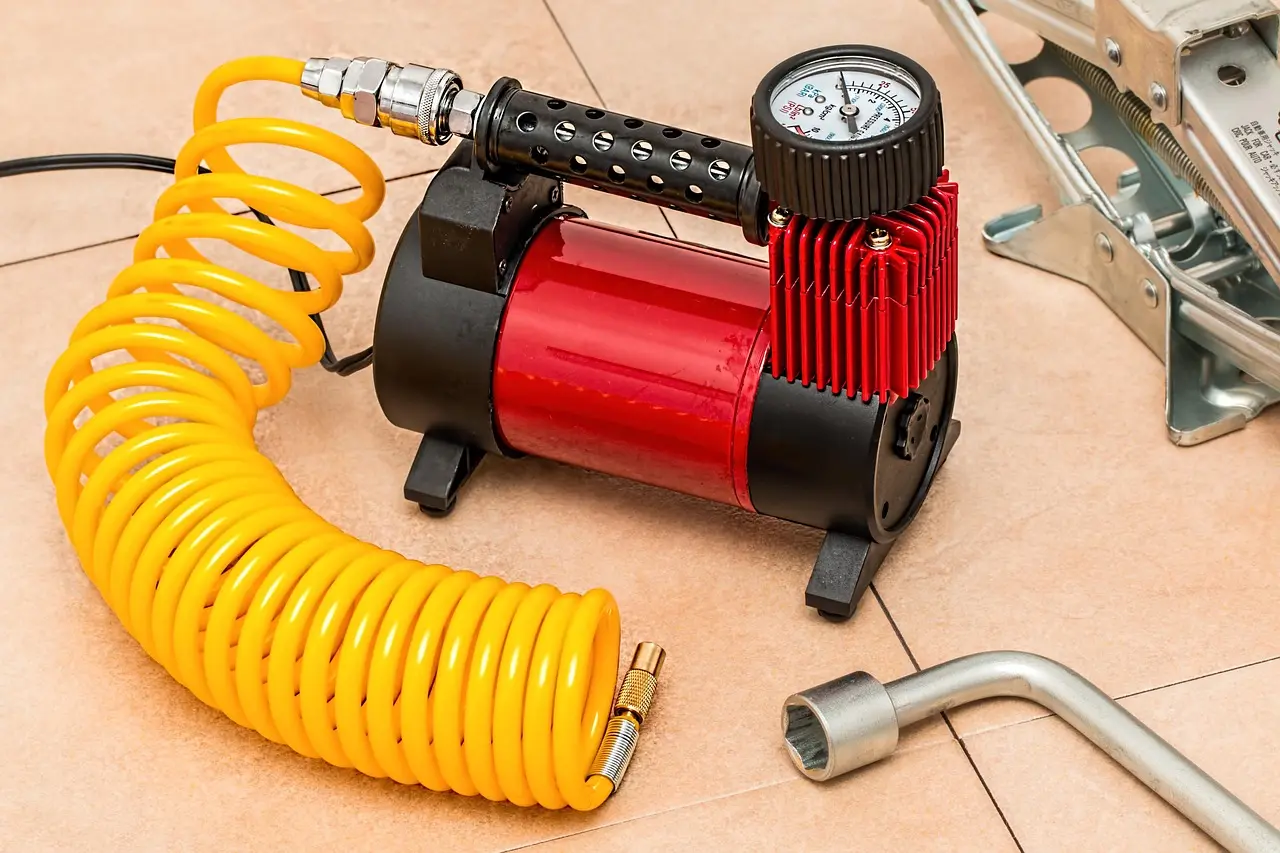
You can check tire pressure at a gas station with the hose gauge that comes with the compressor, or with your own handheld gauge before you add air. Remove the valve cap, press the gauge or chuck squarely onto the valve stem, and read the PSI before inflating. Check all four tires, and the spare if the owner manual says to do so. On station compressors with coin or card payment, the air often begins in preset bursts, so a quick read before filling helps avoid overshoot.
Using a built-in hose gauge
Many station compressors have a gauge built into the hose or chuck. Press it firmly onto the valve stem until you hear a brief hiss stop and the reading settle. If the hose only shows pressure while air is flowing, tap the chuck on, then release and read the value. On some machines, the display lags slightly after the chuck is removed, so waiting a second before reading can give a steadier number.
Using a separate handheld gauge first
If the station gauge is hard to read or seems unreliable, use your own tire pressure gauge first. A digital gauge or an analog pencil-style gauge can give a quick PSI number before you touch the compressor. Then use the station air only to correct the difference. Pencil gauges can be slightly harder to read in poor lighting, while digital gauges often show a clearer number on a dim forecourt.
Checking all four tires and the spare
Check each road tire individually, and check the compact spare if the manual says to do so. Do not assume the same reading applies to the rest, because temperature, wear, and small leaks can vary by corner. If the vehicle has a compact spare and the manual calls for checking it, read that tire too.
Suppose the front right tire reads 29 psi and the placard calls for 35 psi cold. Add air in small bursts, then recheck. If the rear tires are already at 33 psi and 34 psi, leave them alone rather than “rounding them up” by habit.
How do you fill tire pressure without overshooting?
Add air in short bursts, then recheck the PSI after each burst. That is the safest way to avoid overshooting, especially when the station compressor only moves in coarse increments. If you go past the target, let a little air out at the valve stem and check again. This approach matters even more on preset compressors, where the machine may not stop exactly where you expect.
Add air in short bursts
Hold the air chuck on the valve stem for a second or two, then stop and read the pressure. A small burst is easier to control than one long fill. This matters most when the compressor kicks air in fixed jumps or the hose gauge lags.
Recheck after each burst
Do not guess from sound alone. The only useful number is the PSI on the gauge. Repeat the check until the tire is within 1–2 psi of the placard target, then stop. That small buffer is usually enough for a gas-station fill.
How to let air out if you overshoot
If you overshoot, press the center pin in the valve stem briefly with the gauge tip or a small tool if available, then read again. Let out only a little air at a time. Replace the valve cap after you finish so dirt and moisture stay out of the stem.
What if the air machine is hard to use?
Station compressors can be awkward, especially when the hose is short, the gauge is dim, or the machine only offers preset PSI steps. If the built-in setup is a problem, use a handheld gauge first, park differently if possible, or move to another station rather than guessing at the pressure. Gas-station air pumps can also vary a lot: some are free, some are coin or card operated, and some shut off automatically at a preset pressure.
Short hose or awkward parking angle
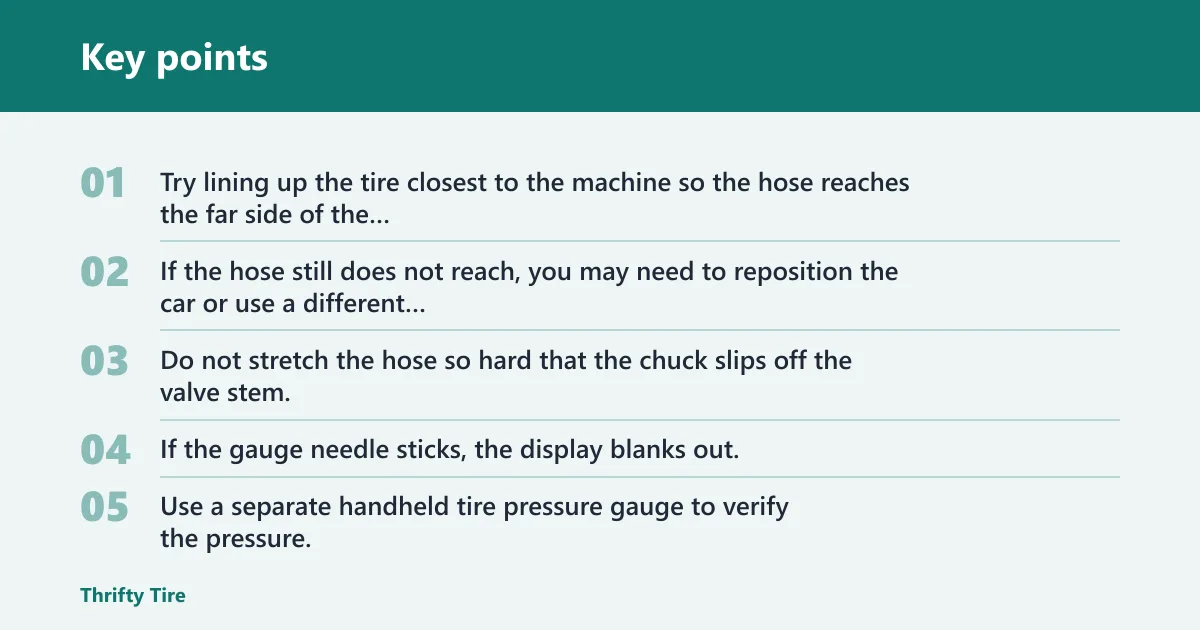
Try lining up the tire closest to the machine so the hose reaches the far side of the vehicle. If the hose still does not reach, you may need to reposition the car or use a different compressor. Do not stretch the hose so hard that the chuck slips off the valve stem.
Broken, inaccurate, or hard-to-read gauge
If the gauge needle sticks, the display blanks out, or the markings are too small to read, stop relying on it. Use a separate handheld tire pressure gauge to verify the pressure. A clearly readable tool beats a questionable station gauge. If a TPMS warning light remains on after inflation, that can mean the system has not yet reset, or that a sensor, puncture, or slow leak still needs attention.
Preset PSI limits and no-gauge compressors
Some compressors shut off at preset values or have no useful gauge at all. That makes exact tuning harder, but not impossible. Add a short burst, then check with your own gauge. If you do not have one, you may need another station.
| Station problem | What it looks like | Best move |
|---|---|---|
| Short hose | Chuck cannot reach the valve stem without strain | Reposition the car or use another air machine |
| Inaccurate gauge | Needle jumps, display is unreadable, or readings change wildly | Verify with your own handheld gauge |
| Preset compressor | Machine only stops at a set PSI or adds air in large steps | Add brief bursts and recheck often |
| Broken hose or chuck | Air leaks audibly or the chuck will not hold the stem | Move to another station or machine |
A common first-timer mistake is trusting the station gauge after a long drive, then stopping at what looks like the right number. The tire may still be warm, the hose gauge may lag, and the result can end up a few psi off. A handheld gauge removes some of that uncertainty.
Frequently asked questions
Can you check tire pressure at a gas station?
Yes. Most gas stations have an air compressor with a hose gauge, and many drivers use one to check pressure before adding air. For best results, compare the reading to the vehicle’s placard PSI on a cold tire, not the tire sidewall’s maximum rating.
How do you know what PSI to set on your tires?
Use the tire pressure placard on the driver door jamb. It lists the correct cold PSI for the front and rear tires, and those values can differ. Do not use the tire sidewall max as the everyday setting unless a vehicle-specific manual says otherwise.
Should you check tire pressure before or after driving?
Before driving is better because cold tires give the most accurate reading. If you have already driven to the station, the tire may read slightly higher from heat. You can still check it, but treat the result as less exact and recheck later if needed. NHTSA and most tire manufacturers recommend cold checks because heat changes the pressure.
What if the gas station gauge seems inaccurate?
Stop relying on it and use a separate handheld tire pressure gauge to confirm the PSI. If the station gauge is broken, sticky, or hard to read, the safest move is to verify pressure with your own tool and use the compressor only for small corrections.
Can you check tire pressure at a gas station in Canada or the USA?
Yes. The workflow is the same in both places: use the vehicle placard, check cold tire PSI, and add air in short bursts. Gas stations may call the stop a gas station or a petrol station, but the tire pressure steps do not change.
Why might the TPMS light stay on after you inflate the tires?
It can take a short drive for the system to update, especially after the pressure has been corrected from a low level. If the light stays on after a brief drive, recheck the PSI with a gauge and inspect for a puncture, damaged valve stem, or sensor issue. If the tire is still low, the problem is not the warning light; it is the air loss itself.
What if you suspect a slow leak?
If one tire keeps dropping again after a proper fill, the most likely next step is leak hunting rather than more air. Check the tread for a nail, look at the valve stem, and watch whether one wheel loses pressure faster than the others. For a step-by-step diagnostic path, see finding a slow leak.