Why Do My Brakes Make Noise While Driving Without Braking?
Brake noise while driving with the pedal released usually comes from worn pads, a bent dust shield, a sticking caliper, a wheel bearing, or debris near the rotor. If the sound is grinding, gets louder fast, or changes with speed, inspect it soon. Let a small brake fault slide, and it can damage the rotor, wear tires unevenly, and create a safety issue. Use this guide to separate harmless brake sounds from urgent failures and non-brake lookalikes with driver-safe checks.
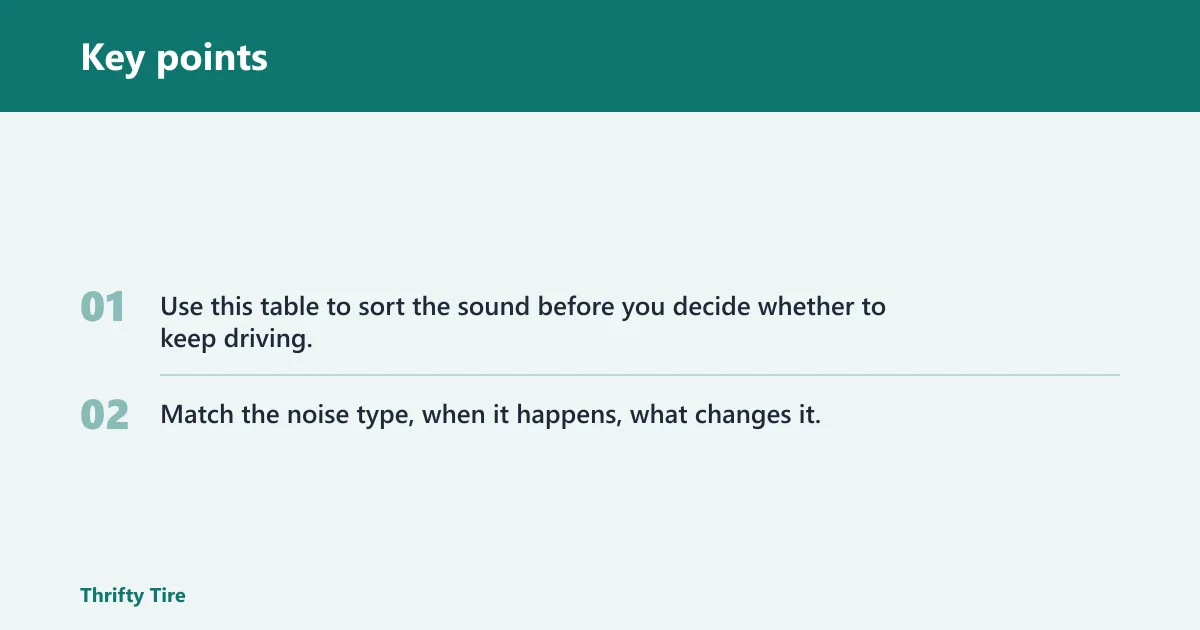
Brake noise triage table
Use this table to sort the sound before you decide whether to keep driving, book service soon, or stop and inspect. Match the noise type, when it happens, what changes it, and whether the car pulls or vibrates.
| Noise type | Driving condition | Most likely cause | What changes the sound | Safe to drive? | Urgency | Next action |
|---|---|---|---|---|---|---|
| Squeak or light squeal | First start after rain, washing, or a damp night; fades after a few stops | Temporary rotor moisture or light surface rust | Usually fades with a few normal stops and dry weather | Usually yes, if it clears quickly and braking feel is normal | Monitor briefly | Drive normally for a short trip. If it clears quickly, no immediate repair may be needed. |
| Squeak, chirp, or scrape | Coasting at low speed; changes when turning or lightly braking | Worn brake pads, brake wear indicator, or hardware noise | Often changes with light brake pressure, steering input, or bumps | Maybe for a short trip; not ideal to postpone | Soon | Schedule brake inspection. Pad wear can progress into rotor damage. |
| Grinding | Any speed; often worse with speed or when braking lightly | Pads worn down, metal contact, or debris caught in the brake area | Usually gets louder with vehicle speed and may change under light braking | No, if it is persistent or getting worse | Urgent | Have the brakes inspected as soon as possible. Grinding can mean the pad material may be gone. |
| Single-side squeal, pull, or heat smell | While cruising or after a drive | Sticking or jammed caliper | May get worse after a longer drive and may not change much with gentle braking | No, if the wheel is hot, the car pulls hard, or smell is strong | Urgent | Do not ignore it. A caliper that sticks can keep a brake partly applied. |
| Squeak, growl, or screech that changes with speed | Not tied to brake pedal use; may change when turning | Wheel bearing wear | Often changes with steering load, lane changes, or speed | Use caution; avoid long trips until checked | Soon to urgent | Inspect promptly. A bearing noise can sometimes mimic brake noise and may worsen quickly. |
| Squeak over bumps or during steering input | More noticeable on rough roads or in parking lots | Ball joints, bushings, or other suspension parts | Mostly changes with bumps, body roll, or steering angle | Often yes for a short trip if braking is normal | Soon | Book a suspension check. The brakes may not be the source. |
| Random tick, click, or scrape | After driving through gravel, snow, debris, or a rough shoulder | Small stone, acorn, tree limb, or similar debris near the rotor or shield | May change with wheel rotation, bumps, or when a trapped object shifts | Maybe, if the noise is light and braking is normal | Monitor or soon | Look for obvious debris from outside the wheel area. If the sound persists, have it inspected. |
Why do my brakes make noise while driving?
Brake noise can happen while driving even without pedal input. The sound may come from pad wear, rotor surface rust, brake hardware, a sticking caliper, or something touching near the wheel. Speed, road load, turning, and temperature can change the sound.
How the sound changes matters
A noise that rises with vehicle speed points toward parts that rotate with the wheel, including pads, rotors, bearings, or debris near the brake. A noise that changes when you steer or hit bumps often points away from the brake pads and toward suspension or wheel bearing parts. If the sound disappears the moment you apply the brakes lightly, that detail matters too, because it can point to pad vibration or a rotor surface issue.
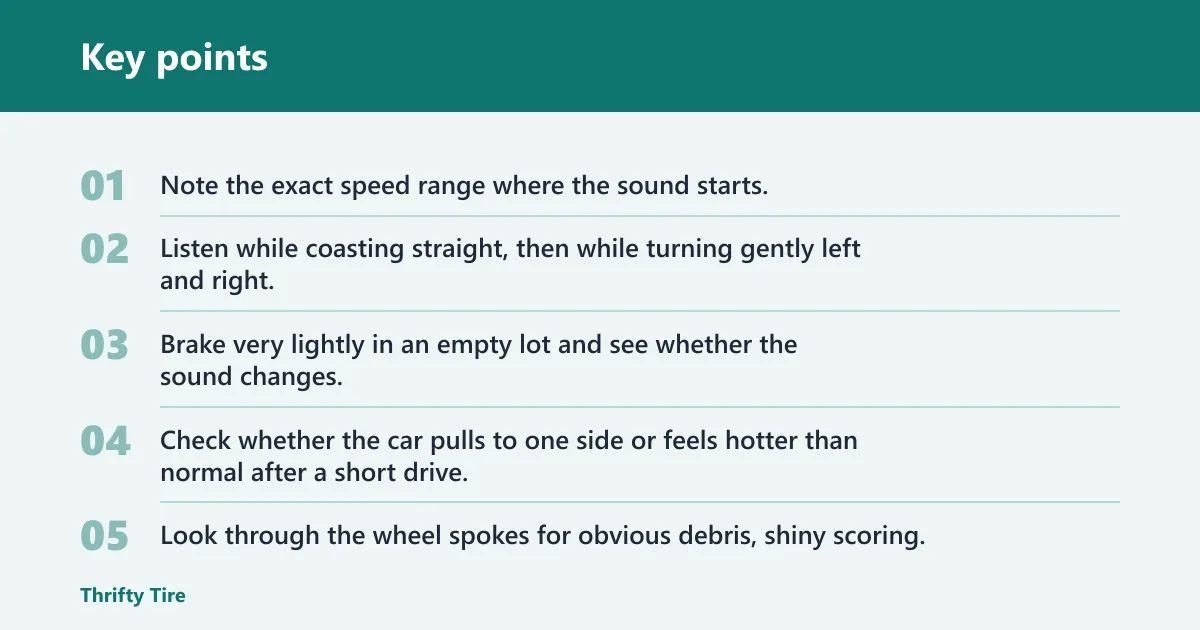
Simple driver-safe checks
- Note the exact speed range where the sound starts.
- Listen while coasting straight, then while turning gently left and right.
- Brake very lightly in an empty lot and see whether the sound changes.
- Check whether the car pulls to one side or feels hotter than normal after a short drive.
- Look through the wheel spokes for obvious debris, shiny scoring, or heavy rust on the rotor edge.
Front versus rear clues
Front brake noises are often easier to hear because front wheel wells sit closer to the driver. Front issues also tend to show up during steering or weight shift. Rear brake or rear bearing noises may seem to come from the middle or one side of the car, which can make them harder to place. A noise from one corner, plus a pull or heat from that wheel, is more concerning than a noise that is equal on both sides.
Worn pads and wear indicators
Worn brake pads can make noise even when you are not pressing the pedal. The brake wear indicator is a small metal tab or clamp found on many pads, and it is meant to signal pad wear by making a squeal when the pads get low. Pad material also affects how loud the brakes are, and some ceramic brake pads can be noisy on metal rotors. OEM service guidance generally treats a pad-thickness warning as a service item rather than a normal sound.
What worn pads often sound like
Worn pads often start with a chirp or high squeak that shows up at low speed, then becomes more frequent. As the friction material gets thinner, the sound can turn into scraping. If the pad is down to the wear indicator, the metal tab may create a steady squeal while cruising. That noise is a warning, not normal wear.
Why pad type and fit matter
Pad material changes how much vibration turns into noise. Ceramic, semi-metallic, and other compound types can sound different under the same conditions. Fitment matters too. If a pad sits loosely in the bracket, it can chatter or squeak on bumps or during light throttle. Anti-rattle pins and shims are used to reduce that movement, and missing, corroded, or dry hardware can bring the noise back.
Suppose a sedan starts chirping at 20 to 30 mph after new pads were installed, but the sound fades on the first stop after a wet morning. That may point to pad hardware or surface moisture rather than a major fault. If the same chirp grows into grinding a week later, the problem has changed and needs inspection.
Could a stuck caliper cause brake noise while driving?
Yes. A jammed caliper is a major cause of squeaking noise while driving, and a stuck caliper can keep the brakes activated even without pressing the pedal. That extra friction can cause heat, pull to one side, drag, and a smell from one wheel. It is more urgent than simple pad squeak. Brake manufacturers and service manuals warn that dragging brakes can overheat components quickly.
What a sticking caliper feels like
A caliper that does not release fully may make one wheel feel hotter than the others after a short drive. The car may pull left or right, and fuel economy can drop because the brake is dragging. The noise may start as a squeak and move toward scraping or a constant rubbing sound. If the sound is one-sided and the steering wheel feels off-center, the caliper moves higher on the list.
When to stop driving
Stop driving if the wheel smells hot, the car pulls hard, or the noise becomes a steady grind. That pattern can mean the brake is staying partly applied. A dragging brake can damage the rotor and pads fast, and in severe cases it can overheat the wheel area. NHTSA advises prompt attention to brake problems that reduce stopping performance or create abnormal heat.
Rotor rust, grooves, and glaze
Moisture can leave temporary rotor rust, and that thin rust layer can make squeaking after rain, washing, or a humid overnight park. grooved rotors may contribute to squeaking in some cases, especially if pad material is already uneven or damaged, and glazed surfaces can add a hard, polished noise. The rotor can be checked for visible scoring, heavy rust ridges, or blue heat marks.
What is normal after moisture?
A brief squeak after rain is common if the car sits parked for several hours. Light surface rust usually wipes off after a few brake applications. If the noise fades quickly and braking feel stays normal, that is usually less urgent than a sound that persists for the whole drive.
What points to rotor damage
Grooves, rough edges, and a shiny glazed surface can all create friction noise or vibration. If the brake pedal pulses, the steering wheel shudders, or the car feels like it is dragging, the rotor may be damaged or uneven. That does not always mean replacement alone; worn pads, pad material, or caliper issues may be the real source and can damage the rotor again if ignored.
Can rocks or sticks get trapped in my brakes?
Yes. A tiny rock, acorn, or tree limb may get lodged in the tire area near the rotor or splash shield, and that can make a ticking, scraping, or chirping sound while driving. Debris noise often changes with turning, bumps, or speed changes because the trapped object shifts position.
Safe checks before a shop visit
- Park on level ground and inspect the visible wheel area with the car off.
- Look for a bent dust shield, a twig, a stone, or fresh scrape marks near the rotor edge.
- Roll the car a short distance and listen for changes.
- If the noise appears only after gravel or off-road travel, debris rises on the list.
A common first-timer mistake is to assume every scrape means a bad brake rotor. If the sound started right after a dirt shoulder, the first suspect may be a stone caught between the shield and rotor, not a failed brake part. If the sound persists after the debris is gone, the brake still needs inspection.
Other noises that sound like brake noise
Wheel bearings, suspension parts, and even tire-related noises can sound like brake noise from the driver’s seat. Wheel bearings can create squeaking or screeching-type noise, and worn bearings often change with speed or turning. Suspension parts such as ball joints and bushings can squeak over bumps and make the front end sound brake-related.
How to separate the lookalikes
If the sound changes most during steering input, think wheel bearing or suspension before the brakes. If it shows up mainly on rough roads, a bushing or ball joint may be the source. If it changes when you lightly apply the brakes, brake pads, rotors, or hardware move higher on the list. Tire noise usually sounds more like a steady hum or roar, not a metal squeak.
After recent brake work
If the noise started after a pad or rotor service, missing lubrication, dry anti-rattle pins, or incorrect hardware fit may be part of the problem. Anti-seize lubricant belongs only on the contact points specified by the service procedure, such as backing-plate or pad-hardware contact points where the manufacturer allows it, never on friction surfaces. In that case, the issue may be a setup problem rather than a worn-out component.
When to seek a mechanic
Seek service soon if the sound lasts beyond a brief damp-weather squeak, if it returns every drive, or if it changes with speed, steering, or light braking. Stop driving and get help quickly if the noise turns into grinding, the car pulls hard, the wheel feels hot, or braking feel changes. A mechanic should inspect the problem if it persists.
Repair scope and likely cost range
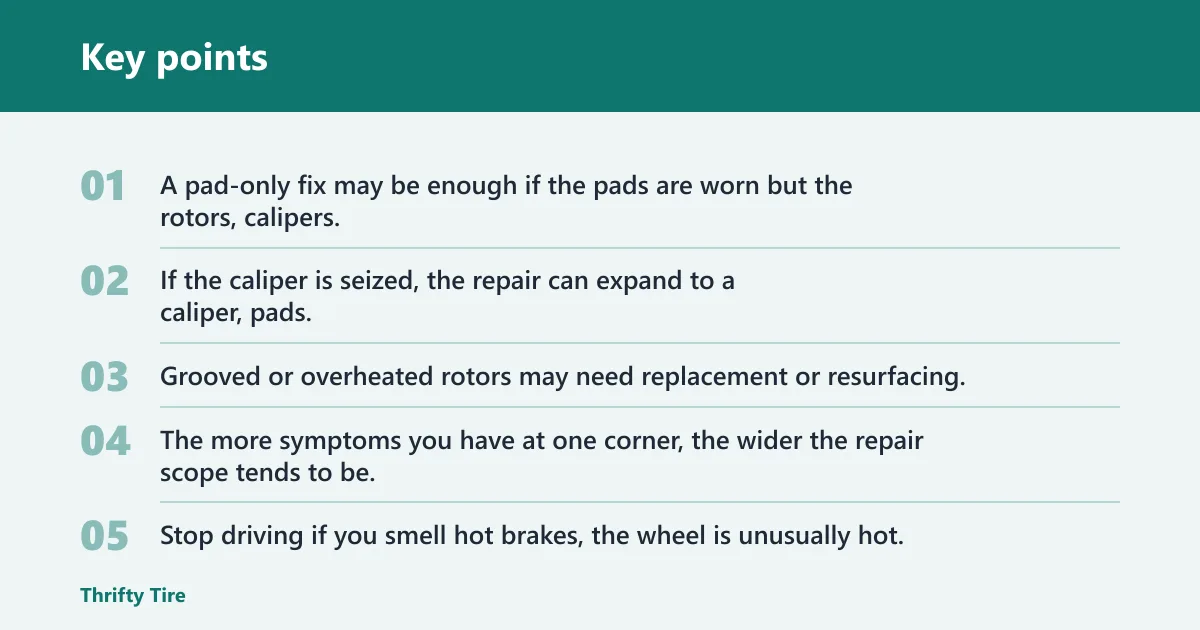
A pad-only fix may be enough if the pads are worn but the rotors, calipers, and hardware are still in good shape. If the caliper is seized, the repair can expand to a caliper, pads, and fluid-related service. Grooved or overheated rotors may need replacement or resurfacing, and missing hardware or anti-rattle pieces may also need attention. The more symptoms you have at one corner, the wider the repair scope tends to be.
Stop driving now
Stop driving if you smell hot brakes, the wheel is unusually hot, the car pulls hard to one side, the noise becomes grinding, or the brake pedal feel changes suddenly. These symptoms can point to a dragging caliper, metal-to-metal contact, or heat damage that can worsen quickly.
Book service soon
Book service soon if the sound is a repeatable squeak, chirp, or scrape that lasts beyond damp-weather startup, changes with speed, or appears during light braking. These patterns often point to worn pads, hardware noise, surface rust that is not clearing, or a rotor issue that should be checked before it becomes expensive.
Frequently asked questions
Why do my brakes make noise while driving without braking?
Brake noise without pedal input often comes from worn pads, rotor rust, a sticking caliper, missing or dry hardware, or debris near the rotor. The key clues are speed, turning, weather, and whether the sound changes when you lightly press the brake. Grinding or a fast-changing noise needs prompt inspection.
What causes squeaking noise while driving but brakes not applied?
Squeaking while coasting can come from pad wear indicators, light pad contact, temporary moisture on the rotor, or a wheel bearing. Suspension parts such as bushings and ball joints can also squeak. If the sound changes with bumps or steering more than with braking, the source may not be the pads.
Can old brake pads make noise even when I’m not pressing the pedal?
Yes. Old brake pads can squeak while driving, especially when the wear indicator starts touching the rotor or when the pad material is thin and vibrating. The sound may begin as a chirp and move toward scraping. Once pads are very worn, rotor damage becomes a real risk.
Can suspension or wheel bearing problems sound like brake noise?
Yes. Wheel bearings can make squeaking or screeching-type noise, and suspension parts like ball joints and bushings can squeak over bumps. These sounds can be mistaken for brake trouble because they come from the wheel area. A noise that changes most with turning or road bumps points in that direction.