How to Check Brake Pads Without Removing the Wheels
Check brake pad thickness through the wheel spokes by looking for about 3 mm of pad material on the inner pad; if it cannot be seen clearly, remove the wheel or have it inspected. Missed wear can score the rotor, lengthen stopping distances, and turn a pad swap into a larger brake repair. This guide shows where to look, what you can trust from the outside, and when a wheel has to come off.
What you’ll need
- Flashlight or phone light
- Level ground
- Parking brake
- Wheel chocks if needed
- Gloves
- Clean rag or paper towel
Can you check brake pads without removing the wheel?
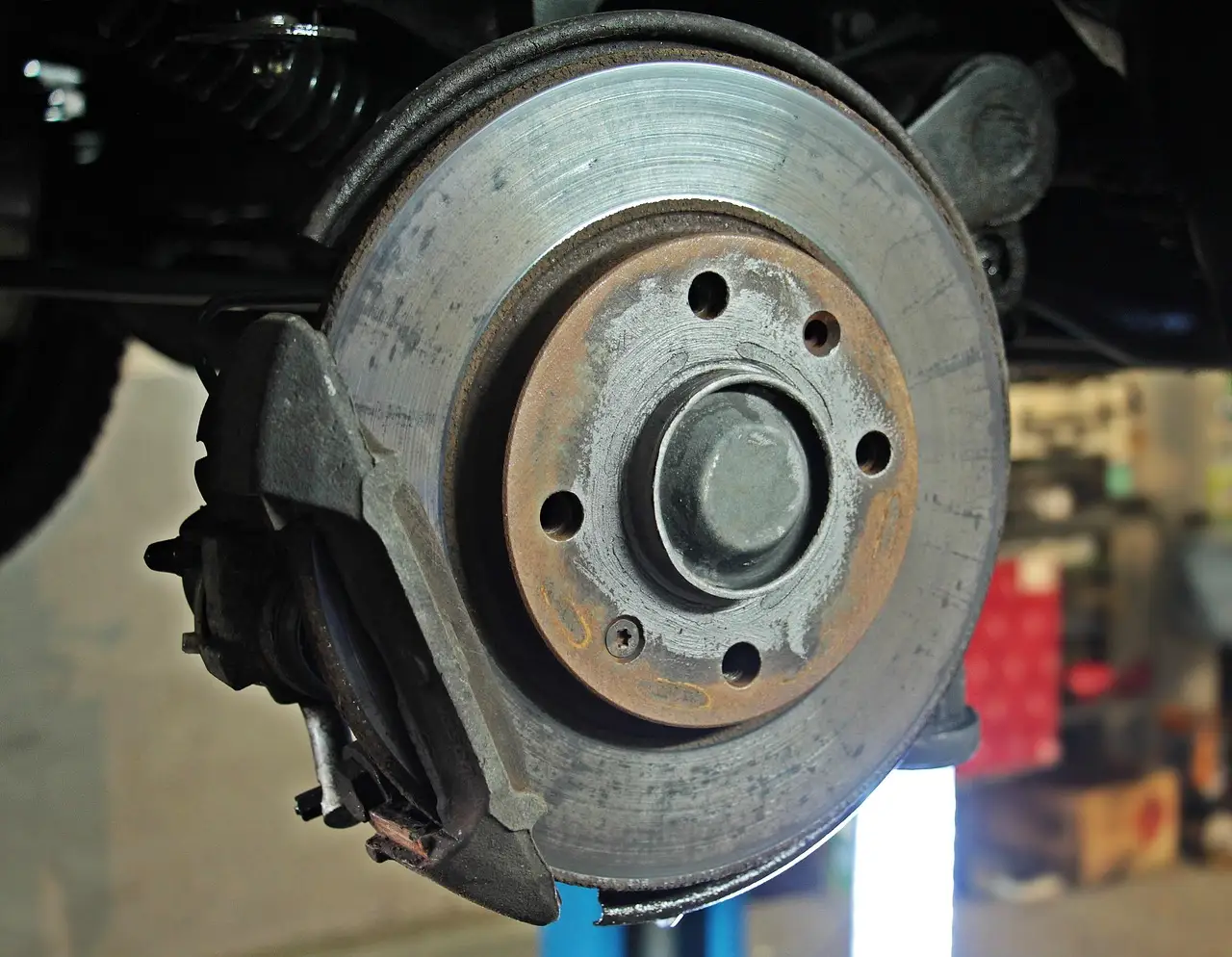
Yes, sometimes. On many cars, enough can be seen through the spokes to confirm that the brake pads still have visible friction material and that the caliper and disc look normal. You usually cannot confirm exact pad thickness from outside, and that matters because the inner pad can wear faster than the outer pad.
What a through-the-spokes check can confirm
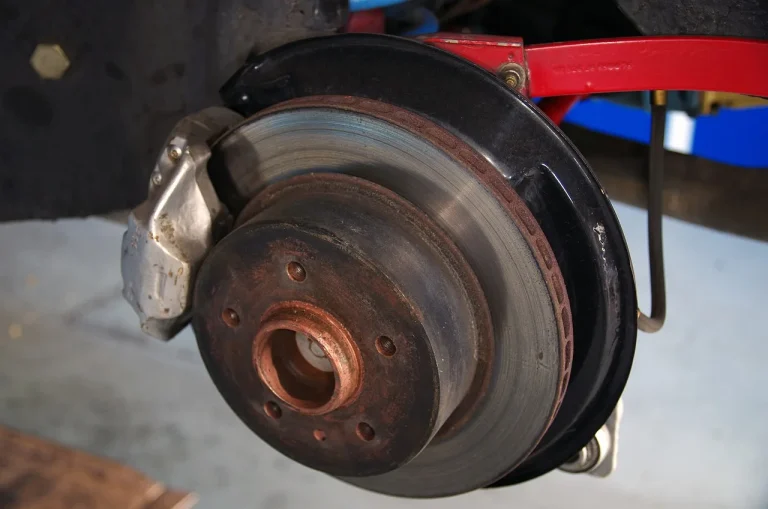
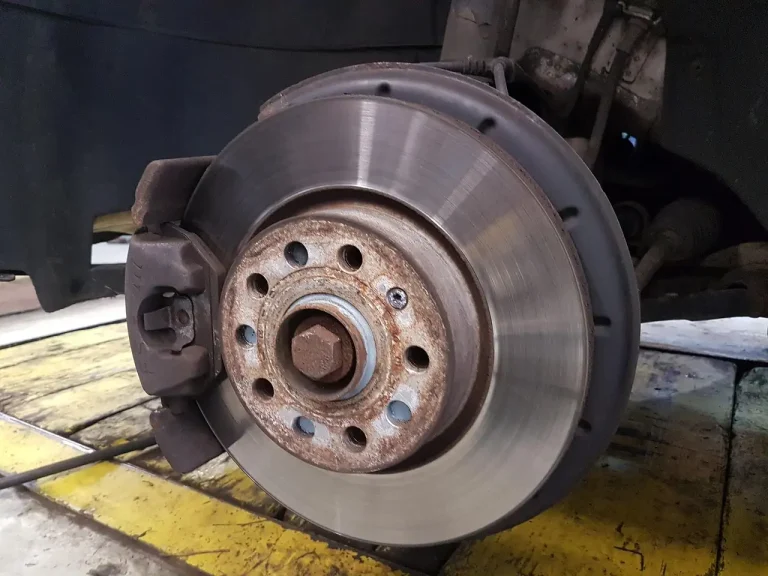
You can often identify the brake disc, brake caliper, and the outer edge of the pad. If the pad material still looks substantial and the rotor is not deeply worn at the edge, the brakes may still have useful life left. That is a screening check, not a measurement.
What it cannot confirm
Through most wheels, pad thickness is not reliably measurable. Dense spokes, small openings, and rear suspension parts can block the view. A dashboard wear light is separate from a visual check; it only means a fitted sensor has reached the electrical contacts.
When the answer is no
If you cannot see the inner pad clearly, if the wheel design blocks the caliper, or if wear looks uneven, stop relying on the outside view. At that point, wheel removal is the safer route for an actual inspection.
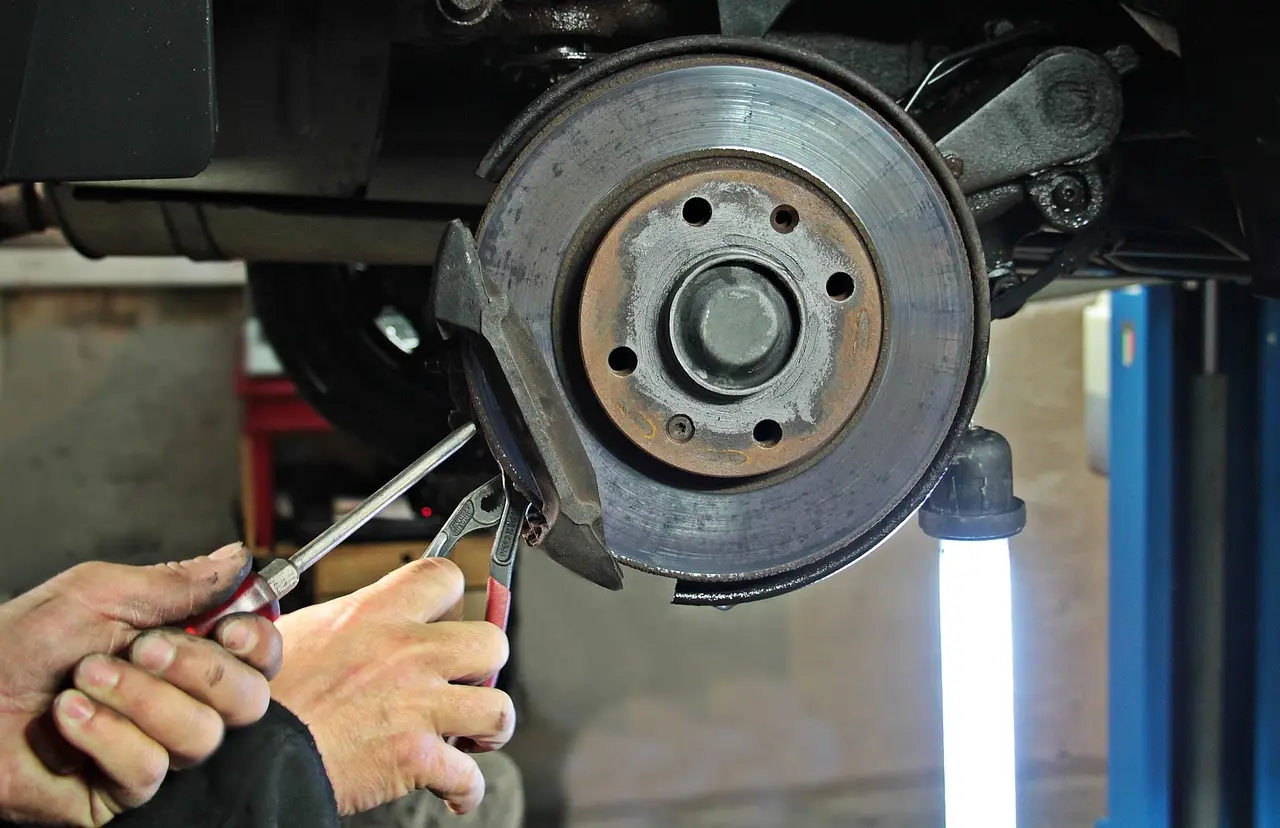
Park on level ground, secure the car, and use a light to look through the spokes. Find the caliper, disc, and pad edge first, then decide whether the view is clear enough to trust. If the wheel design hides the inner pad or the rear caliper, do not guess.
Step-by-step check
- Park on level ground and set the parking brake.
- Chock the wheels if the car could roll.
- Turn the steering wheel for a better front-wheel view if needed.
- Use a flashlight to find the caliper, disc, and pad edge.
- Check the outer pad first, then look for the inner pad through another spoke opening.
- Compare the visible pad material with the backing plate; if the material is thin or hard to see, plan for wheel removal.
Say your front wheel has large open spokes and the pad material is easy to see. You may be able to confirm that the outer and inner pads still have visible friction material. Suppose the rear wheel has a tight five-spoke pattern and the caliper sits behind a suspension arm. The same check becomes unreliable because the hidden pad cannot be judged from the outside.
How do you know what you are seeing?
Look for three things: the friction material, the backing plate behind it, and any wear lip at the disc edge. The friction material is the part that wears down over time. The backing plate is metal. If the material looks close to the plate, the pad is nearing its limit.
Friction material versus backing plate
The friction layer is usually darker and thicker than the backing plate. If only a thin strip of material remains, the pad is near replacement territory. Exact thresholds are vehicle-specific, so a quick look through the spokes is only a rough screen.
Wear lip on the rotor
A small edge ridge on the brake disc can hint at pad wear, but it does not measure pad thickness. Discs are paired with pads and calipers, and disc condition can be different from pad condition. Do not use rotor shine or a lip as a substitute for seeing the pads.
Uneven wear and the inner pad
The inner pad can be more worn than the outer pad because caliper pistons push from one side. That is why checking only the outside edge can miss a problem. If one side looks thin or uneven, remove the wheel for a better view.
Why a wear sensor light is different
Some cars have a brake pad wear sensor. The warning depends on brake material wearing away until it contacts electrical points. Not all cars have one, and a warning light means only that the sensor circuit has reached its limit, not that a visual inspection was done.
Brake pad check matrix
This matrix shows what a through-the-wheel check can tell you, and where it stops being useful.
| Wheel visibility level | What can be seen externally | What cannot be confirmed externally | Next action |
|---|---|---|---|
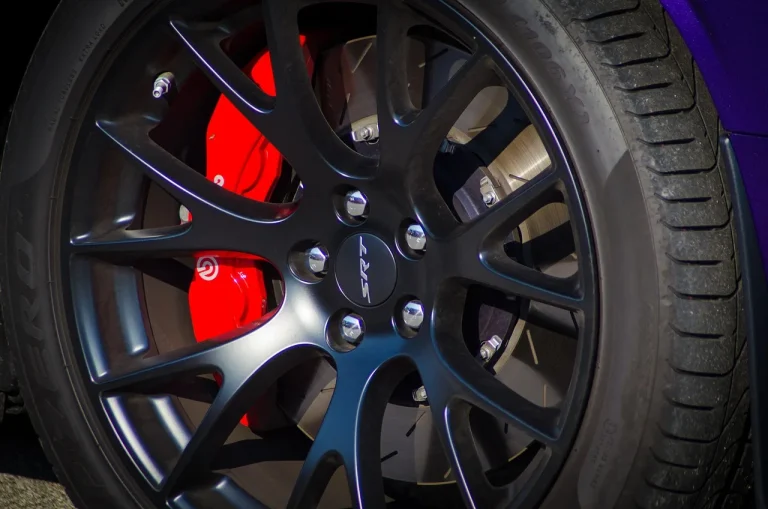
| Open-spoke wheels | Caliper, disc face, outer pad edge, part of the inner pad | Exact pad thickness, full inner-pad wear, backing-plate-to-rotor clearance | Use the view as a screen; remove the wheel if the pad looks thin or uneven |
| Dense-spoke wheels | Only a narrow slice of the caliper or disc edge | Pad thickness, pad wear pattern, inner pad condition | Do not trust the outside view; plan to remove the wheel |
| Rear calipers blocked by suspension components | Partial caliper body, limited disc edge, little or no pad material | Inner pad wear, caliper-side clearance, sensor condition on some layouts | Wheel removal is usually necessary for a real inspection |
When the wheel has to come off
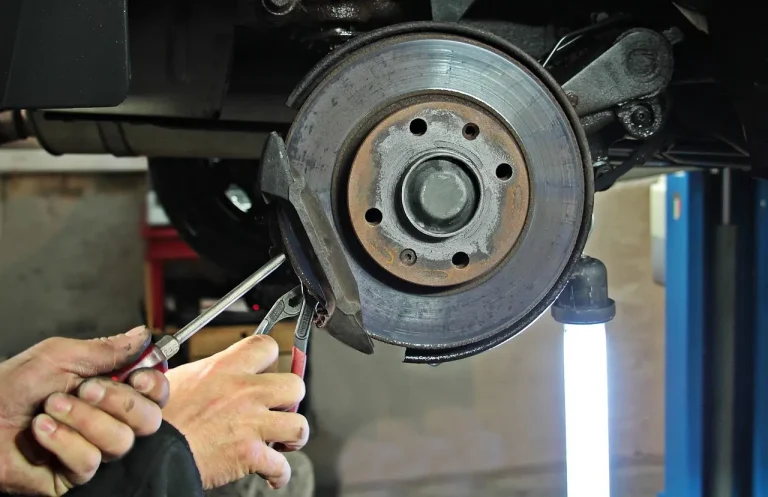
Remove the wheel if the inner pad is not visible, the wheel design blocks the caliper, wear looks uneven, or you need an actual thickness check. Accurate checking usually involves removing the wheels. If you do that, support the car on axle stands; never work on a car supported by a jack alone.
Why wheel removal is the safer call
Wheel spokes are an observation point, not a measuring tool. They limit access and measurement, especially on rear brakes where suspension parts can hide the caliper. If the goal is a real pad measurement, the wheel should come off.
Safe support before removal
Use a jack only to lift the car. Once the wheel is off, place the car on axle stands on solid ground before reaching near the brake assembly. That is the point where a visual check becomes a hands-on inspection.
Common mistakes
Most mistakes come from trusting too little view as if it were a full inspection. A quick look can help, but it is easy to misread what is visible through the spokes.
- Checking only the outer pad. The inner pad can wear more than the outer pad, so both sides matter.
- Confusing rotor wear with pad wear. A lip on the disc does not tell you pad thickness.
- Trusting a dashboard light alone. A wear warning is sensor-based and not all cars have one.
- Using a jack as the only support. A jack alone is not safe for working under a car.
A common first-timer mistake is seeing shiny metal near the disc and assuming the pads are finished. That metal may be the backing plate, the caliper, or just a bad viewing angle. If the material layer is hard to judge through the wheel, remove the wheel instead of guessing.
How to check front brake pads without removing wheel
Front brakes are often easier to inspect because the caliper and disc are more open to view, and turning the steering wheel can expose more of the assembly. Aim a light through the spokes, find the outer pad first, then try to spot the inner pad. If the wheel opening is small, the result is still only a rough check.
On many front setups, you can see enough to rule out obvious trouble. If you cannot see the friction material clearly, do not try to estimate the remaining life from the outside. Remove the wheel for a proper view.
How to check rear brake pads without removing wheel
Rear brake checks are often harder because suspension components can block the caliper and hide the inner pad. You may only get a partial view through the spokes. That means the rear axle is more likely to need wheel removal even when the front axle looks easy to inspect.
If the rear wheel design leaves only a narrow opening, treat the outside look as a warning screen, not a measurement. When the caliper sits behind a control arm or shield, the wheel has to come off for a dependable inspection.
Frequently asked questions
How to check brake pads without taking off the wheel
Park on level ground, shine a light through the spokes, and look for the pad material on both sides of the disc. A visible pad with several millimeters of friction material can pass a basic screen, but a hidden inner pad or blocked caliper means the check is incomplete.
How do you check brake pad thickness without removing the wheel?
You usually cannot measure thickness accurately through most wheels. A rough visual estimate is possible only when the spoke openings are large and the pad edge is exposed. If the view is partial, remove the wheel instead of trying to guess a number.