How Do Brake Pads Work on a Car?
A brake pad is the friction material a caliper clamps against a rotor. When you press the pedal, hydraulic pressure helps multiply force, and the pads slow the wheel by turning motion into heat. If pads wear unevenly or hardware sticks, stopping distance grows, and you can get squeal, vibration, or rotor damage. This guide explains the clamp system, pad movement, wear indicators, and the noises that matter.
Brake pad function map
| Component | Job | What happens when it fails | Driver symptom |
|---|---|---|---|
| Brake pad | Friction material inside the caliper that presses against the rotor to slow the wheel | It wears down, overheats, or becomes uneven; metal backing can contact the disc | Squeal, longer stops, grinding, vibration |
| Caliper | Houses the pads and pistons; hydraulically actuated to squeeze the pads toward the disc | Sticking slides or pistons keep the pad from moving evenly | Pulling to one side, drag, hot wheel, uneven wear |
| Rotor / brake disc | Spinning disc surface the pads clamp against on both sides | It can wear, score, or warp from heat and pad contact | Pulsation, noise, reduced smooth braking |
| Piston | Uses hydraulic pressure to push the pads into the rotor | If it sticks or leaks, clamp force drops or stays applied | Soft pedal, dragging brake, uneven braking |
| Clips / hardware | Hold pads squarely in place and control small movement in the bracket | Rust, bent clips, or missing springs let pads rattle or stick | Rattle over bumps, squeal, uneven pad wear |
| Brake fluid | Transmits pedal force through pressurized lines to the caliper pistons | Low fluid can point to pad wear or leakage; contamination can reduce performance | Low-fluid warning, soft pedal, poor braking feel |
| Master cylinder | Converts pedal movement to hydraulic pressure and pushes fluid through the system | Internal wear or leaks prevent full pressure buildup | Sinking pedal, weak braking, fluid loss |
| Wear indicator | Audible tab or sensor that warns when pad thickness reaches a set limit | The tab squeals on the rotor or the sensor triggers a warning light | High-pitched squeal, dashboard brake warning light |
Front vs rear: Front brake pads usually do more work and wear faster because the front axle carries more braking load during stops. Rear pads still matter, but they often last longer and may use different pad shapes or wear sensors.
What do brake pads do?
Brake pads press on the rotor and create the friction that slows the wheel. They sit in the caliper, and when hydraulic pressure moves the pistons, the pads clamp the rotor on both sides. That contact converts rotating energy into heat, which is how the car slows down.
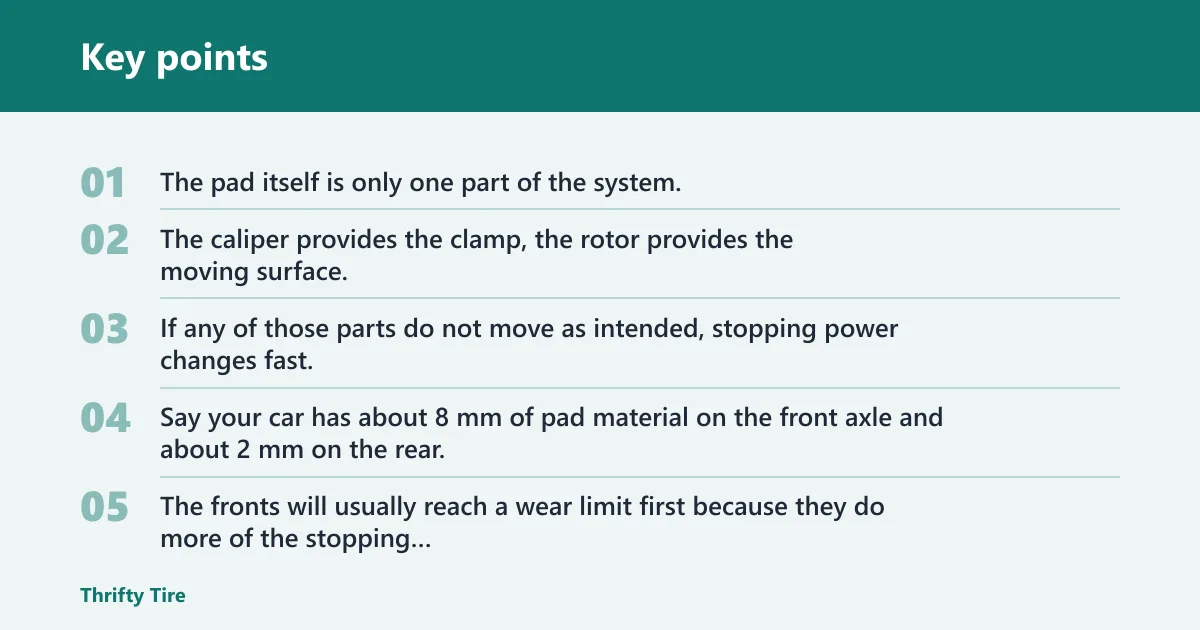
The pad itself is only one part of the system. The caliper provides the clamp, the rotor provides the moving surface, and the fluid carries force from the pedal to the pistons. If any of those parts do not move as intended, stopping power changes fast.
Say your car has about 8 mm of pad material on the front axle and about 2 mm on the rear, which would generally mean the fronts reach the wear limit first. The fronts will usually reach a wear limit first because they do more of the stopping work, especially in harder braking or stop-and-go traffic.
Why pads wear down
Every stop removes a little material. Heat, pressure, and road grit all contribute, and the pad is built to wear instead of the rotor. That is why brake pads are replaced on a schedule based on thickness, noise, and condition rather than waiting for a failure.
Uneven wear often points to a sticky caliper, bent hardware, or a pad that cannot slide cleanly in its bracket. In that case, one edge may wear faster than the rest, which can create noise and shorten rotor life.
How do brake pads and rotors work?
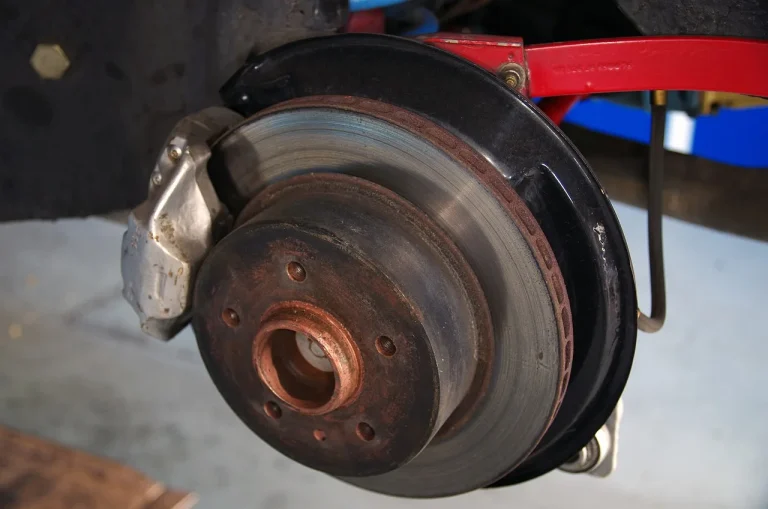
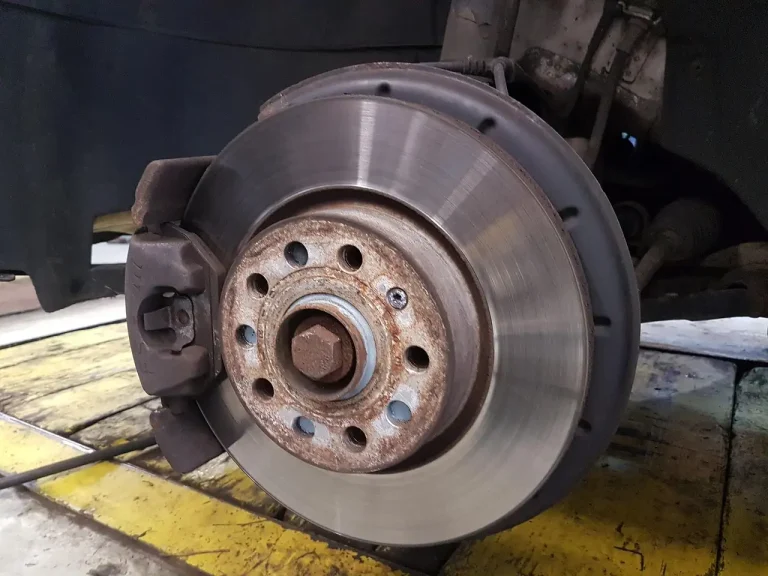
Brake pads and rotors work as a pair. The rotor is the spinning disc, and the caliper clamps pads on both sides of it. That squeeze creates friction, and friction turns motion into heat. FixMyCar notes that the caliper squeezes the pad against the rotating disc to slow the vehicle.
The rotor surface matters because the pad is pressing on metal that is moving at wheel speed. If the rotor is worn, scored, or warped, the pad cannot contact it evenly. That can lead to vibration, reduced smoothness, and faster pad wear.
Vented and solid discs
Rotors can be vented or solid. Vented discs have internal gaps that help shed heat, and they are usually used at the front because braking forces are higher there. Solid discs are simpler and are often used where heat demand is lower.
Heat is part of every stop. A brake system that sees repeated hard use can build enough heat to glaze pads or mark the rotor. That is why pad material, rotor condition, and airflow all matter to real stopping feel.
What holds the brake pads in place?
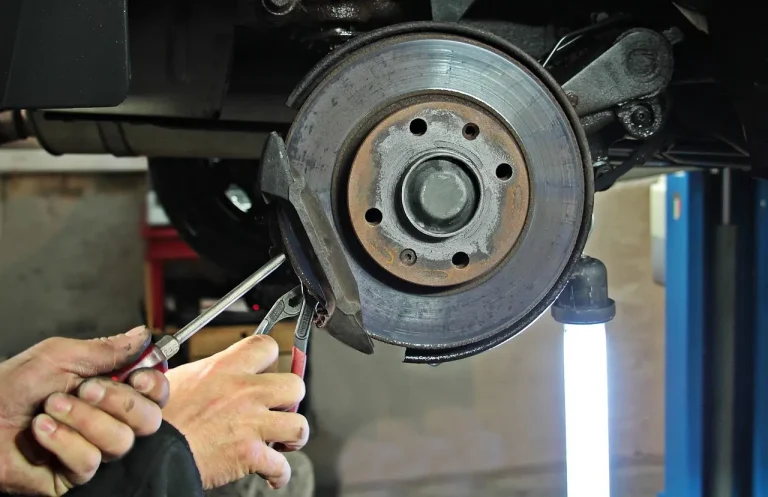
The pads sit in the caliper bracket, and the caliper body and hardware keep them aligned. Clips, shims, and springs hold the pads squarely so they can move a small amount without rattling. They also help control noise and prevent the pad from binding in the bracket.
Brake pads are not supposed to flop around. They need enough freedom to slide when the piston pushes them, but not so much play that they chatter or sit crooked. That balance is what the hardware is for.
Why hardware matters
Missing or rusty clips can change how the pad contacts the rotor. If a pad hangs up, it may stay too close to the disc, generate heat, and wear unevenly. If it moves too loosely, it may squeak or clunk over bumps.
A common first-timer mistake is replacing only the pad material and reusing bent hardware. The brakes may still stop the car, but the noise and drag can return quickly because the pad cannot move the way the system expects.
How hydraulic pressure moves the pads
Pressing the pedal sends force to the master cylinder, which converts pedal movement into hydraulic pressure. Brake fluid then travels through pressurized lines to the caliper pistons. Golden Triangle Auto Care notes that brake fluid is incompressible and helps brakes work, and pressing the pedal pushes the fluid onto the pistons.
The servo, also called power assist, reduces the pedal effort you need. It uses vacuum or hydraulic assistance so the driver does not have to press as hard to build useful braking force.
From pedal to clamp
The sequence is simple. Pedal movement becomes hydraulic pressure, the fluid carries that pressure, the piston moves, and the pad clamps the rotor. When the seal, fluid, or piston movement is off, the clamp force drops or becomes uneven.
Brake fluid level can also hint at pad wear. As pads thin, the pistons sit farther out in the caliper, and the fluid level in the reservoir may fall. A low level can also point to a leak, so it is worth checking the rest of the system instead of topping off and moving on.
- Press the pedal.
- The master cylinder builds hydraulic pressure.
- Brake fluid sends that pressure through the lines.
- The caliper piston moves outward.
- The pads clamp the rotor on both sides.
- Friction slows the wheel and the car.
Why front pads usually wear faster
Front brake pads usually wear faster because most cars shift weight forward when stopping. That weight transfer increases the front axle’s share of the braking load. AutoEducation says most cars have disc brakes on the front wheels, and vented discs are usually used there because braking forces are higher.
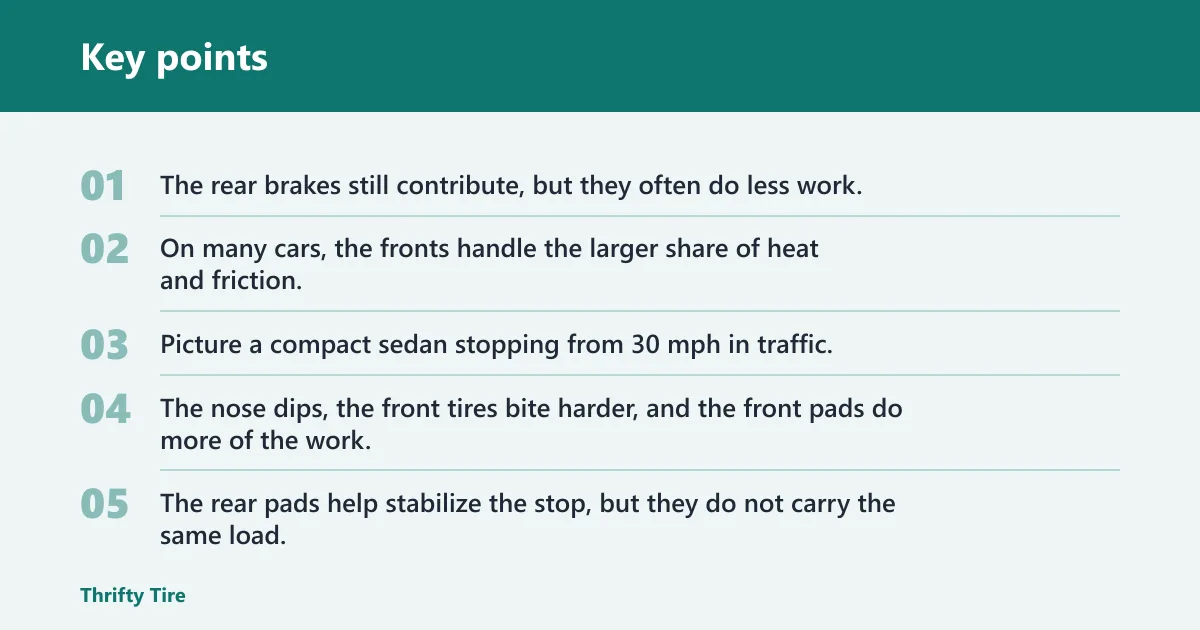
The rear brakes still contribute, but they often do less work. On many cars, the fronts handle the larger share of heat and friction, so they reach replacement thickness sooner.
Picture a compact sedan stopping from 30 mph in traffic. The nose dips, the front tires bite harder, and the front pads do more of the work. The rear pads help stabilize the stop, but they do not carry the same load.
What warning signs point to worn pads?
Wear often starts with sound. The same source says a metal tab can vibrate against the rotor when pads are worn down dangerously, and some cars have a dashboard light that comes on when pads reach a set limit. Those are different warnings, and either one deserves attention.
Grinding is more serious. AutoEducation warns that grinding usually means metal-to-metal contact with the rotor, which can damage the disc and raise repair costs. Squeal is an early warning; grind means the pad material is likely gone or nearly gone.
Common symptoms to watch
Look for a high-pitched squeal during light braking, a pedal that feels longer or softer than usual, vibration through the pedal, or the car pulling to one side. Low fluid may appear at the same time if the pads are worn far enough for the pistons to move outward more than usual.
Suppose the left front pad is worn to the tab and the right front pad still has usable material. The car may still stop, but the noise will come from one corner, and the rotor on that side can suffer faster wear if the issue is ignored.
Are brake pads the same as brakes?
No. Brake pads are one part of the brake system, and they are the friction part inside the caliper. The full brake system also includes the pedal, master cylinder, fluid, servo, caliper, rotor, and hardware. Pads do the gripping, but they do not work alone.
That distinction matters because a stopping problem is not always a pad problem. A weak pedal can point to fluid, a master cylinder issue, or air in the system. A vibration can point to the rotor. A pull can point to a caliper or hardware issue.
Frequently asked questions
How do brake pads work on a car?
Brake pads work by clamping against the rotor when hydraulic pressure pushes the caliper pistons. The pad material creates friction, and that friction turns wheel motion into heat. The result is a slower wheel and, by extension, a slower car.
What are brake pads made of?
Brake pads are made of friction material bonded to a metal backing plate. The exact mix varies by design, but the purpose is the same: provide controlled friction, tolerate heat, and wear predictably. Some pads also include wear indicators or shims for noise control. (Wikipedia)
Should brake pads move freely?
They should move freely in a controlled way. The pads need enough clearance to slide when the piston applies pressure, but they should not rattle or bind. Clips, shims, and springs help keep that balance so the pads wear evenly and stay quiet.
How do front brake pads work?
Front brake pads work like all disc brake pads, but they usually do more of the stopping. During braking, weight shifts forward, so the front pads handle more force and heat. That is why they often wear faster and may need replacement sooner.
How do rear brake pads work?
Rear brake pads still clamp the rear rotors and help slow the car, but they usually carry less load than the fronts. They support stability during braking and contribute to overall stopping force. On many vehicles, that lighter duty means longer pad life.
Why do brake pads wear out?
Brake pads wear out because friction is their job. Each stop removes a small amount of material as the pad presses against the rotor and converts motion into heat. Heat, driving style, road conditions, and sticking hardware can all change how fast they wear.