What Should My Tire Pressure Be for My Car?
Use the tire-pressure placard on your driver’s door jamb. That PSI is the correct starting point for your car, not the number molded on the tire sidewall. Wrong pressure can hurt braking, tire wear, fuel economy, and ride stability. This guide shows how to find the placard, handle load or trim exceptions, and take a cold PSI reading you can trust.
What tire pressure be table
| Placard location | Cold-check timing | Front vs rear pressure | Load condition | TPMS status | If placard is missing or unreadable |
|---|---|---|---|---|---|
| Driver’s door jamb or doorpost; sometimes glove box door or fuel door | Before driving, or after the car has sat at least 3 hours | Check front and rear separately; they may differ | Use the placard first, then follow the manual for towing, heavy cargo, or trim-specific changes | TPMS warns of a pressure problem; it may light when a tire is 25% under-inflated (Firestonecompleteautocare) | Use the owner’s manual, then confirm through a dealer or manufacturer source |
If you need the fast answer, start with the vehicle placard and a cold gauge reading. PSI means pounds per square inch, and it is the unit commonly used for tire pressure. The placard is the manufacturer-recommended source, so it beats guesses and generic charts.
📊 A TPMS symbol can light up when any tire is 25% under-inflated. Source: Firestonecompleteautocare.
Where do I find my car’s recommended tire pressure?
The recommended tire pressure is usually on the vehicle placard, most often on the driver’s door jamb or doorpost. Some vehicles place it on the glove box door or fuel door. If the placard is missing, faded, or hard to read, the owner’s manual is the next place to check.
That placard is the number to follow first. It is tied to your exact vehicle setup, including the factory tire size and trim.
Use the placard before the tire sidewall
The placard is the manufacturer-recommended PSI source for your car. The tire sidewall shows the tire’s maximum inflation limit, not the vehicle’s recommended operating pressure. Those two numbers can be very different.
Suppose your door placard says 35 PSI front and 33 PSI rear, but the tire sidewall lists a much higher maximum. The sidewall number is not your target. The placard still controls unless the owner’s manual gives a specific exception for load or towing.
Keep the owner’s manual as backup
If the placard is missing, unreadable, or unclear, the owner’s manual is the backup source. It can also explain whether your trim, wheel package, or tire size changes the correct PSI. That matters on vehicles with different factory equipment across the lineup.
When the placard and manual do not settle the question, a dealer or manufacturer source can confirm the correct specification for your exact build.
What should my tire pressure be for my car?
Your car should use the PSI on the vehicle placard, with front and rear axle pressures checked separately if the placard lists different numbers. Do not guess from the tire sidewall. If you tow, carry heavy cargo, or have a trim with different tire fitment, stay within the manufacturer’s guidance rather than inventing a new PSI.
Many vehicles have different tire pressures on the front and rear axle. That means the front tires can be one number and the rear tires another. Read both numbers before you add air.
Match PSI to load and trim
Load and trim can change the correct setting within manufacturer guidance. That includes staggered fitments, XL tires, and tow-use instructions in the manual. The key is not to improvise. Stay inside the vehicle maker’s stated range and follow the placard first unless the manual tells you to adjust for a specific condition.
For example, a sedan with a light daily load may call for one set of pressures, while the same model loaded for a trip can call for a different one. The answer is still vehicle-specific, not universal.
Should I use the number on the tire sidewall?
No. The sidewall number is the tire’s maximum pressure, not the vehicle’s recommended PSI. If you inflate to the sidewall maximum without checking the placard, you can end up with a ride that is too firm, poor contact patch shape, and pressure that does not match your car’s weight balance.
The placard number is the one designed for the vehicle. The sidewall number tells you how much pressure the tire can tolerate, not what your car should run every day.
Why sidewall pressure can be wrong
A tire can be correct for the rim and still wrong for the vehicle. The manufacturer sets placard PSI based on the car’s weight, suspension, tire size, and intended use. That is why the same tire size can appear on different vehicles with different recommended pressures.
Michelin notes that recommended pressure is generally shown on a driver’s side door sticker or in the manual, and that the pressure may be listed in BAR or PSI. Read the units carefully if you are comparing sources.
When a tire size change matters
If the tire size has changed from stock, the placard still comes first, but the new size may require manufacturer guidance. That is especially true with staggered fitments or XL tires. Do not assume the original sidewall maximum carries over as your daily target.
A common first-timer mistake is fitting a different tire size and using only the molded sidewall number. That can miss the vehicle’s actual load needs and lead to the wrong front-to-rear balance.
How do I check tire pressure correctly?
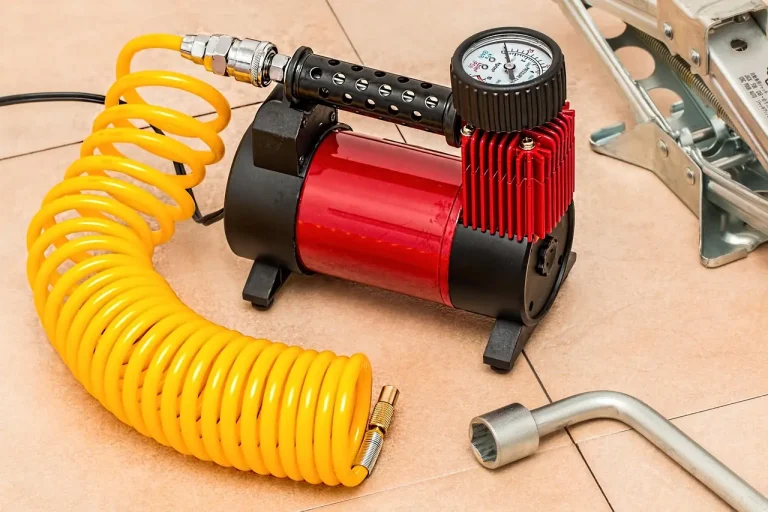
Check tire pressure with a tire pressure gauge when the tires are cold, then add air with a compressor if needed. Cold means before driving or after the vehicle has sat at least 3 hours. If a tire is above the placard number, release a little air and recheck.
Use a digital or analog gauge, but use it consistently. The important part is that the reading comes from a cold tire, because heat from driving changes the number.
- Find the placard on the driver’s door jamb, doorpost, glove box door, or fuel door.
- Check the pressure before driving or after the car has sat at least 3 hours.
- Remove the valve cap and press the gauge straight onto the valve stem.
- Read the PSI and compare it to the placard for the correct axle.
- Add air with a compressor if the tire is low, then recheck.
- Release a small amount of air if the tire is overinflated, then recheck.
- Repeat for all four tires and the spare if your vehicle carries one.
An air compressor can be found at a gas station or service center, and it may be free or cost a small fee. That makes it a practical fix when a tire is low and the nearest shop is not far away.
Why do tire pressure readings change?
Tire pressure changes because temperature and driving heat change the air inside the tire. Firestone says to check tire pressure before driving or at least 3 hours after driving. That matters because heat from the road and the tire’s flex can raise the reading and make a warm tire look more inflated than it really is.
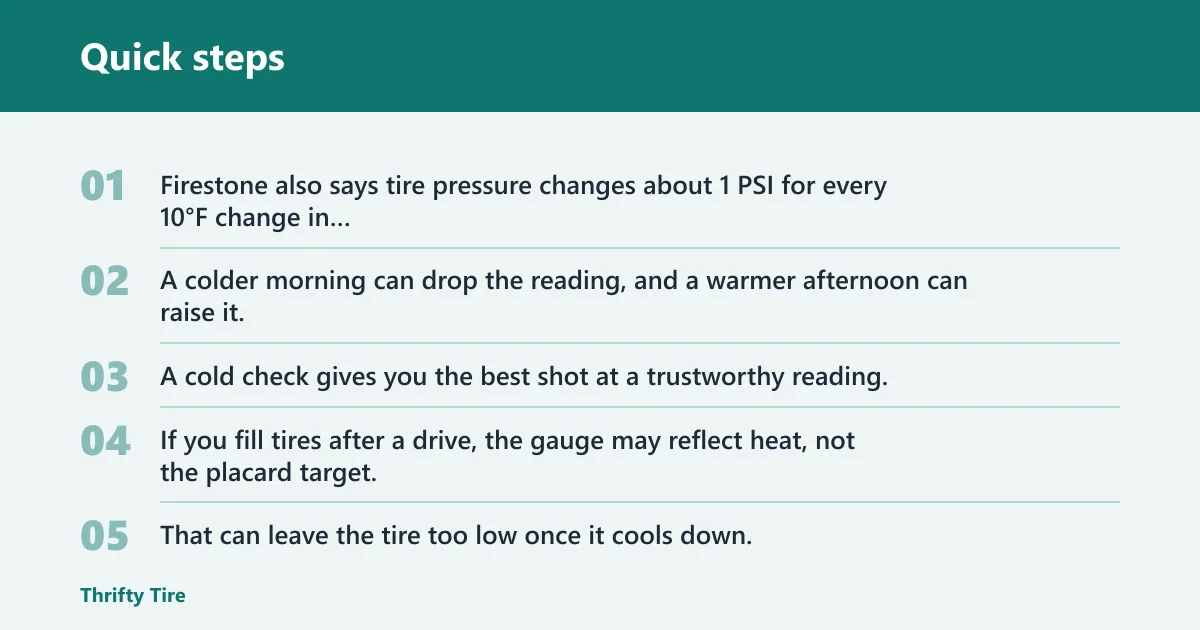
Firestone also says tire pressure changes about 1 PSI for every 10°F change in temperature. A colder morning can drop the reading, and a warmer afternoon can raise it. The car has not changed; the air has.
Use a cold-check routine
A cold check gives you the best shot at a trustworthy reading. If you fill tires after a drive, the gauge may reflect heat, not the placard target. That can leave the tire too low once it cools down.
Say your door placard calls for 36 PSI and the tire shows 38 PSI after a freeway run. That warm reading can be misleading. Wait until the tire is cold, then check again before deciding whether to let air out.
Tire pressure check guide
Use this quick guide when the placard is hard to find, the TPMS light is on, or the car carries extra load. The goal is to avoid guessing and to keep the reading tied to the vehicle maker’s instructions.
Placard missing or unreadable
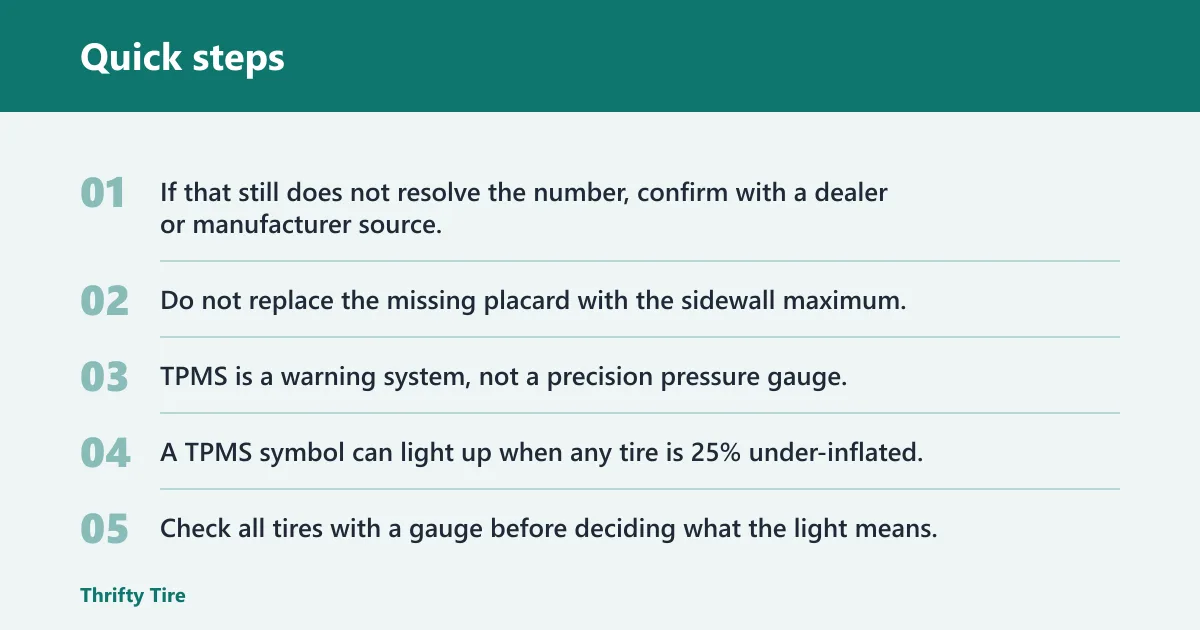
Go to the owner’s manual first. If that still does not resolve the number, confirm with a dealer or manufacturer source. Do not replace the missing placard with the sidewall maximum, because that is not the same thing.
TPMS light
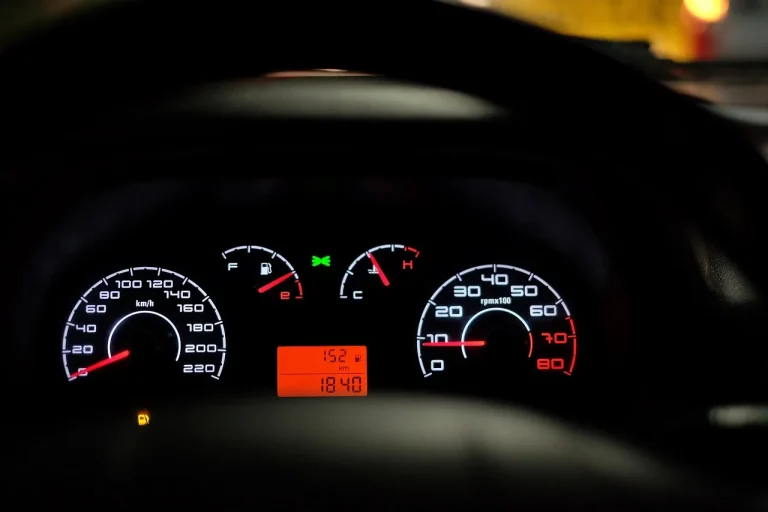
TPMS is a warning system, not a precision pressure gauge. A TPMS symbol can light up when any tire is 25% under-inflated, and it may blink if there is a system issue. Check all tires with a gauge before deciding what the light means.
Do not rely on the warning light alone. It tells you something needs attention; it does not always tell you which tire is exactly low or by how much.
Spare tire check
Check the spare tire too. It is often forgotten, and a flat spare is useless when you need it. If your vehicle carries a compact spare, follow the pressure listed for that spare, which may be different from the road tires.
Load, towing, and trim exceptions
Manufacturer guidance matters when the vehicle is loaded for travel, towing, or fitted with a trim that uses a different tire setup. Front and rear pressures may not be the same. If the manual gives a load or tow adjustment, use that instruction rather than a generic rule.
Picture an SUV with a door placard that lists separate front and rear pressures. The driver adds cargo for a trip and notices the TPMS light after the tires cool overnight. The correct next step is to check all four tires cold, then verify whether the manual gives a load-specific pressure before adding air.
Tires Plus says proper inflation improves gas mileage, tire life, and handling. It also says underinflated tires can make braking take longer. That is why the correct PSI matters even when the car still “feels fine.”
The same source says a tire under-inflated by 1 bar or 14 psi can increase braking distance on wet roads by 11 metres, and that a tire under-inflated by 14 psi can increase fuel consumption by one full tank per year. Those numbers are a reminder to check pressure before it drifts too far from spec.
Check tire pressure at least once a month. That schedule catches slow leaks, seasonal drops, and pressure loss before it becomes a warning light or a worn-edge tire pattern.
Frequently asked questions
What tire pressure should I have?
Use the PSI on your vehicle’s placard, usually on the driver’s door jamb or doorpost. That is the manufacturer’s recommended starting point. Check the front and rear tires separately if the placard lists different numbers, and use the owner’s manual for any load or trim exception.
What is proper tire pressure?
Proper tire pressure is the cold PSI listed for your specific vehicle, not a generic number. PSI means pounds per square inch. Read the placard before driving, compare front and rear axles separately, and confirm the number in the owner’s manual if the placard is missing or unclear.
What should my car tire pressure be?
Your car tire pressure should be whatever the vehicle placard lists for your exact model, trim, and tire setup. That number can differ front to rear. If you tow, haul heavy cargo, or have a nonstandard tire size, follow the manufacturer’s guidance rather than guessing.
What is the tire pressure for car?
There is no single tire pressure for every car. The correct PSI depends on the vehicle placard, which is usually on the driver’s door jamb, and sometimes on the glove box door or fuel door. The owner’s manual is the backup source if the placard is missing.
What is my tire pressure?
Your current tire pressure is the PSI you read on a gauge, but the number that matters is the cold reading. Check before driving or after the car has sat at least 3 hours. Then compare each tire to the placard, including the spare if your vehicle has one.
When should I check tire pressure?
Check tire pressure before driving or after the vehicle has sat at least 3 hours. That gives you a cold reading that is not distorted by heat. Firestone notes that pressure changes about 1 PSI for every 10°F change in temperature, so monthly checks are a good habit.