What Does the TPMS Light Mean on a Car?
The TPMS light usually means one or more tires is low; on many vehicles, the warning is triggered when pressure drops about 25% below placard spec, while a light that flashes first and then stays on points to a TPMS fault instead of simple low pressure. Check tire pressure first, then diagnose the system if the warning persists. (Thedrive)
| Light behavior | Likely meaning | Quickest check | Next action |
|---|---|---|---|
| Steady light | One or more tires are low on pressure | Check all tires with a gauge and compare to the door-jamb placard | Inflate to spec, then drive a short distance if the vehicle needs a reset |
| Flashing then solid | System malfunction, often a sensor or module problem | Watch whether the light flashes for about 60 seconds before staying on | Have the TPMS diagnosed; air alone may not clear it |
| Light on after cold weather | Pressure likely dropped as temperature fell | Measure each tire cold; pressure falls roughly 1 PSI for every 10°F drop | Add air to the placard spec and recheck later |
| Light on after airing up but no tire is low | Possible leak, overinflation, or TPMS reset issue | Recheck each tire with a gauge and inspect for a slow leak | Confirm the pressure is not above spec, then perform the required reset or diagnosis |
TPMS warning light meaning
TPMS stands for Tire Pressure Monitoring System. The warning symbol is a horseshoe-shaped tire icon with an exclamation point in the center. If the light is steady, the system usually sees low tire pressure. If it flashes first, that often points to a system fault instead of a simple low-tire warning. (TPMS flashing light vs solid light)
Why it matters now: low pressure changes how the tire carries load, builds heat, and steers. A warning can mean a tire needs air right away, or it can mean the car needs diagnosis before the light can be cleared.
What should you check in the next 5 minutes?
Start with the tires, not the dash. Check all four road tires with a gauge, compare the readings to the vehicle door-jamb placard, and look for nails, cuts, bulges, or wet spots around the tread, valve stem, and bead area. If the car has a full-size spare or a monitored spare, check that too.
Do not guess from the sidewall. The tire sidewall lists the tire’s maximum, not the vehicle’s target pressure. The door-jamb label shows the correct cold air pressure for that vehicle.
- Park on level ground and find the tire pressure placard on the driver-door jamb.
- Use a tire pressure gauge on each tire, including the spare if the vehicle monitors it.
- Write down the readings before adding air.
- Inflate any low tire to the door-jamb spec, not the sidewall maximum.
- Look for puncture signs: a nail, screw, cut, cracked valve stem, or damaged wheel seal.
- Drive only if the tire is safely inflated and there is no visible damage that suggests a rapid leak.
TPMS warning light triage
If the light is steady, treat it as a pressure check. If it flashes first and then stays on, treat it as a system fault. Cold weather can also be enough to trigger the light, because tire pressure drops about 1 PSI for every 10°F decrease in temperature. (Thedrive)
| Light behavior | Likely meaning | Quickest check | Next action |
|---|---|---|---|
| Steady light | One or more tires are low on pressure | Check all tires with a gauge and compare to the door-jamb placard | Inflate to spec, then drive a short distance if the vehicle needs a reset |
| Flashing then solid | System malfunction, often a sensor or module problem | Watch whether the light flashes for about 60 seconds before staying on | Have the TPMS diagnosed; air alone may not clear it |
| Light on after cold weather | Pressure likely dropped as temperature fell | Measure each tire cold; pressure falls roughly 1 PSI for every 10°F drop | Add air to the placard spec and recheck later |
| Light on after airing up but no tire is low | Possible leak, overinflation, or TPMS reset issue | Recheck each tire with a gauge and inspect for a slow leak | Confirm the pressure is not above spec, then perform the required reset or diagnosis |
If a tire is only slightly low because of a small puncture, the pressure can drop again after a short drive unless the leak is found and repaired. That is why the gauge check matters more than the visual check.
Why is the TPMS light on but the tires look fine?
Visual checks miss small pressure losses. A tire can look normal and still be low enough to trigger TPMS. A leak through a nail hole, a slow bead leak, or a valve stem problem may take days to show up by eye, especially if the pressure loss is small.
Another reason is sensor trouble. Direct TPMS uses a sensor in each wheel, and the sensor battery eventually dies. A failed sensor can keep the light on even when every tire measures correctly. On indirect systems, the tires may be fine but the car may still need a reset or relearn.
Suppose your sedan calls for 35 PSI cold and all four tires read 35 PSI, but the light stays on after you top them off. That points away from low pressure and toward a sensor, relearn, or module issue. The next step is diagnosis, not more air.
Direct and indirect TPMS
Direct TPMS uses pressure sensors inside or attached to each wheel. These sensors send actual tire pressure data and usually need battery-powered electronics in the wheel. When the battery dies or the sensor fails, the warning can flash or stay on until the system is repaired.
Indirect TPMS uses ABS wheel-speed data to detect when a tire is rolling differently from the others. It uses ABS wheel-speed data to spot a tire that is rolling at a different speed than the others, which can happen when pressure drops. That is why reset and relearn steps differ by vehicle and system type.
Why diagnosis and reset steps differ
Direct systems often need a scan tool, sensor programming, or a sensor replacement. Indirect systems may need a drive cycle, steering-wheel button sequence, or menu-based reset after inflation or tire rotation. The owner’s manual has the exact pattern for the vehicle.
When does the spare tire matter?
Some vehicles monitor the spare tire, and some use it as part of the TPMS strategy. If the four road tires look normal and the warning remains on, the spare is worth checking. A low or failed spare sensor can keep the light on even when the main tires are at spec. On vehicles that monitor the spare, this check is part of the same pressure scan, not an extra step. (Thedrive)
That matters most on vehicles with a full-size spare or a monitored temporary spare. If the spare is underinflated, the dash warning may point to that tire instead of the road tires, so a pressure gauge check should include it when the system is designed that way.
Do you need a TPMS reset or repair?
Some vehicles clear the warning after the tires are inflated and driven for a short period. Others need a manual reset, a relearn, or a scan-tool procedure. If the light stays on after the tire pressures are correct, the next step is not more inflation; it is checking whether the vehicle wants a reset or whether the system has a fault.
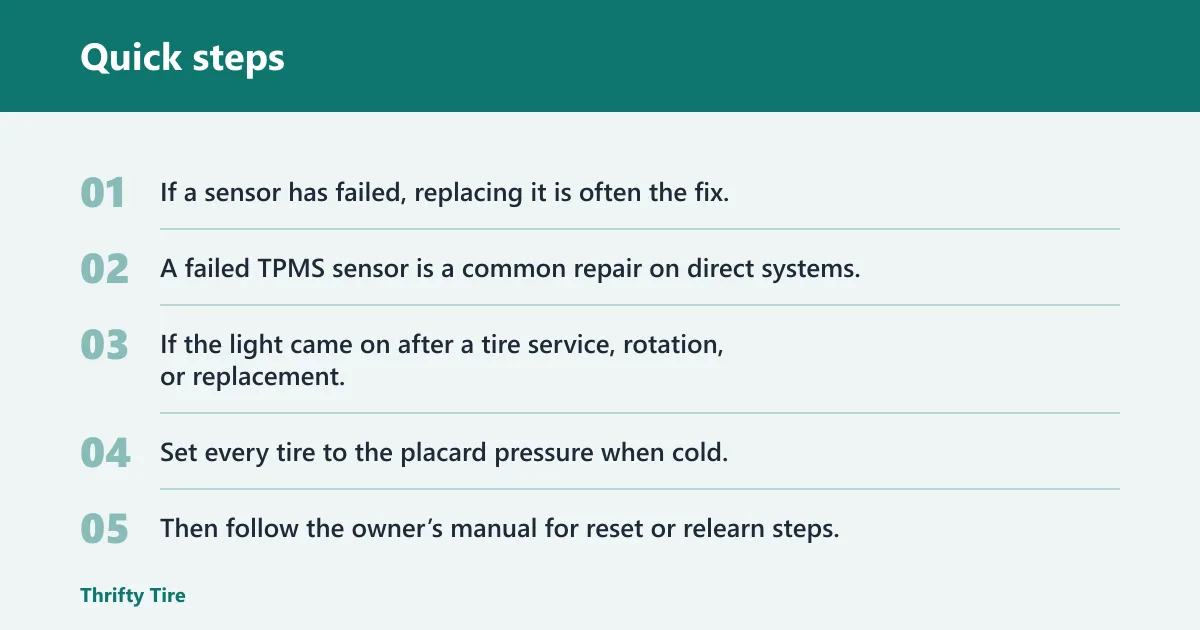
If a sensor has failed, replacing it is often the fix. A failed TPMS sensor is a common repair on direct systems, but the exact cost varies by vehicle and labor rate, so it is better to diagnose the fault first than assume inflation will solve it. If the light came on after a tire service, rotation, or replacement, the relearn process may be the missing step.
After inflation or tire repair
Set every tire to the placard pressure when cold. Then follow the owner’s manual for reset or relearn steps, because the process varies by make and by whether the car uses direct or indirect TPMS.
After replacing a sensor
New direct sensors may need programming or relearning before the car recognizes them. If the warning began with a flashing pattern, a replacement sensor or a full TPMS diagnosis is more likely than a simple pressure correction.
When the light will not clear
If the light stays on after correct inflation, a spare-tire check, and the proper reset steps, the system likely needs diagnosis. That can include a dead sensor battery, a failed sensor, a wiring issue, or a module fault.
What does the TPMS light mean on a car?
The TPMS light means the car has found low tire pressure or a TPMS fault. A steady light usually means one or more tires are low. A TPMS flashing light vs solid light, especially one that flashes for about 60 seconds and then stays on, usually means the system itself has a malfunction.
That difference matters. Low pressure is often fixed with air to the door-jamb spec. A fault often needs diagnosis, a sensor replacement, or a reset/relearn step before the warning goes away.
Is it OK to drive with the TPMS light on?
It depends on why the light is on. If the light is steady and one tire is only slightly low, a short drive to a safe place for inflation is usually reasonable. If a tire is visibly damaged, losing air fast, or the light flashes to signal a malfunction, the safer move is to stop and inspect it.
Do not treat the light as cosmetic. A low tire can overheat and can fail under load. If the warning appeared after a pothole hit, curb strike, or tire puncture, check the tire before continuing farther.
Frequently asked questions
What does it mean when the TPMS light stays on?
A light that stays on solid usually means at least one tire is underinflated. Check all tires with a gauge, compare them to the door-jamb placard, and inflate any low tire to the listed cold pressure. If the pressures are correct and the light remains on, look for a fault or reset issue.
What does it mean if the TPMS light flashes then stays on?
That pattern usually means the TPMS has a system malfunction, not just a low tire. Many vehicles flash the light for about 60 seconds before it stays on. That often points to a bad sensor, dead sensor battery, wiring issue, or module problem that needs diagnosis.
How do you know if the TPMS sensor is bad?
A bad sensor is likely when the light flashes first, the warning will not clear after correct inflation, or one wheel stops reporting data. Direct TPMS sensors have batteries that eventually die. Diagnosis usually needs a scan tool or TPMS service equipment, not just a tire gauge.
What does the tire pressure light mean?
It means the car has detected a tire pressure problem or a TPMS fault. In most cases, the first check is simple: use a gauge, read every tire cold, and compare the numbers to the door-jamb label. That separates an actual low tire from a system problem.