How Much Should a Brake Job Cost Per Axle?
A typical brake job often costs roughly $300 to $700 per axle for pads and labor, and can rise when rotors or calipers are replaced. Miss the add-ons, and a cheap quote can jump fast. This guide shows what a per-axle quote should include, what extra charges change the total, and how to compare estimates.
What does per axle mean on a brake job?
Per axle means one end of the vehicle: the front wheel pair or the rear wheel pair. One axle price usually covers both wheels on that end, so it is not a single-wheel quote. Two axles typically make up a complete four-wheel brake job.
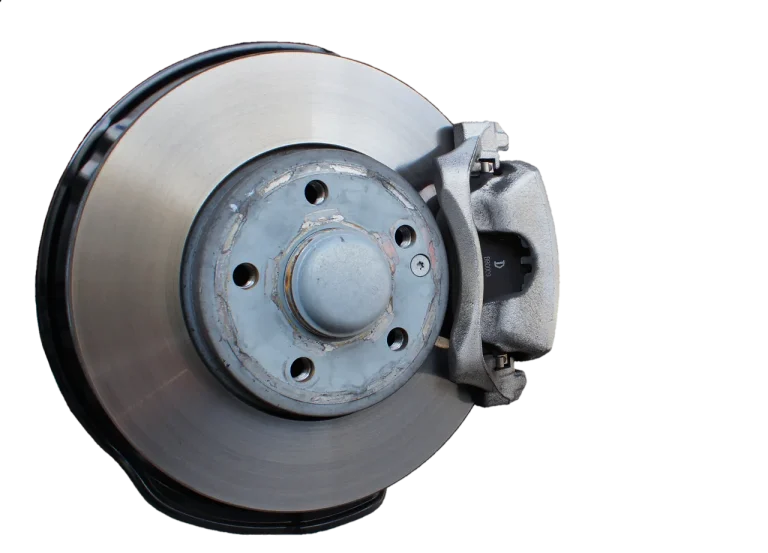
Brake pads are sold as an axle set, so one axle generally needs parts for both wheel ends together. That is why a quote should be clear about whether it covers just pads, pads plus rotors, or a deeper repair with calipers and hardware.
Front axle vs rear axle
Front brake work is the most common pricing benchmark because front brakes usually do more stopping. Rear brake pricing can differ because rear hardware may include parking brake parts, and wear patterns are often different. A rear quote that looks lower is not always apples to apples.
For a full car, a brake shop may quote both axles separately or quote the whole vehicle. A true per-axle quote should still break out what each end gets, rather than lumping all parts into one vague line.
How many brake pads are on one axle?
One axle uses four pads in many common disc brake setups. Shops usually sell them as one axle set. Pad materials vary too. Organic, semi-metallic, and ceramic pads all exist, and the material choice affects the parts price.
Brake quote decoder
This table shows how a per-axle quote usually changes as more parts are added. It is a quote-reading tool, not a fixed national menu. The same axle can cost more or less depending on labor rate, vehicle type, and whether the shop finds seized hardware or uneven wear. Prices below are typically quoted per axle unless the estimate explicitly says per side.
| Scenario | Expected inclusions | What is usually extra | Likely total range | Red flags |
|---|---|---|---|---|
| Pad-only | Pads for one axle, pad installation, basic inspection | Rotors, calipers, hardware, brake fluid service, machining | About $150 to $350 per axle | Quote says “brakes” but does not name pads; “per side” wording; no labor line |
| Pads plus rotors | Pads, rotor replacement or resurfacing, axle labor | Calipers, slides, brackets, sensors, fluid service if needed | About $300 to $700 per axle | Rotor price is missing; labor is listed once but parts are split oddly by side |
| Pads plus rotors plus caliper | Pads, rotors, at least one caliper, installation labor | Brake fluid bleed, hardware, seized slide repair, extra rotor wear correction | About $450 to $900+ per axle | One caliper is listed without stating which side; quote omits bleed labor or hardware |
What should a brake job cost per axle?
For a standard axle, the cleanest way to compare estimates is by package: pad-only, pads plus rotors, or pads plus rotors plus caliper. A pad-only axle is often the lowest quote; a rotor job usually lands higher; and caliper replacement pushes the total further. Front and rear pricing can differ because the hardware and labor demands are not identical.
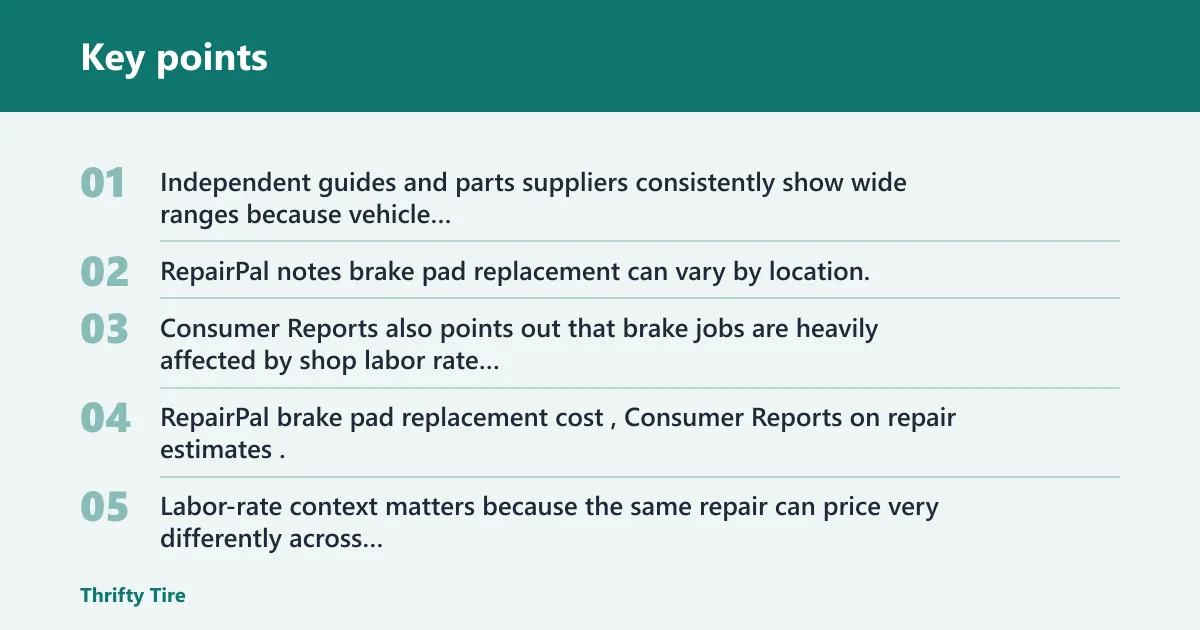
Independent guides and parts suppliers consistently show wide ranges because vehicle type and labor rates vary. RepairPal notes brake pad replacement can vary by location, and rotor replacement adds a separate parts-and-labor layer. Consumer Reports also points out that brake jobs are heavily affected by shop labor rate and parts quality. RepairPal brake pad replacement cost, Consumer Reports on repair estimates.
Labor-rate context matters because the same repair can price very differently across shops. AAA’s labor-cost guides and consumer repair resources show that diagnostic and repair labor commonly varies by region, shop type, and vehicle complexity. That is why a quote that looks high in one city may be ordinary in another. AAA auto repair labor rates.
Typical pad-only range
Pad-only quotes are the simplest price point and usually apply when rotors are still within spec and the calipers move freely. A fair pad-only estimate should name the axle, list the pads, and include labor for both wheels on that end. If the estimate says only “brakes,” ask what is actually included before approving it.
Typical range with rotors
When rotors are replaced with pads, the bill rises because each rotor adds parts and labor. A complete front brake job with pads, rotors, and calipers can cost $250 to $900. That wide spread exists because vehicle size, brand, and labor rate all matter, and rotor replacement is often the step that changes the estimate most.
Why the low quote is not always the full price
A cheap axle quote can leave out rotor work, caliper replacement, hardware, or fluid service. It can also hide labor under vague wording. If a quote only lists “front brakes” or “per side,” ask whether that means both wheels on the axle, both rotors, and all required labor before you approve the work.
Why do front and rear prices differ?
Front and rear brake prices can differ because they do different jobs and may use different parts. Front brakes often cost more, so they are the usual benchmark. Rear axle work can still be costly when parking brake hardware, rust, or uneven wear adds time.
Rear axle hardware and wear patterns
Rear brakes often wear more slowly than front brakes, but that does not mean they are always cheaper. Parking brake mechanisms, smaller components, and rusted slide hardware can add labor. If the quote includes rear service, make sure it names the exact parts being replaced so you can compare it fairly with a front quote.
Why one axle can cost more than the other
One axle can be priced higher when parts are harder to access or when wear is uneven. A front axle may need rotors sooner, while a rear axle may need extra hardware or parking brake work. The axle with the more complicated repair usually gets the larger bill, especially if bleeding or caliper work is required.
What adds the most to the bill?
Labor is often the main driver of total cost, and it can exceed parts cost. Shop type and location matter, too. Dealer labor is usually higher than independent-shop labor, and busy urban areas often price brake work above smaller markets. Parts alone rarely tell the full story.
Rotor replacement or resurfacing
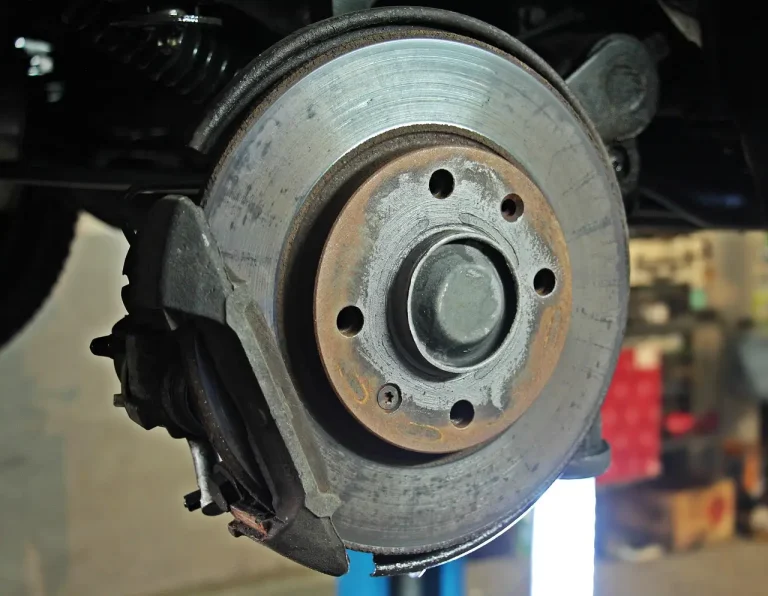
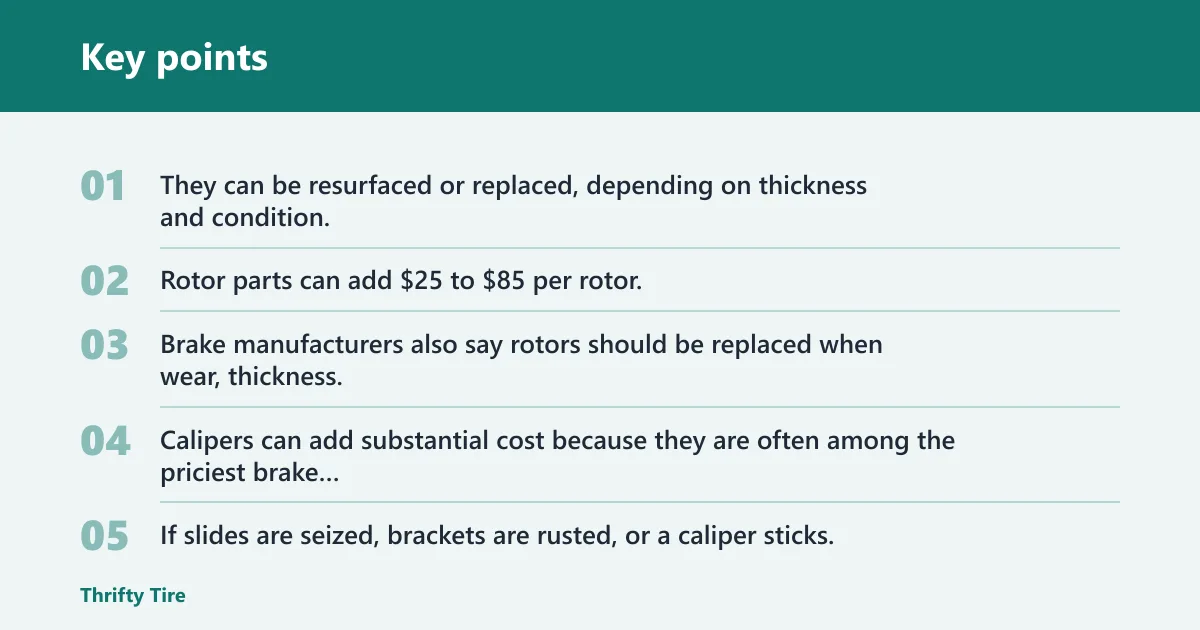
Rotors are one of the most common add-ons. They can be resurfaced or replaced, depending on thickness and condition, but a replacement adds cost right away. Rotor parts can add $25 to $85 per rotor, and two rotors on one axle can change the quote a lot. Brake manufacturers also say rotors should be replaced when wear, thickness, or runout is outside spec. Bendix on when to replace brake rotors.
Caliper replacement and seized hardware
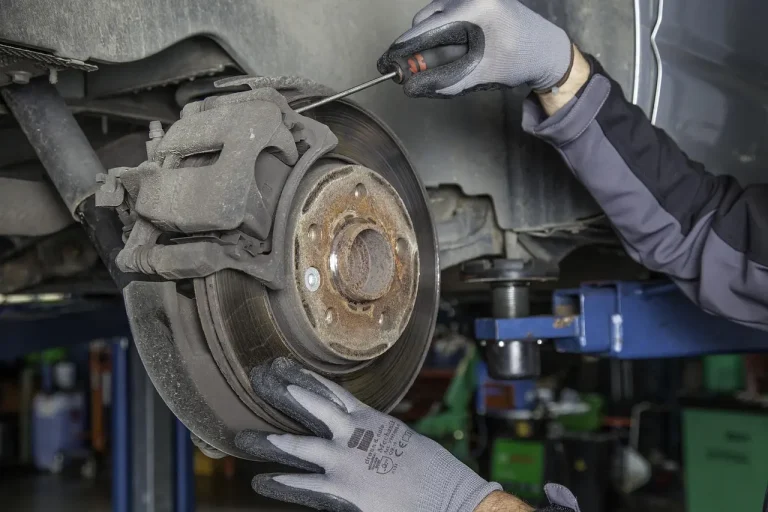
Calipers can add substantial cost because they are often among the priciest brake components in the job. If slides are seized, brackets are rusted, or a caliper sticks, the repair can grow beyond a simple pad swap. When a caliper is replaced, the system usually needs to be bled to remove air and restore firm pedal feel. Haynes on bleeding brakes, Brake & Front End on brake bleeding.
A common first-timer mistake is assuming new pads fix every brake noise. Suppose a midsize SUV has one front wheel pulling and the rotor shows uneven wear. That can point to a sticking caliper or slide issue, which makes the quote higher than a pad-only estimate because the repair needs more than friction material.
How vehicle type changes the price
Vehicle size changes brake cost because larger, heavier vehicles usually need larger parts and more labor time. Compact cars often cost less than heavy-duty trucks. Brake size, weight, and access all affect the axle price, and heavy vehicles often use more expensive hardware.
Compact car vs heavy-duty truck
A compact car often lands near the lower end of an axle quote because its rotors and pads are smaller. A heavy-duty truck usually needs more expensive parts and may require more labor. The same shop can quote very different totals for those two vehicles because the hardware, weight load, and brake surface area are not the same.
European brand pricing
European vehicles often cost more because parts and labor can be higher, and a specialized mechanic may be needed. Brand affects pricing through part availability, sensor requirements, and labor time. A European sedan may therefore land above a domestic compact car even with similar symptoms and the same axle layout.
How do front and rear brake job prices compare?
Front brake job prices are often used as the baseline because front brakes handle more stopping force. Rear brake jobs may look cheaper at first, but that is not guaranteed. Parking brake parts, rotor wear, and vehicle design can make the rear axle equal to or higher than the front in some cases.
For a complete four-wheel brake job, the total can be close to double the per-axle price when all four corners need the same work. That is only a rough comparison. If the rear axle needs less work, the four-wheel total may not land at exactly twice one axle, but the math is a useful starting point for quote checks.
How to read a brake estimate line by line
A brake estimate should tell you what is being replaced, where it is being replaced, and what labor is included. Read it line by line. If the shop uses “per side,” check whether that means one wheel or one axle, because those are not the same thing. Ask before approving anything vague.
- Look for the axle label. It should say front or rear, not just “brakes.”
- Check whether pads are listed as an axle set or as separate sides.
- Find rotor wording. If rotors are not named, ask whether they are included.
- Look for calipers, slides, hardware, and brake fluid bleed labor.
- Confirm whether the price includes labor for both wheels on that axle.
Missing parts and labor lines
Missing lines are a warning sign. A quote that lists pads but no labor, or labor but no rotors, can look cheaper than it really is. Hardware, sensors, and fluid service should also be named if they are part of the job, because each one can change the final invoice.
Red flags in the estimate
Watch for “starting at” pricing with no axle detail, “per side” wording without explanation, or a low total that excludes rotors. Also check for vague labor lines that do not say whether the work is for one axle or both. A clean estimate should be specific enough to compare against another shop’s quote.
Frequently asked questions
How much should a brake job cost per axle?
A standard brake job often falls into one of three ranges: pad-only, pads plus rotors, or pads plus rotors plus caliper. The cheapest jobs usually start around the low hundreds per axle, while rotor and caliper work can push the total much higher. Vehicle type and local labor rates drive the final number.
How many brake pads per axle?
Most disc brake setups use four pads per axle, with two pads for each wheel on that end of the vehicle. Shops usually sell them as an axle set. Pad material also matters, since organic, semi-metallic, and ceramic pads can cost different amounts and affect the estimate.
Does a brake job per axle include rotors?
Not always. Some axle quotes cover pads and labor only, while others include rotors, and the total can change a lot when rotor parts are added. Rotor replacement is common when thickness or wear is outside spec, so always check whether the quote includes replacement or only pad installation.
How much of a brake job cost is labor?
Labor is often the largest share of the bill. Shop type, local labor rate, and vehicle complexity all matter, and rotor or caliper work raises labor time further. Dealer labor usually runs higher than independent-shop labor, so two quotes for the same axle can be very different even with similar parts.
Why does my brake quote change by vehicle type?
Vehicle weight, brake size, and brand all change the quote. Compact cars usually cost less than heavy-duty trucks because the parts are smaller and easier to service. European vehicles often cost more because parts and labor can be higher, and some jobs need a specialized mechanic.
When does a caliper need to be replaced instead of reused?
A caliper is usually replaced when it sticks, leaks, or fails to move evenly with the pads. If the shop finds uneven pad wear, a dragging wheel, or heat damage, the estimate may need caliper work plus a brake bleed. A pad-only quote should be updated if that kind of damage is found during inspection.
Should a quote include brake fluid bleeding?
It should if a caliper or hydraulic line is replaced, or if air enters the system during repair. Bleeding restores proper hydraulic pressure and pedal feel, so it is not optional in those cases. If the estimate adds calipers but omits bleed labor, ask for a revised total before authorizing the job.