What Brake Fluid Does My Car Need?
Your car needs the brake fluid listed in the owner’s manual. If the cap says something different, trust the manual and confirm the DOT or ISO spec before you add any fluid. Wrong fluid can damage seals, change pedal feel, and lead to a costly brake repair. This guide shows how to confirm the exact spec from the manual, reservoir cap, and existing fluid before you buy.
How to find your brake fluid spec
The correct answer is the specification tied to your exact vehicle, not a guess based on color, bottle brand, or what another car uses. Start with the owner’s manual, then check the reservoir cap and service records, because those three sources usually point to the exact DOT or manufacturer-approved fluid type.
Start with the owner’s manual
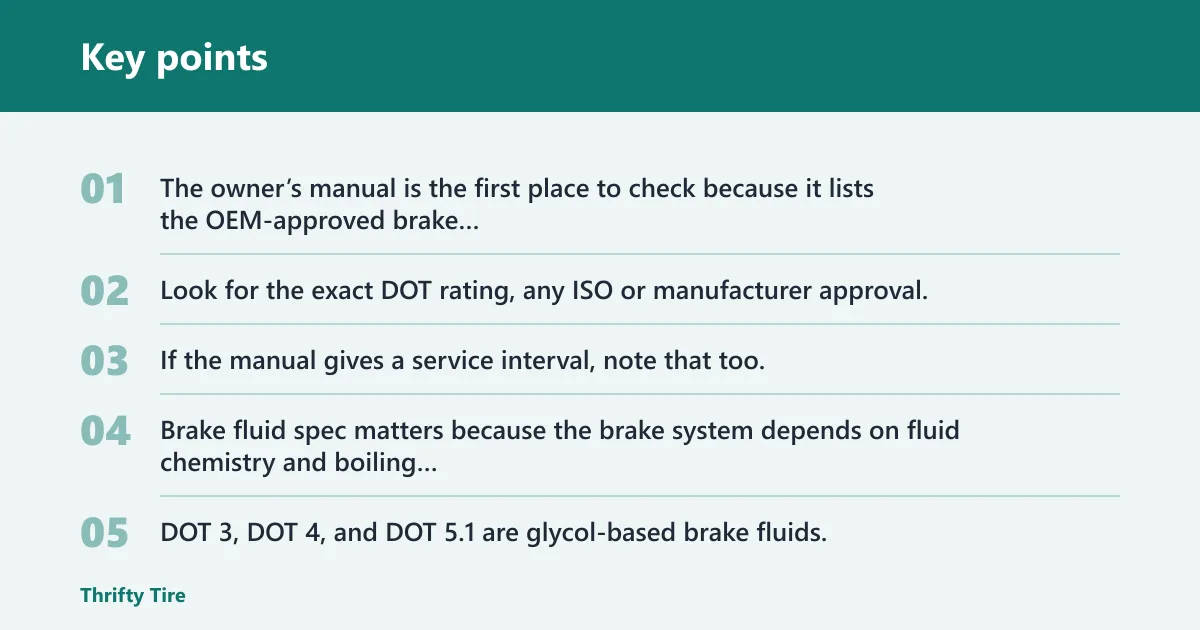
The owner’s manual is the first place to check because it lists the OEM-approved brake fluid spec, often near the brake or maintenance section. Look for the exact DOT rating, any ISO or manufacturer approval, and any warning about silicone or glycol-based fluid. If the manual gives a service interval, note that too.
Match the spec before you buy
Brake fluid spec matters because the brake system depends on fluid chemistry and boiling point. DOT 3, DOT 4, and DOT 5.1 are glycol-based brake fluids. DOT 5 is silicone-based. DOT 5 is not a normal substitute for a car that calls for glycol-based fluid, and the wrong choice can affect seals and braking performance.
Use the cap and records as backup checks
If the manual is missing, the reservoir cap and service paperwork can help. Many caps list the required DOT type or a warning such as “use only DOT 3 or DOT 4.” Old maintenance receipts may show the last fluid installed, which helps on used cars or fleet vehicles. Treat those clues as confirmation, not a replacement for the manual.
Brake fluid basics
Brake fluid turns pedal force into hydraulic pressure that moves through the master cylinder and brake lines to the wheel brakes. That path depends on fluid that does not compress under pressure. If the fluid absorbs moisture, the boiling point drops, vapor can form, and pedal feel can change.
How hydraulic braking moves force
When you press the brake pedal, the master cylinder creates hydraulic pressure. That pressure travels through the brake lines and reaches calipers or wheel cylinders, which apply the brakes. Air in the lines, low fluid, or contaminated fluid interrupts that pressure transfer and can make the pedal feel soft or long.
Why fluid spec matters
Brake fluid is safety-critical because the hydraulic system only works as designed when the fluid matches the vehicle’s specification. Different fluids do not always mix safely. A mixed or wrong-fluid system can cause seal damage, uneven braking response, or a pedal that feels wrong even before a warning light appears.
Why moisture changes performance
Brake fluid pulls in moisture over time. That moisture lowers the brake fluid boiling point, which raises the chance of vapor during hard braking. A spongy brake pedal can point to moisture in the brake fluid, but a soft pedal can also come from air in the lines or a leak.
Brake fluid types and compatibility
DOT labels are not interchangeable labels for “any brake fluid.” They describe different fluid families and performance traits. DOT 3, DOT 4, and DOT 5.1 are glycol-based brake fluids. DOT 5 is silicone-based. Mixing the wrong family can create compatibility problems, so the manual wins over assumptions.
DOT 3 and DOT 4
DOT 3 is described as glycol-based brake fluid. DOT 4 is also described as glycol-based brake fluid. Both are common in many passenger vehicles, but that does not make them universal substitutes. Some vehicles specifically require one or the other because of boiling point needs, seal compatibility, or electronic brake system requirements.
DOT 5 versus DOT 5.1
DOT 5 is silicone-based brake fluid. DOT 5.1 is glycol-based brake fluid. The names look similar, but they are not the same type of fluid. A vehicle that calls for DOT 5.1 does not want silicone DOT 5 unless the manufacturer specifically says otherwise.
Why mixing the wrong fluids is a problem
Using the wrong fluid can cause seal issues, strange pedal feel, or poor braking response. In a hydraulic system, compatibility matters as much as dot rating. If a service record shows DOT 5 in a car that requires DOT 4, inspect the system before you top up or drive far.
Brake fluid checklist
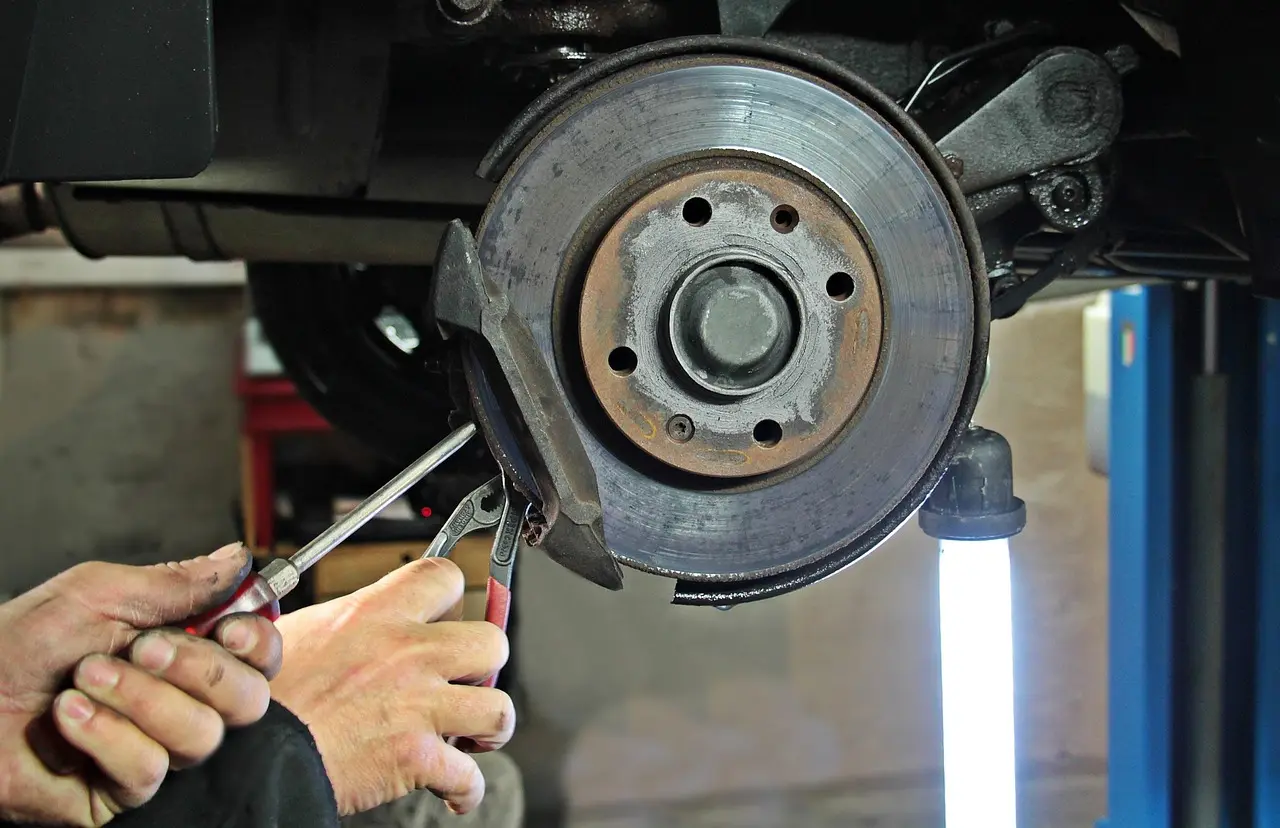
This checklist helps you verify the exact fluid before you open a bottle. It is better to confirm three clues than to rely on one. Use the manual first, then the cap, then service records and current condition as support.
| Vehicle clue | Where to find it | What it usually means | What not to do |
|---|---|---|---|
| Owner’s manual spec | Maintenance or brake section | The OEM-approved DOT type or fluid approval for your exact vehicle | Do not assume DOT 3 and DOT 4 are always interchangeable |
| Reservoir cap marking | Brake fluid reservoir cap under the hood | Often lists the required DOT rating or a fluid warning | Do not treat the cap as more authoritative than the manual if they disagree |
| Service record | Receipts, dealer printouts, maintenance log | Shows what was last installed or bled into the system | Do not top up with a different type just because a previous shop used it |
| Current fluid color | Reservoir sightline or cap opening with care | Fresh fluid is usually clear or light amber; dark or cloudy fluid can indicate ageing or contamination | Do not use color alone to identify the exact spec |
| Emergency top-up scenario | Low reservoir before you can get the right fluid | May call for a short, cautious top-up to prevent a dry reservoir | Do not pour in an unknown fluid unless the manual confirms compatibility |
Emergency top-up do’s and don’ts
If the reservoir is low, that is a warning sign, not a normal refill schedule. Low fluid may indicate a leak or worn pads. If you must move the car and the exact fluid is unknown, the safest step is to check the manual or cap first and avoid adding a guess-fluids mix. If the pedal feels soft, do not drive until inspected.
Say your sedan’s reservoir is just below the MIN mark and the cap says DOT 4. If the owner’s manual also lists DOT 4, a cautious top-up with the correct fluid is reasonable. If the manual is missing and the cap is unreadable, pause and verify before opening any bottle.
How do you check the reservoir?
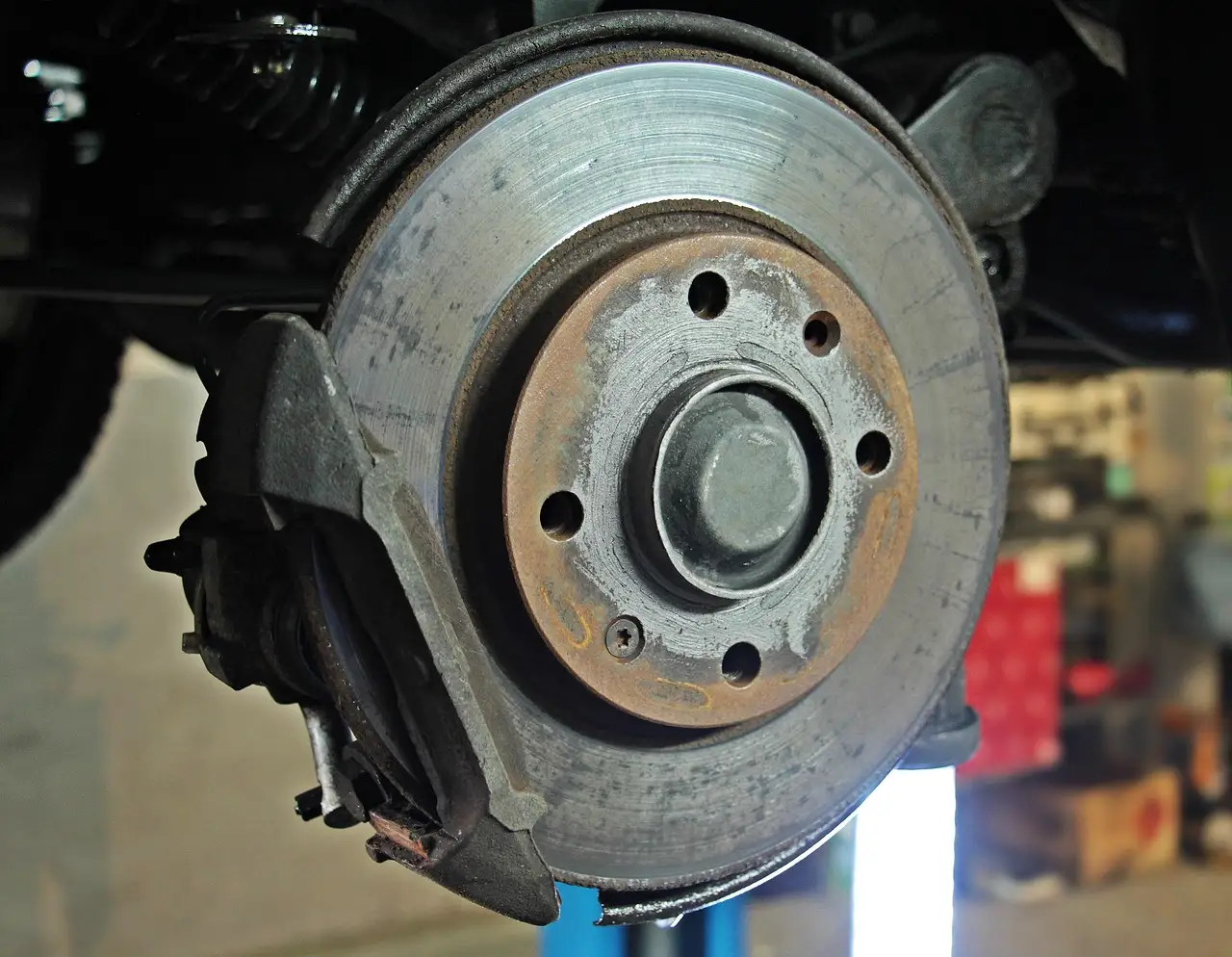
Check the brake fluid reservoir with the vehicle parked level and the engine off unless the manual says otherwise. The reservoir typically has MIN and MAX marks. A low level can point to pad wear or a leak, while the fluid’s color and clarity can give you a rough idea of age or contamination.
Find the MIN and MAX marks
The reservoir is often mounted near the master cylinder on the brake booster side of the engine bay. Look for the translucent tank and its MIN and MAX marks. If the fluid is at or below MIN, the system needs attention. Do not ignore a low level just because the brakes still work.
Read fluid color and clarity
Fresh brake fluid is usually clear or light amber. Dark or cloudy fluid can indicate ageing or contamination. That visual cue helps you judge condition, but it does not prove the fluid type. Two fluids can look similar and still have different specifications or compatibility limits.
Know what low fluid may mean
Low fluid may mean worn pads, a leak in the brake lines, or a system issue at the master cylinder or calipers. The reservoir, master cylinder, and brake lines work together in one hydraulic system. If the level drops again after topping up, the car needs inspection rather than repeated refills.
Suppose a compact car shows a dark reservoir and a slightly lower pedal on the first press after sitting overnight. That does not automatically mean the wrong fluid is installed. It may be aged fluid, moisture contamination, air in the lines, or a slow leak. The symptom matters, but it is not a spec label.
How do you know if the fluid is wrong?
Wrong fluid often shows up as a change in pedal feel, a service history mismatch, or unusual system behavior after a top-up or flush. A soft pedal can also come from air in the lines or a leak, so do not jump straight from symptom to fluid type. Confirm the fluid spec first.
Soft or spongy pedal feel
A spongy brake pedal can indicate moisture in the brake fluid. It can also mean air entered the hydraulic system, which changes pedal travel and response. If the pedal sinks more than usual, or if it feels soft after service, the issue may be bleeding, not just fluid condition.
Dark, cloudy, or contaminated fluid
Dark or cloudy fluid can indicate ageing or contamination. That points toward a fluid change and inspection, especially if the car has gone a long time without service. Many manufacturers recommend replacing brake fluid every 2 years, but the manual for your vehicle should set the final interval.
When the problem may be air or a leak
If the pedal slowly drops at a stop or feels inconsistent from one press to the next, air in the lines or a leak may be more likely than a simple fluid-spec issue. If the reservoir keeps falling, that points away from normal ageing and toward loss of fluid. Do not mask that with a top-up.
Frequently asked questions
What brake fluid does my car need?
Your car needs the brake fluid listed in the owner’s manual, and that spec should match the reservoir cap and service history if possible. Start there before buying anything. If the car has been modified, imported, or serviced elsewhere, verify the exact DOT or manufacturer approval rather than guessing by model name alone.
What brake fluid does my car take?
It takes the fluid specified for its braking system, usually identified by DOT rating and sometimes a manufacturer approval. The manual is the best source, with the cap and old service records as backup. Do not rely on color alone, because fresh brake fluid is usually clear or light amber regardless of type.
What type of brake fluid does my car need?
That depends on the vehicle’s design and the manufacturer’s requirement. DOT 3, DOT 4, and DOT 5.1 are glycol-based brake fluids, while DOT 5 is silicone-based. The wrong family can create compatibility problems, so match the exact type in the manual before adding or replacing fluid.
How do I know what brake fluid I need?
Use a three-step check: owner’s manual, reservoir cap, then service records. If all three agree, you have a strong match. If they conflict, trust the manual and inspect the system before topping up. If the reservoir is low and the fluid looks dirty, a professional inspection is the safer next step.
Can I use any brake fluid if the reservoir is low?
No. If the reservoir is low, you still need the correct spec. A low level may point to a leak or worn pads, so adding the wrong fluid can create a second problem on top of the first. If the exact fluid is unknown, verify the manual or cap before pouring anything in.
What happens if I use the wrong brake fluid?
Wrong fluid can damage seals, change pedal feel, and reduce confidence in the hydraulic system. It may also create contamination that is harder to fix than a normal fluid change. If the wrong fluid was added, stop driving when practical and have the system inspected, flushed, and checked for leaks or air.
Can I check brake fluid type from the owner’s manual?
Yes. The owner’s manual is where most vehicles list the OEM-approved brake fluid spec, service interval, and any fluid warnings. That is the first place to look. If the manual is missing, look for a maintenance booklet or dealer records, then confirm the reservoir cap before buying fluid.
Is DOT 3 the same as DOT 4?
No. DOT 3 and DOT 4 are both glycol-based brake fluids, but they are not automatically interchangeable. The vehicle manufacturer may require one or the other based on boiling point or system design. If your manual names DOT 4, do not substitute DOT 3 just because both are common.
What brake fluid does my car need by reg?
You can use the registration lookup only as a starting point. A reg search may return the model, engine, or trim, but brake fluid can still vary by year, market, or brake system package. Confirm the exact spec in the manual or on the reservoir cap before buying fluid.
How do I find out what brake fluid I need?
Check the owner’s manual first, then the reservoir cap, then service paperwork. If the fluid in the reservoir is dark, cloudy, or low, treat that as a condition clue, not a type label. If the pedal feels soft, schedule a brake inspection and ask for a fluid test before replacement.
What brake fluid does my car need by reg?
A registration lookup can help you identify the vehicle, but it does not always confirm the brake fluid spec. The safest path is still the manual, cap, and service records. If those are missing, a professional brake fluid test or brake inspection is the better way to avoid a wrong-fluid fill.