What Size Lug Nuts Does My Car Need?
Your car needs lug nuts matched to three specs: thread size and pitch, seat type, and hex size; the exact numbers depend on the vehicle and wheel, not the badge alone. Wrong lug nuts can strip studs, loosen wheels, or stop proper clamping. Start with the owner’s manual, then verify the wheel hardware and torque spec before buying replacements.
How to identify the right lug nut fitment

Answer first: you need the exact stud thread, the exact wheel seat style, and the correct hex size for the nut. The owner’s manual is the best starting point because OEM manuals and wheel service references usually list the wheel hardware and torque information together. If the manual is missing, identify the vehicle’s lug pattern or wheel stud layout first, then separate that from thread size and seat type.
Fitment depends on the hub hardware, not the badge alone. A vehicle can share a wheel pattern with another model and still use a different thread pitch, seat geometry, or socket size. Bolt pattern, thread size, and seat type are related but not interchangeable; the bolt pattern only tells you how the wheel mounts, not what threads or seat the lug nut needs.
Lug nut fitment checklist
| Thread size | Seat type | Hex size | Lug count | Confirmation method |
|---|---|---|---|---|
| Honda Civic / Accord commonly use M12x1.5 on many model years | 60° conical seat is common on many Honda OE and aftermarket wheels | 19mm is common on many Honda lug nuts | 5-lug | Confirm in the Honda owner’s manual and compare the wheel seat to the existing nut; torque is commonly specified in the manual by year |
| Toyota Camry commonly uses M12x1.5 on many generations | 60° conical seat is common; do not assume the closed-end outer shape defines the seat | 21mm is commonly listed for some Toyota hardware; verify by year and wheel | 5-lug | Check the Toyota owner’s manual and the wheel-hardware notes from Toyota service information before ordering |
| Ford F-150 commonly uses M14x1.5 on many recent model years | 60° conical seat is common on many replacement wheels | 21mm or 22mm can be seen depending on nut style and year | 6-lug | Verify the Ford owner’s manual, then confirm stud diameter and pitch against the wheel and existing lug nut |
| Chevrolet Silverado / GMC Sierra commonly use M14x1.5 on many recent trucks | Conical seat is common; OEM and aftermarket wheels may differ | 21mm or 22mm are common on truck lug hardware | 6-lug | Use the GM owner’s manual and wheel-hardware reference, then check the seat geometry before installation |
| Nissan Altima / Sentra commonly use M12x1.25 on many model years | 60° conical seat is common | 19mm is common on many Nissan lug nuts | 5-lug | Confirm in the Nissan owner’s manual and compare the old nut’s threads before purchase |
| Subaru Outback / Forester commonly use M12x1.25 on many model years | Conical seat is typical; factory and aftermarket wheels should be checked separately | 19mm is common on many Subaru lug nuts | 5-lug | Check the Subaru owner’s manual and wheel accessory instructions for the exact year and trim |
| Volkswagen Golf / Jetta commonly use M14x1.5 on many model years | Ball seat or radius seat is common on some OEM wheels; many aftermarket wheels use conical seats | 17mm or 19mm can appear depending on hardware style | 5-lug | Confirm the wheel seat style from the wheel manufacturer, not just the vehicle make |
| Aftermarket wheels commonly follow the vehicle’s stud thread or the wheel maker’s hardware spec | Conical, ball, or tuner-style seat can apply depending on the wheel | 16mm, 17mm, 19mm, or tuner-socket sizes can be used | Depends on the vehicle | Match the wheel manufacturer’s fitment instructions to the vehicle manual before buying |
How do you tell the thread size?
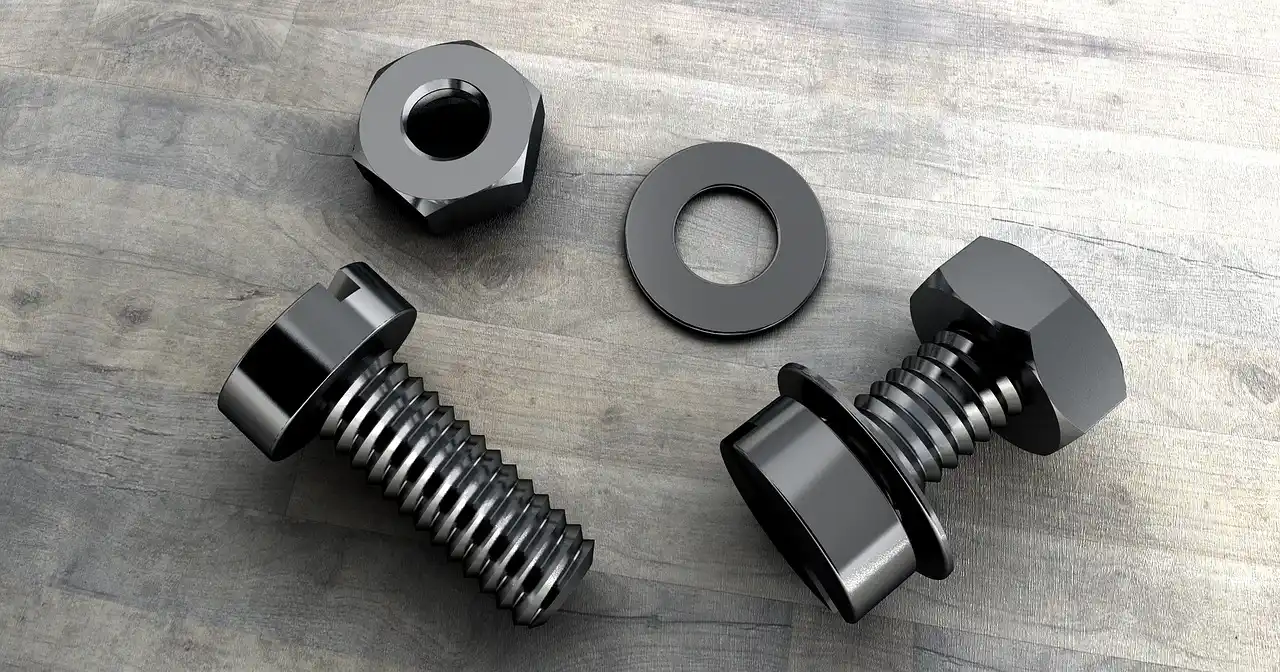
Answer first: thread size is the diameter and pitch of the stud, and it must match exactly. Common metric examples include M12x1.5, M12x1.25, and M14x1.5, but those numbers are vehicle-specific, not universal. OEM owner’s manuals and wheel-service references are the safest way to confirm the exact thread before ordering.
Thread pitch is the spacing between threads, so a nut can appear close and still be wrong. A mismatched pitch may start by hand and then bind before the nut seats fully. That is a fitment failure, not a minor variation. Toyota, Honda, Nissan, Subaru, Ford, and GM wheel references all show that thread sizes vary by model family and year.
Do all car lug nuts use the same thread size? No. Vehicles vary by make, model, trim, year, and wheel package. Some OE hardware references list M12x1.5 for compact and midsize cars, while many trucks move to M14x1.5. Always confirm the exact stud thread from the manual or the wheel hardware spec sheet.
If the vehicle uses OEM replacement parts, the part-number listing usually identifies the thread pitch directly. If the wheel is aftermarket, the wheel maker’s hardware chart can override the factory look because the wheel design may require a different seat or hardware style even when the vehicle threads stay the same.
Metric vs SAE threads
Metric and SAE are different thread systems. Metric sizes use diameter and pitch, such as M12x1.5. SAE hardware uses inch-based sizing and thread count. A nut that looks similar can still be wrong if the thread system does not match the stud.
Do not rely on appearance. A metric stud can look similar to an SAE stud at a glance, and the wrong nut may almost start before it binds. If the old nut is still available, read the marking; if not, confirm the thread with a wheel-hardware catalog, the vehicle manual, or a dealer parts listing.
How do you match the seat type?
Answer first: the seat type must match the wheel’s contact surface exactly. Common wheel seats include 60° conical, ball/radius, and some tuner-specific styles. The outer nut shape does not identify the seat. A closed-end or “acorn” nut can still have a conical seat, and a spline-drive nut can also use a conical seat.
Seat terminology matters because the wheel clamps on the seat, not the cap. A nut can have a closed end, a capped exterior, or a spline-drive body and still use a completely different seat geometry underneath. Match the wheel seat to the hardware spec from the vehicle or wheel manufacturer, not to the outer style of the nut.
Conical seat, ball seat, and acorn style
A conical seat has a tapered contact surface. A ball seat has a rounded contact surface. Acorn style usually describes the outer shape and closed end of the nut, not the seat geometry itself. Tuner nuts and spline-drive variants are also outer-style descriptions; they still need the correct seat under the body.
The wheel must be designed for the same seat geometry. OEM wheels, replacement wheels, and spacers can each change the correct hardware. Some wheel manufacturers specify a ball seat for factory-style wheels and a conical seat for aftermarket wheels, so the wheel maker’s instructions matter as much as the vehicle manual.
A common mistake is to match only thread size and ignore the seat. That can let the nut spin on normally while the wheel still clamps incorrectly. If the wheel seat shape is unclear, stop and confirm it from the wheel manufacturer’s instructions or the OEM wheel service reference.
What size socket do you need?
Answer first: hex size is the tool size used to turn the lug nut, not the thread size or seat type. Common hex sizes include 17mm, 19mm, 21mm, and 22mm, but the right socket depends on the nut design. Some tuner or spline-drive nuts require a special key instead of a standard six-point socket.
Tool size is useful, but it never proves fitment. A 21mm nut can still have the wrong thread or seat for the vehicle. Use the correct socket only after the thread and seat are confirmed. If the wheel uses tuner-style or spline-drive hardware, confirm the adapter or key is included before installation.
Final tightening should follow the vehicle’s torque spec from the owner’s manual. Wheel and tire manufacturers also publish torque guidance for specific hardware, but the vehicle manual takes priority when the car maker gives a specification. The number is vehicle-specific, wheel-specific, and sometimes stud-specific.
Torque values vary by model and wheel package, so do not treat a generic chart as a universal rule. OEM manuals and service references are the right source for the final number. If you are missing the manual, use the vehicle maker’s online owner portal or a dealer service listing before torquing the wheels.
What if you do not have the manual?
Answer first: use a no-manual workflow in this order—identify the current hardware, confirm the wheel seat, verify the stud thread, and then check the torque spec from the OEM source. That sequence avoids the common mistake of buying by outer nut shape or socket size alone.
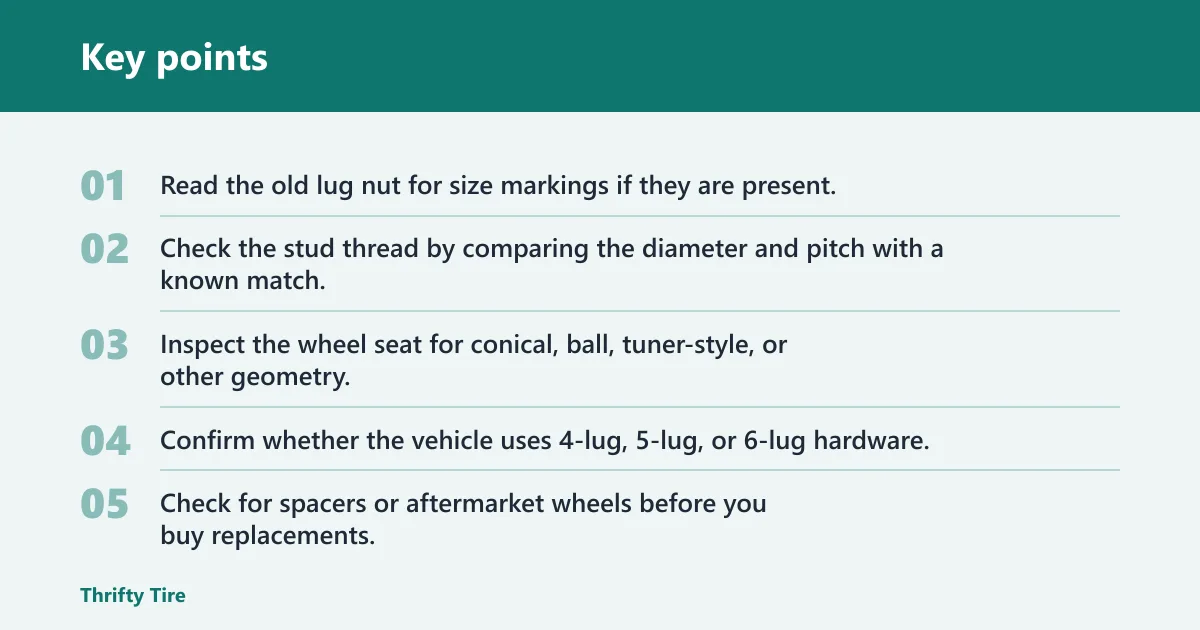
Start with the existing lug nut if it is still available. Read any stamped markings, then compare the thread against known vehicle fitments. Next, inspect the wheel seat directly. Finally, confirm the lug pattern and wheel mounting style so you do not confuse bolt pattern with hardware spec. The lug pattern tells you how many fasteners the wheel uses and where they sit; it does not identify thread size or seat type.
Most passenger vehicles in the U.S. market commonly use a 5 lug pattern, but that still does not mean the stud thread, seat, or hex will match across vehicles. The wheel pattern and the hardware spec are separate checks, and both have to be right.
Decision tree for missing manuals
- Read the old lug nut for size markings if they are present.
- Check the stud thread by comparing the diameter and pitch with a known match.
- Inspect the wheel seat for conical, ball, tuner-style, or other geometry.
- Confirm whether the vehicle uses 4-lug, 5-lug, or 6-lug hardware.
- Check for spacers or aftermarket wheels before you buy replacements.
- Buy only after the thread, seat, and hex size all line up.
Edge cases to watch
Some imports use lug bolts instead of lug nuts. In that setup, the fastener threads into the hub rather than using a nut on a wheel stud. That changes the parts search, the torque process, and the replacement hardware options. If the vehicle uses bolts, do not shop as if it were a stud-and-nut system.
Trim, year, and wheel package can change hardware details within the same vehicle family. OE manuals, wheel service bulletins, and wheel maker instructions sometimes disagree on style because the wheel changed. When that happens, the wheel in front of you controls the seat type, while the vehicle controls the thread and torque spec.
Aftermarket wheels and spacers can reduce thread engagement even when the nut still spins on. In that case, a correct replacement needs the proper thread depth, the correct seat, and enough engagement for the application. If the setup is unclear, confirm the wheel manufacturer’s hardware instructions before installation.
Frequently asked questions
What size lug nuts does my car have?
Your car has a thread size, seat type, and hex size that must match the wheel hardware exactly. The fastest way to find it is to check the owner’s manual first, then confirm the existing nut and wheel seat. Common metric sizes include M12x1.5, M12x1.25, and M14x1.5, but the exact fit depends on the vehicle and wheel.
What size wheel nuts does my car have?
“Wheel nuts” and lug nuts are the same hardware in everyday use, but fitment still depends on three separate specs: thread, seat, and hex. Do not buy by vehicle name alone. Check the manual, then match the old nut to the stud and wheel seat before ordering replacements.
How do I know what size lug nuts I need?
Start with the owner’s manual, then inspect the existing nut if the manual is unavailable. Confirm the thread size and pitch, the seat geometry, and the socket size needed to turn it. If the wheel is off, check the stud and wheel seat directly for a cleaner confirmation.
What size are lug nuts on cars
There is no single size that fits all cars. Many modern vehicles use metric lug nuts, and common examples include M12x1.25, M12x1.5, and M14x1.5, but the exact spec depends on the vehicle and wheel. The hex size can also vary, with 17mm, 19mm, 21mm, and 22mm being common.
How to figure out what size lug nuts you need
Use a three-step check: thread, seat, and hex. First, confirm the stud thread matches exactly. Second, match the seat type to the wheel. Third, pick the socket size that fits the nut. If anything is unclear, check the manual and use the wheel maker’s instructions for the wheel-specific details.
Do all car lug nuts use the same thread size?
No. Thread size varies by vehicle, and even within a brand the hardware can change by model, trim, year, or wheel package. Some cars use metric threads, some use different sizes, and some imports use lug bolts instead of lug nuts. Always verify the exact stud thread before buying.
How can I tell if my lug nuts are metric or standard?
Check the manual first if it is available. If not, inspect the marking on the nut, compare the thread with a known metric or SAE match, and measure carefully with a caliper if needed. Metric sizes are common on modern vehicles, but “common” is not the same as “correct” for your car.
What should I check besides thread size when buying lug nuts?
Check the seat type, the hex size, and the lug pattern or bolt pattern as well. You also need to know whether the vehicle uses wheel studs or lug bolts, and whether aftermarket wheels or spacers change the required hardware. Finally, confirm the vehicle-specific torque spec before final tightening.