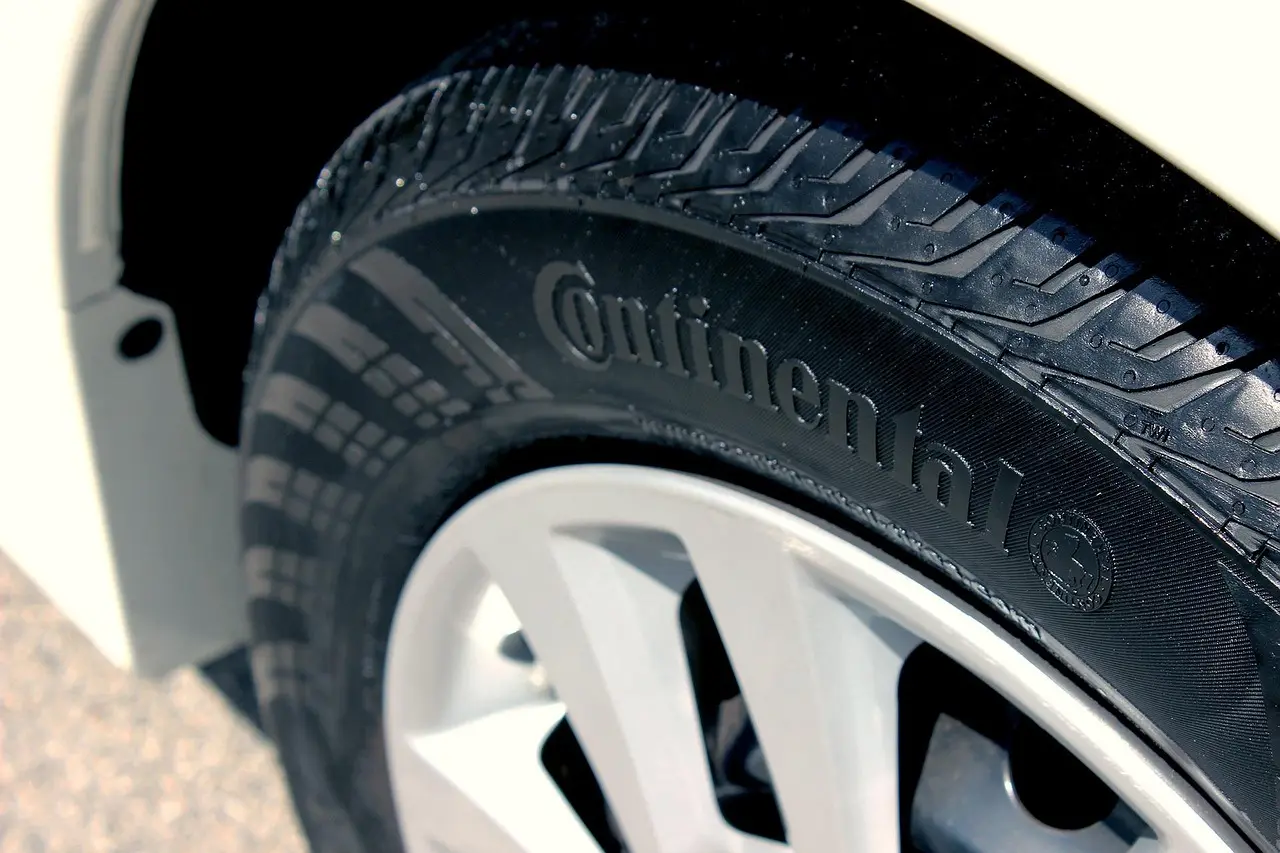
Load Index: What It Means and How to Choose
Choose a tire with a load index at least equal to your vehicle placard’s requirement for that size and inflation pressure; never go lower, and go higher only if the tire also matches the size, speed rating, and wheel fitment. Too little load capacity can overheat a tire, shorten its life, and raise the risk of failure when you carry passengers, cargo, or tow. This guide shows what the load index number means, where to find it in the sidewall code, and how to match it to your vehicle, axle loads, and real-world use.
What is tire load index?
Load index is the number in a tire’s service description that states the tire’s maximum load capacity per tire when used under the conditions tied to that specification. It is a replacement requirement, not a guessing tool. The right choice must meet or exceed the vehicle manufacturer’s required load index for the approved size.
What the number actually measures
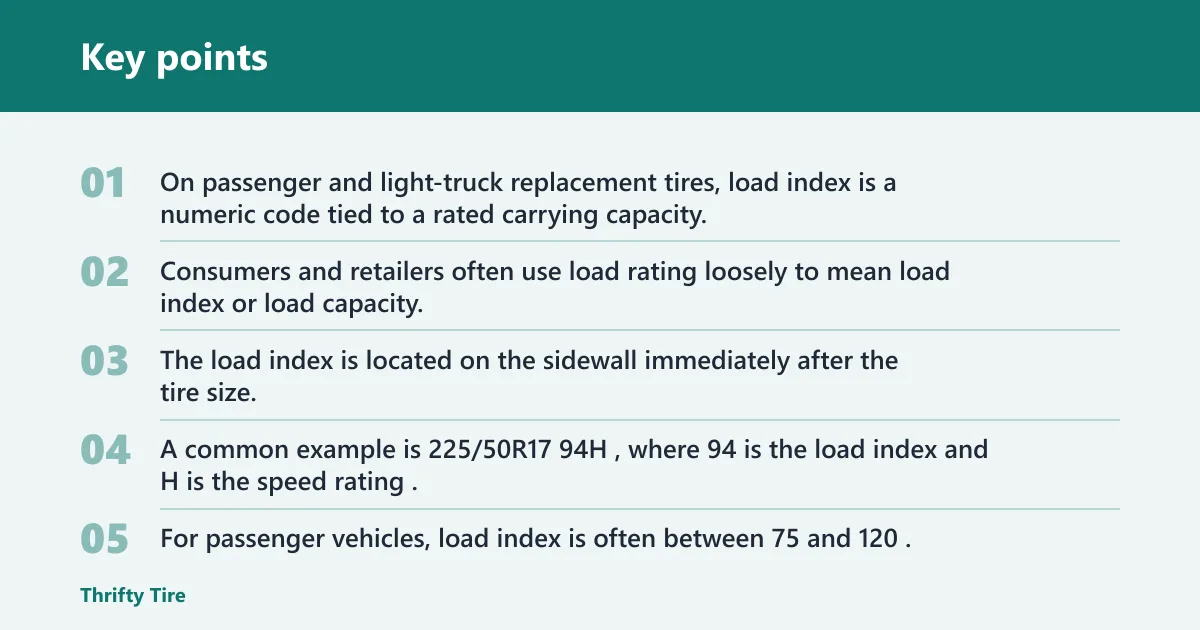
On passenger and light-truck replacement tires, load index is a numeric code tied to a rated carrying capacity. The number does not stand alone. It only has meaning with the tire size, service type, and inflation conditions the vehicle maker calls for.
That is why a chart by itself is incomplete. A chart converts the number to capacity, but it does not tell you whether that number is correct for your car, SUV, pickup, or van in the size you plan to run.
Consumers and retailers often use load rating loosely to mean load index or load capacity. In practice, the safer reading is narrower: the load index is the numeric code, while load rating can refer more broadly to the tire’s load-carrying specification in context.
How load index appears in the service description
The load index is located on the sidewall immediately after the tire size. A common example is 225/50R17 94H, where 94 is the load index and H is the speed rating. In that service description, the number states load capacity and the letter states speed capability, so you need to verify both together.
For passenger vehicles, load index is often between 75 and 120. In that same example, a load index of 94 equals 1,477 pounds per tire. Those numbers help decode the marking, but replacement still starts with the placard and owner’s manual.
Load index in truck applications
In truck use, the load index is described as an international numerical code, and truck tire load index is paired with a speed symbol in the manual. Truck tire requirements can also vary across axles, which is one reason passenger-car rules of thumb do not transfer cleanly to commercial or dual-rear-wheel setups.
Nokian states that load index specifies the maximum weight a single truck tire can safely support. That word single matters because trucks may run the same tire in a single-wheel or dual-wheel position, with different allowed capacities depending on the configuration.
Where do you find the load index?
You find the current tire’s load index on the sidewall, immediately after the tire size in the service description, and you confirm the required replacement spec on the driver-side door-jamb placard. If the placard and tire markings do not answer the whole question, the owner’s manual is the next manufacturer source.
Reading the sidewall and service description
Look for the tire size first, then the number and letter that follow it. The code appears immediately after tire size on the sidewall. On a marking such as 225/50R17 94H, the 94 is the load index and the H is the speed symbol.
This sidewall marking tells you what is mounted now. It does not prove the tire is the right fit for the vehicle. Used vehicles, aftermarket wheel packages, and previous replacements can all leave you with a tire that differs from factory guidance.
Using the driver-side door-jamb placard
The placard on the driver-side door jamb is usually the first replacement reference because it ties together tire size, load requirement, and recommended inflation pressure for that vehicle. That makes it more useful than a generic load chart and more reliable than copying whatever is already on the car.
Check the placard first, every time. If the placard lists multiple approved sizes, each size may carry a different required load index. The same vehicle can be correct with more than one size, but each approved size has to meet its own specification.
Checking the owner’s manual
The owner’s manual backs up the placard and often adds the detail people miss: alternate approved tire sizes, trailer-towing instructions, heavy-load conditions, snow-tire notes, and truck-specific axle guidance. When placard details seem sparse or a size change is involved, this is the next place to confirm the requirement.
For trucks, manuals may separate front and rear axle requirements. They may also call out single versus dual applications. Truck tires with the wrong load index can lead to fines or being grounded, so commercial users should treat the manual or fleet spec as mandatory, not optional.
Why the placard matters more than a chart alone
A load-index chart only decodes the number into rated capacity. It does not decide which number your vehicle needs. The placard matters more because it reflects the vehicle’s approved tire sizes, axle loading assumptions, and inflation targets. That is what turns a decoded number into a correct replacement choice.
What a chart can and cannot tell you
A chart can tell you that one index carries more than another. It cannot tell you whether your sedan, crossover, half-ton pickup, or EV was designed around that number in the tire size you want to use.
That matters because tire size and application change the answer. Two tires can share the same width and wheel diameter but differ in construction, service description, or intended duty. A decoded chart entry is only one piece.
How alternate approved sizes change the required number
Suppose your placard lists one wheel package with a smaller wheel and a taller sidewall, and another with a larger wheel and a lower-profile tire. Those approved sizes may not use the same load index. Matching only the old number can be wrong if the size changes.
A common first-timer mistake is moving from one approved size to another, then insisting on the original load index because “that’s what the old tire had.” The correct move is to follow the manufacturer requirement for the new approved size, not the retired setup.
Why vehicle loading and inflation assumptions matter
Load capacity on paper depends in practice on adequate inflation support. Inflation pressure affects usable load capacity, but PSI is not the same thing as load index. You do not pick one instead of the other. You match both to the manufacturer guidance for the vehicle and the tire type.
Nokian links overloading to excessive flex and heat buildup. Underinflation compounds that problem because a tire carrying a marginal load at the wrong pressure flexes more, runs hotter, and gives away reserve capacity sooner.
Do not use the sidewall maximum pressure as a blanket setting. Vehicle placards specify the operating pressure for that vehicle, tire size, and load case. The sidewall marking and the door-jamb recommendation answer different questions.
How do you choose the right load index for your vehicle?
Choose the right load index by following the placard and owner’s manual for the exact tire size you plan to use, then checking whether your real use adds towing, heavy cargo, full passenger loads, or commercial duty. A chart can decode the number afterward, but it should not make the decision by itself.
A practical selection process
- Read the placard first. Check the driver-side door-jamb label for the approved tire size and recommended inflation pressure. Write down the exact size and required service description if the placard lists it, because replacement starts there.
- Confirm the manual next. Open the owner’s manual if the vehicle has multiple tire sizes, a towing package, EV-specific fitment, or any truck use. This step matters when alternate approved sizes or axle-specific instructions change the required load index.
- Match the service description. On the replacement tire, find the code after the size, such as 225/50R17 94H. Make sure the load index meets or exceeds the manufacturer requirement and that the speed rating is also appropriate.
- Check your real use. Consider whether the vehicle regularly carries five or seven passengers, luggage, tools, trailer tongue weight, or repeated cargo loads. If use is heavier than basic commuting, stay especially strict about placard and manual requirements and avoid marginal choices.
- Verify fitment details. Confirm wheel diameter, width range, overall fitment, and any TPMS or clearance issues before ordering. A higher load index does not fix a bad size choice, and an approved number in the wrong tire type can still be the wrong tire.
- Set inflation correctly. Inflate to the vehicle manufacturer’s recommended pressure for that tire setup unless the manual gives a different load condition. Pressure supports the rated capacity in use; the right index at the wrong PSI is still a bad outcome.
What happens when the index is too low
Using a load index below requirement reduces the tire’s intended carrying reserve. Even a small shortfall can matter once the vehicle is full of people, luggage, or trailer tongue weight. The failure mode is practical rather than abstract: overload, excess heat, unstable handling, longer braking, and faster wear.
Picture a compact SUV that spends weekdays lightly loaded, then takes a weekend trip with four adults, cargo, and a roof box. A replacement tire that looked “close enough” during solo commuting can become the weak point once the vehicle reaches the load case the manufacturer planned for.
Axle and matching rules that matter on trucks
Truck tire requirements can vary across axles, and identical tread patterns and load indexes are required on the same axle. On work trucks and commercial vehicles, that means a mixed-axle or mixed-capacity replacement can create both handling problems and compliance problems.
For single-rear-wheel pickups used hard, and especially for dual-rear-wheel trucks, match the exact position requirement rather than assuming one tire spec fits every corner. That is where the manual or fleet tire book earns its place.
Can you use a higher load index than stock?
A higher load index is often acceptable if the replacement tire still matches an approved size, the needed speed rating, wheel fitment, and the vehicle’s inflation guidance. It is not automatically the best choice, though. Higher-capacity versions can change casing stiffness, pressure expectations, and ride quality.
When a higher index works
The basic rule is simple: replacement tires should meet or exceed the vehicle manufacturer’s load index. That gives room to choose a higher index version when the tire fits correctly and the service description still suits the vehicle.
That can make sense if the vehicle sees heavier family travel, repeated cargo duty, or an EV trim with a heavier curb weight than a similar gas model. Placard compliance matters even more there because EVs often leave less room for guesswork.
Tradeoffs to expect
A higher load index may come with a stiffer casing or a tire line aimed at heavier duty. That can change ride feel, bump compliance, and noise. In some cases, the tire may be designed around different inflation behavior than the original passenger-tire setup.
This does not mean higher is bad. It means higher is a fitment choice with consequences. If the tire becomes harsher, heavier, or less responsive in the way you want the vehicle to drive, the extra capacity may not be worth it for ordinary commuting.
When a higher index is still a bad choice
A higher load index does not excuse the wrong size, the wrong speed rating, or an incompatible tire category. It also does not justify inflating to the sidewall maximum when the placard calls for something else.
Say your sedan calls for a passenger-tire setup in an approved size, and an online listing pushes a heavier-duty version with a higher load index but a service description that no longer matches the car’s intended use. The bigger number looks safer, but the better replacement is the tire that matches the vehicle’s full specification.
What changes for towing, hauling, EVs, and dual rear wheels?
Towing, repeated cargo loads, EV curb weight, and dual-rear-wheel setups all change how carefully load index must be chosen because they raise tire demand or alter how capacity is assigned. In these cases, the placard and manual matter more than ever, and a casual chart lookup is rarely enough.
Passenger cars and family SUVs under load
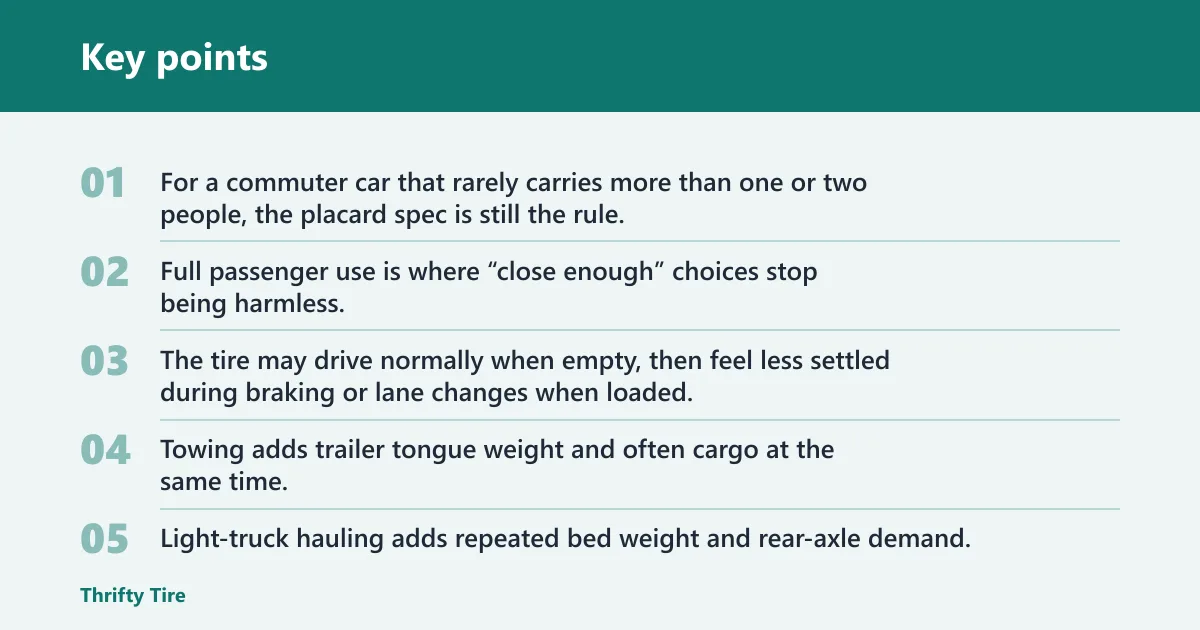
For a commuter car that rarely carries more than one or two people, the placard spec is still the rule. For a family SUV that regularly carries a full cabin, stroller, luggage, and weekend gear, staying exactly on spec or above it becomes more important because the vehicle lives closer to its intended load case.
Full passenger use is where “close enough” choices stop being harmless. The tire may drive normally when empty, then feel less settled during braking or lane changes when loaded.
Towing and light-truck hauling
Towing adds trailer tongue weight and often cargo at the same time. Light-truck hauling adds repeated bed weight and rear-axle demand. In both cases, use the placard and manual for the exact approved tire size, and check any towing-specific tire or pressure guidance in the manual.
Do not pick a load index by guessing from trailer weight alone. The tire has to support the vehicle’s own load plus whatever the hitch or cargo adds to the axle. If the truck has optional wheel-and-tire packages, use the requirement for the package you are actually running.
EV weight and placard discipline
EV curb weight can be higher than a comparable gas model, so manufacturer tire requirements carry more weight in the decision. A replacement that seems fine based on size alone can miss the needed load index once battery mass and passenger load are added together.
That is one reason EV owners should resist generic advice such as “the same size always works.” The same size can exist with different service descriptions. The placard tells you which one the vehicle was built around.
Single versus dual configuration
Single and dual truck positions do not use a passenger-car rule of thumb. In dual fitments, two tires share the side on an axle, but the per-tire allowed capacity is not the same as a simple single-tire figure copied from a chart. This requires the correct table or manual lookup for that tire and application.
Nokian’s wording about the maximum weight a single truck tire can safely support is the clue here. Once a tire is used in dual configuration, the relevant capacity reference changes. For work trucks, that lookup is mandatory.
Load index vs load range, PSI, and speed rating
Load index vs load range
Load index is a numeric capacity code. Load range is a separate, lettered construction system used mainly with light-truck tires, such as Load Range E. They are related to carrying ability, but they are not interchangeable labels.
A tire can have a given load range and still need its exact load index checked. Load range speaks to construction class and intended duty. Load index gives the specific coded capacity figure used in the service description.
Load index vs inflation pressure
PSI is inflation pressure, not load index. Pressure affects how much of the tire’s rated capacity is usable in service, but it does not replace the need for the correct index. A tire with the right load index can still be overloaded in real use if it is underinflated.
The reverse is also true. Adding pressure does not turn an under-indexed tire into the right tire for the vehicle. Follow the manufacturer’s pressure guidance for the approved tire setup rather than treating pressure as a workaround.
Why speed rating still matters
The service description combines load index and speed rating. The speed symbol sits beside the load index in the sidewall code, as in 225/50R17 94H. That is why replacement should not be reduced to a single number.
If the load index is acceptable but the speed rating is not, the tire may still be the wrong choice for the vehicle’s intended specification. Check both every time.
Load index decision matrix
Use-case decision table
| Use case | Selection rule | Required source document | Red-flag failure mode |
|---|---|---|---|
| Daily commuting | Match the placard size and choose a tire whose load index meets or exceeds the manufacturer requirement for that size. | Driver-side door-jamb placard | Choosing by current tire alone and ending up with an under-indexed replacement after a previous owner changed sizes. |
| Family SUV | Use the placard spec, then confirm the manual if the SUV has multiple approved wheel sizes or regular full-passenger travel. | Placard first, owner’s manual second | Marginal load capacity that feels acceptable unloaded but runs hotter and handles worse with people and cargo aboard. |
| Towing | Use the approved tire size and load index for the actual wheel package, then follow any towing-related tire and pressure guidance in the manual. | Owner’s manual and placard | Rear-axle overload, excess heat buildup, and unstable braking from treating trailer weight as separate from vehicle tire demand. |
| Light truck hauling | Check axle-specific requirements, confirm whether P-metric or LT fitment is specified, and do not substitute load range for load index. | Owner’s manual or fleet spec sheet | Using a lettered load range as a shortcut and missing the actual required numeric load index for the tire size in use. |
| Commercial use | Follow the truck manual or fleet requirement exactly, including axle position, single-versus-dual setup, and matching tires on the same axle. | Truck manual, fleet spec, and tire load table | Compliance problems, fines, being grounded, or a mixed-axle setup with non-identical load indexes. |
Frequently asked questions
What is load index on tires?
It is the numeric code in the tire’s service description that states the tire’s maximum load capacity per tire under the applicable conditions. You will find it on the sidewall after the tire size, and the replacement tire should meet or exceed the vehicle manufacturer’s requirement.
What does load index mean on tires?
It tells you how much weight the tire is rated to carry, but only in the context of its size, application, and correct inflation. It is part of the service description, paired with the speed rating, so it should be checked with the placard rather than decoded from a chart alone.
How do I choose the right load index for my car?
Start with the driver-side door-jamb placard for the approved tire size and pressure, then confirm the owner’s manual if there are alternate sizes or heavy-use conditions. Choose a tire whose load index meets or exceeds that requirement, and never go below it.
Can I use tires with a higher load index than stock?
Often yes, if the tire still matches an approved size, the needed speed rating, and wheel fitment. The catch is that a higher-index tire can ride differently, may use a stiffer casing, and is still a poor choice if the rest of the specification does not match.
What is the difference between load index and load range?
Load index is the numeric capacity code in the service description. Load range is a separate lettered construction class, commonly seen on light-truck tires, such as Load Range E. They both relate to carrying ability, but they are different specifications and should not be swapped in conversation.
What load index do I need for towing?
You need the load index required by the vehicle manufacturer for the approved tire size on the vehicle doing the towing, plus any towing-related tire guidance in the owner’s manual. Do not estimate from trailer weight alone, because hitch load and cargo change axle demand on the tow vehicle.