How to Find Your Car’s Hub Bore Size
Find your car’s hub bore by checking the vehicle spec, confirming the wheel’s center-bore stamping, and measuring the hub or wheel with calipers; the correct ring size matches the larger wheel bore to the smaller hub bore. A wrong match can cause vibration, poor centering, and wheels that are hard to mount correctly. This guide shows the three-source method and how to reconcile mismatched numbers before you buy wheels or rings.
What hub bore size means
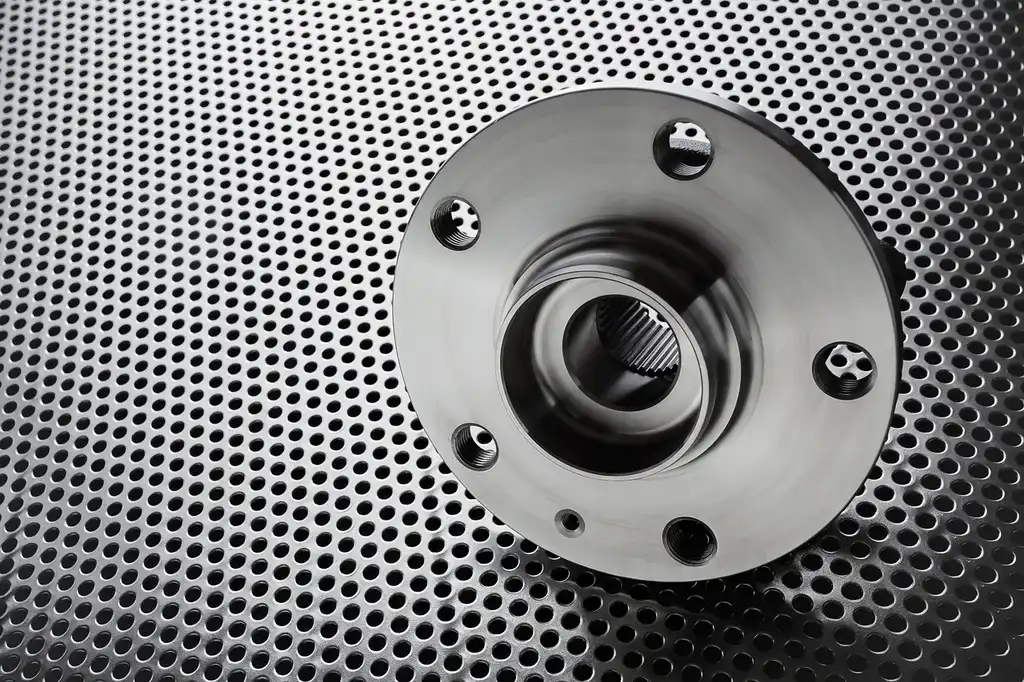
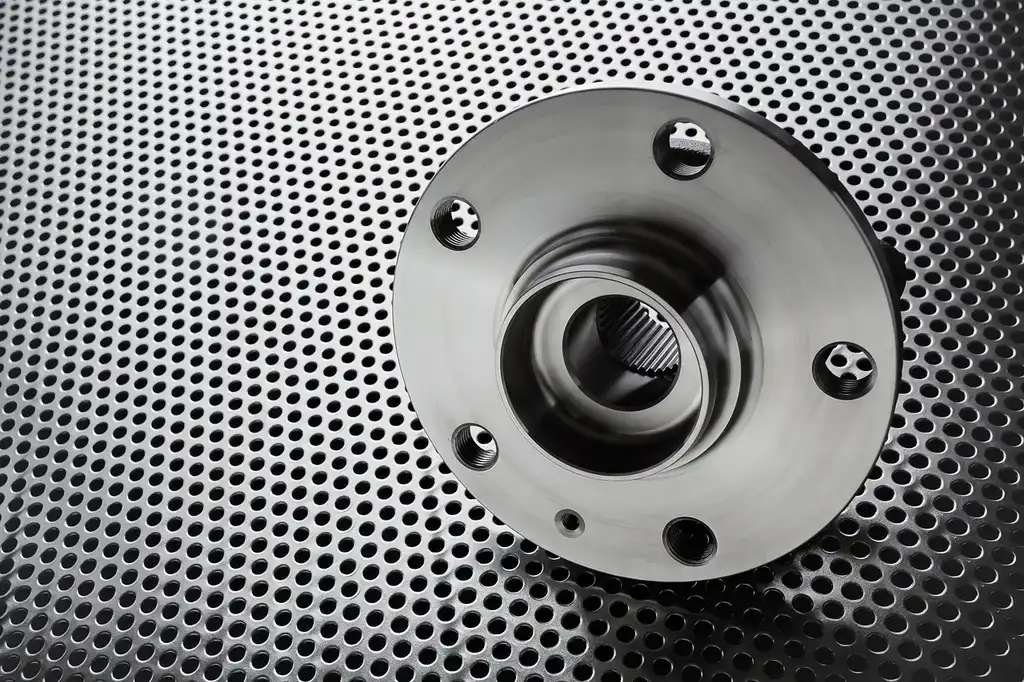
The center bore is the diameter of the hole in the middle of the wheel, measured in millimeters. It fits over the hub, the mounting surface the wheel centers on. When the bore matches the hub exactly, the fit is hub-centric.
The wheel bore has to be the same size as the vehicle’s hub or larger. If the wheel bore is smaller, the wheel won’t seat. Many aftermarket alloys are made with a slightly larger bore, so the fit is often finished with hub-centric rings rather than a wheel that matches the hub exactly.
Do not treat center bore as the only fitment check; PCD, offset, diameter, width, and load rating also matter.
How do you find your hub bore size?
Start with the vehicle spec, then verify the wheel, then measure if anything still does not match. The best result comes from comparing the vehicle’s year, make, model, and trim in the owner’s manual or a wheel data lookup against the wheel’s stamped bore and a direct caliper measurement.
That order matters because fitment changes by trim and brake package. A wheel that fits one version of the same model can fail on another if the hub, brake clearance, or offset differs.
Check the vehicle spec. Open the owner’s manual or a wheel data lookup and confirm the exact year, make, model, and trim. Use that spec as the first source for hub diameter, bolt pattern, offset, and any wheel hardware notes.
Compare the wheel data. Read the wheel’s center-bore stamping, casting mark, or product listing from the wheel itself. Match that number against the vehicle spec before you assume the wheel will fit hub-centric.
Measure the fit directly. If the numbers conflict, measure the hub or wheel bore with calipers in millimeters. This is the tie-breaker when a stamping is missing, hard to read, or known to vary by aftermarket brand.
Say your vehicle lookup shows a 66.1 mm hub and the wheel stamping says 72.6 mm. That wheel can still work if the rest of the fitment is correct, but it needs a 72.6-to-66.1 hub-centric ring. If the wheel stamp were 64.1 mm instead, it would not seat on the 66.1 mm hub.
How do you check wheel bore size on the wheel itself?
You can read the wheel’s own markings or measure the center bore with calipers. The stamped or cast number is the fastest source, but a direct measurement is more useful when the marking is absent, worn, or inconsistent with the vehicle spec. Use both when possible.
Aftermarket wheels often have a larger center bore than the vehicle hub. The job is to confirm whether that larger bore is intentional and what ring size, if any, is needed.
Read wheel stamping and casting marks
Look on the back side of the wheel, near the spokes, barrel, or mounting pad for size markings. A typical wheel marking may include width, diameter, offset, PCD, and center bore. PCD is written as two numbers, for example 5×114.3.
If the bore is listed, record the number exactly as printed. Do not guess from the wheel’s appearance. A wheel that looks close can still be wrong by a few millimeters, and that is enough to change whether it centers correctly.
Measure the center bore with calipers
Use calipers to measure the inner diameter of the wheel’s center hole in millimeters. Open the jaws, place them across the widest internal span, and take the reading at a few points around the bore to catch any wear or casting variation. The cleanest reading is the one that repeats.
Measure the hub the same way if the vehicle spec is unclear. You are comparing the wheel center bore to the hub diameter, not the outer face of the hub cap or dust cover.
Clean the measurement area. Remove dirt, corrosion, and paint buildup from the wheel bore and hub face. Debris can throw the reading off by enough to change ring selection.
Zero the calipers. Close the jaws and confirm the tool reads zero before measuring. A bad zero can shift the result and lead to the wrong ring size.
Measure in millimeters. Span the internal diameter of the bore and record the number. Repeat the reading in at least two spots to confirm the bore is round and the value is stable.
Compare against the hub. Match the wheel bore to the vehicle hub diameter. If the wheel bore is larger, note the difference as the ring size you need; if it is smaller, stop because the wheel will not seat.
Hub bore decision table
| Source | What it tells you | Acceptable tolerance | What to buy next |
|---|---|---|---|
| OEM spec | Vehicle hub diameter for the exact year, make, model, and trim; also confirms PCD, offset, diameter, width, and load rating | Use the exact published number; do not round a hub value up or down | Buy a wheel that matches the hub exactly or a wheel with a larger bore plus the correct hub-centric rings |
| Wheel stamping | Wheel center bore and usually the wheel’s PCD and offset marking | Must match the hub exactly for hub-centric fitment; larger is acceptable with rings; smaller is not acceptable | If larger, buy rings sized to the wheel bore and hub diameter; if smaller, choose a different wheel |
| Caliper measurement | Direct bore reading when markings are missing, unclear, or suspect | Use the repeated reading that matches the bore and hub within a tight millimeter match; any smaller bore is a stop sign | Buy the ring size that converts the measured wheel bore to the measured hub diameter, or replace the wheel if the bore is smaller |
A common first-timer mistake is buying rings from the hub size alone and ignoring the wheel bore. Suppose a hub measures 66.1 mm and the wheel bore measures 73.1 mm. The ring must reduce the wheel bore to 66.1 mm, so the correct ring size is 73.1 to 66.1, not just “66.1 mm.”
What size hub-centric rings do you need?
You need hub-centric rings when the wheel bore is larger than the hub. The ring fills the gap between the wheel bore and the hub so the wheel centers properly. Plastic or aluminium rings are common, and correct rings help the wheel run smoothly and avoid vibration.
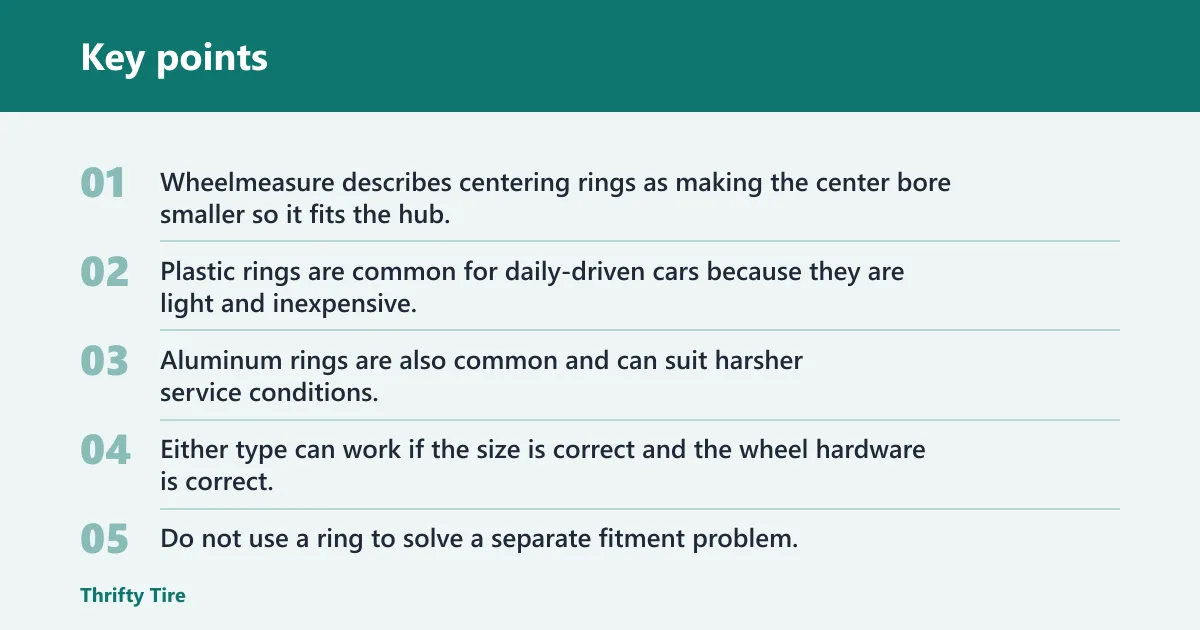
Choose the ring by the two measured diameters: the inner diameter must match the hub, and the outer diameter must match the wheel bore. Wheelmeasure describes centering rings as making the center bore smaller so it fits the hub.
Plastic vs. aluminum rings
Plastic rings are common for daily-driven cars because they are light and inexpensive. Aluminum rings are also common and can suit harsher service conditions. Either type can work if the size is correct and the wheel hardware is correct.
Do not use a ring to solve a separate fitment problem. Rings do not fix the wrong PCD, the wrong offset, or a wheel that hits the brake hardware.
How to confirm ring size from measurements
Take the larger wheel-bore number and the smaller hub number, then match them to the ring package listing. For example, a wheel bore of about 72.6 mm on a hub of about 66.1 mm needs a 72.6-66.1 ring. If the ring is reversed or undersized, the wheel will not center correctly.
Check the ring on the hub before mounting the wheel. It should sit flush and stay in place without forcing it. If it rocks, binds, or leaves a visible gap, the size is wrong.
What else changes wheel fitment?
Center bore matters, but it is only one part of wheel fitment. PCD, offset, diameter, width, and load rating all have to work for the exact vehicle variant. A wheel that clears the hub can still rub the brakes or poke outward if those other values are off.
PCD must match exactly. Offset, written as ET, changes wheel position inward or outward and affects clearance and poke. Diameter and width affect brake clearance and fender space, while load rating has to suit the vehicle’s weight and use.
PCD and bolt pattern
PCD is written as two numbers, such as 5×114.3 or 5×112. The bolt count and circle diameter must match the vehicle exactly. A hub ring cannot correct a bolt pattern mismatch.
Offset and brake clearance
Offset, or ET, is the distance between the mounting face and the wheel centerline. A different ET can move the wheel inward or outward and change inner clearance, outer poke, and brake-room margin.
If the offset is too low or too high for the vehicle, the wheel may contact suspension parts, the brake caliper, or the fender liner even when the bore is correct.
Common fitment problems to catch early
Watch for a wheel that will not seat, a steering-wheel shimmy or body vibration after installation, and ring misuse. Those symptoms often point to a bore mismatch, the wrong hardware, or a wheel that is centered by the bolts instead of the hub.
Correct hardware matters. Use the proper wheel bolts or nuts for the vehicle and wheel design, tighten them with a torque wrench, and re-torque after about 100 to 200 km.
- Wheel will not seat. Stop if the wheel bore is smaller than the hub. Do not force it onto the hub.
- Vibration after installation. Recheck the ring size, the wheel’s bore, the bolt pattern, and the torque pattern. Vibration can come from a loose, mis-centered, or mismatched wheel.
- Wrong rings or hardware. Confirm the ring matches the measured wheel bore and hub diameter, and make sure the lug hardware matches the wheel design.
- Brake or fender contact. Check offset, diameter, and width if the wheel fits the hub but hits nearby parts.
Picture a wheel that measures 72.6 mm at the bore and fits a hub lookup of 66.1 mm, but the installed ring is 70.0 to 66.1. The wheel may start on the hub but will not center correctly, and that can show up as vibration after torqueing. The fix is the correct ring, not tighter bolts.
Frequently asked questions
How do I find out my wheel bore size?
Check the wheel stamping first, because many aftermarket wheels list the center bore on the barrel or back face. If the marking is missing or unclear, measure the center hole with calipers in millimeters. Compare that number with the vehicle hub diameter from the owner’s manual or a wheel data lookup.
How do I find my hub bore size?
Look up the exact year, make, model, and trim in the owner’s manual or a wheel data lookup. That source should give the hub diameter along with the bolt pattern and offset. If the vehicle spec is uncertain, measure the hub directly with calipers and confirm the reading against the published data.
How do I check hub bore size at home?
Clean the hub, zero your calipers, and measure the hub diameter in millimeters. Take the reading at more than one point to make sure corrosion or dirt is not affecting the result. Then compare that measurement with the wheel bore before you choose rings or a wheel.
What is hub bore size on a wheel?
It is the diameter of the hole in the middle of the wheel, measured in millimeters. That hole sits over the hub. When the wheel bore matches the hub exactly, the wheel is hub-centric; if the bore is larger, hub-centric rings can fill the gap.
Can a wheel bore be smaller than my hub?
No. The wheel bore has to be the same size as the hub or larger. If the wheel bore is smaller, the wheel will not seat on the hub, and forcing it is not a safe option. Pick a wheel with the correct bore instead.
How do I measure wheel center bore correctly?
Measure the inner diameter of the wheel’s center hole with calipers in millimeters, not with a tape measure. Clean the bore first, check the tool at zero, and repeat the reading in more than one spot. Use the repeated value to decide whether the wheel is a match or needs rings.