Tiny Rim Leak: Can It Cause Cold Tire Pressure Loss?
Yes. A small rim or bead leak can make cold tire pressure drop overnight, and if the loss is more than about 1–2 psi after a normal temperature swing, treat it as a real air leak rather than weather alone. Ignoring it can leave you underinflated, which hurts handling, tire life, and fuel economy. This guide shows how to tell temperature loss from a rim, valve, or hidden seal leak using a simple cold-morning check.
This guide is part of our Cold tire pressure: what it means and how to set it series.
Can a tiny rim leak drop pressure overnight?
Yes. A slow leak means measurable air loss over hours or days, and a tiny leak at the rim bead can show up as a few PSI gone by morning. Cold weather makes the drop easier to spot because lower air temperature lowers tire pressure in every tire.
What slow loss looks like
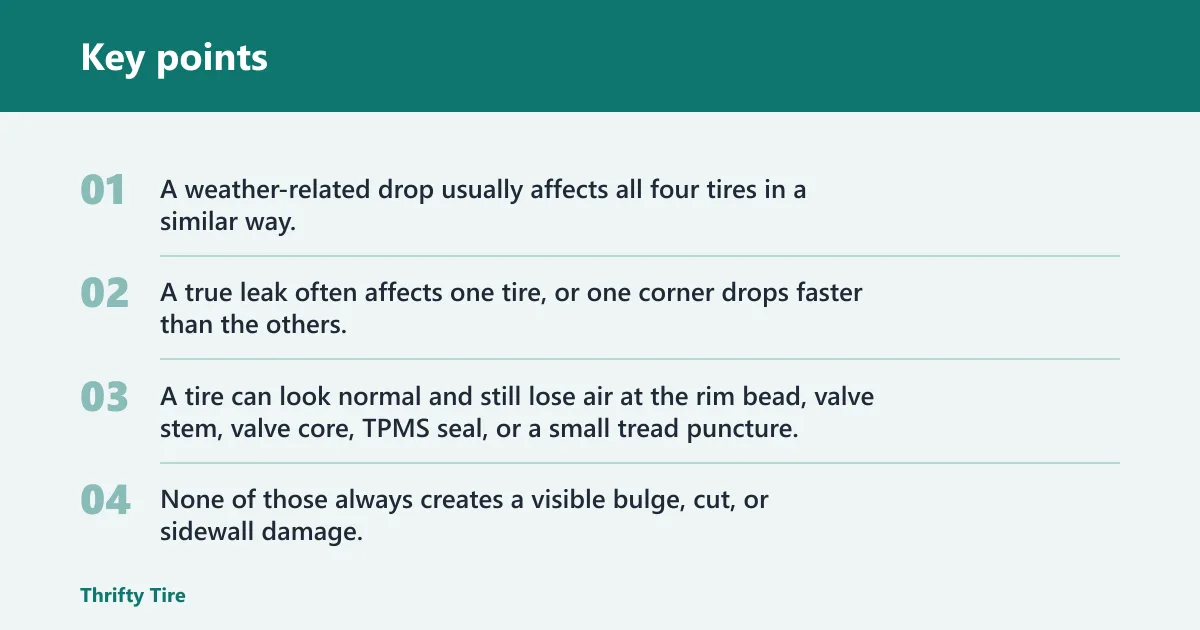
If one tire keeps reading low after sitting overnight, that pattern points to a leak more than ambient temperature alone. A weather-related drop usually affects all four tires in a similar way. A true leak often affects one tire, or one corner drops faster than the others.
Suppose all four tires read about 34 psi on a cool evening and the left front reads about 31 psi the next cold morning while the other three lose about 1 psi each. That gap is not normal temperature change by itself. It suggests a leak at the tire, rim, valve, or TPMS seal on that wheel.
Why a tire can look fine and still leak
A tire can look normal and still lose air at the rim bead, valve stem, valve core, TPMS seal, or a small tread puncture. None of those always creates a visible bulge, cut, or sidewall damage. That is why a clean-looking tire is not proof of a good seal.
How to tell temperature loss from a real leak
Use the door placard as the cold PSI target, and check pressure before driving or after the vehicle has sat for several hours. If one tire keeps falling below the placard while the others stay close, you are likely seeing a real leak, not just normal weather change.
Use the placard, not the sidewall
The door placard lists the manufacturer’s recommended cold PSI for the vehicle. It is usually on the driver door jamb or door edge. The sidewall shows the tire’s maximum pressure, not the vehicle’s target pressure.
Compare all four tires after sitting overnight
Check all four tires with the same gauge before the vehicle moves. A consistent drop across all tires points to ambient temperature change. A larger drop in one tire points to a slow leak that needs attention.
Leak triage table
| Symptom pattern | Likely leak source | DIY check | Next action |
|---|---|---|---|
| Drops only overnight in cold weather | Temperature drop, or a small leak that opens when cold | Check all four tires cold on the same morning and compare to the door placard | Reinflate to placard PSI if all four are similarly low; inspect one tire further if it drops more than the others |
| One tire low every week | Slow leak at bead, valve stem, TPMS seal, or tread puncture | Mark the PSI and recheck after 24 to 48 hours | Use a soap solution test or visit a tire shop for leak tracing |
| Bubbles at valve core | Loose or leaking valve core | Brush soapy water on the valve core and watch for steady bubbles | Tighten or replace the core, then recheck pressure |
| No bubbles but recurring loss | Bead leak, TPMS seal leak, or very small tread puncture | Test the bead area, stem base, TPMS area, and tread with soap solution | Have the wheel demounted and inspected if the leak is still hidden |
| Tire loses air after pothole impact | Rim bead damage or wheel bend | Look for bent wheel lip, dented rim edge, or fresh corrosion near the bead seat | Get a shop inspection; a reseal or wheel repair may be needed |
How to find the leak with a soap solution test
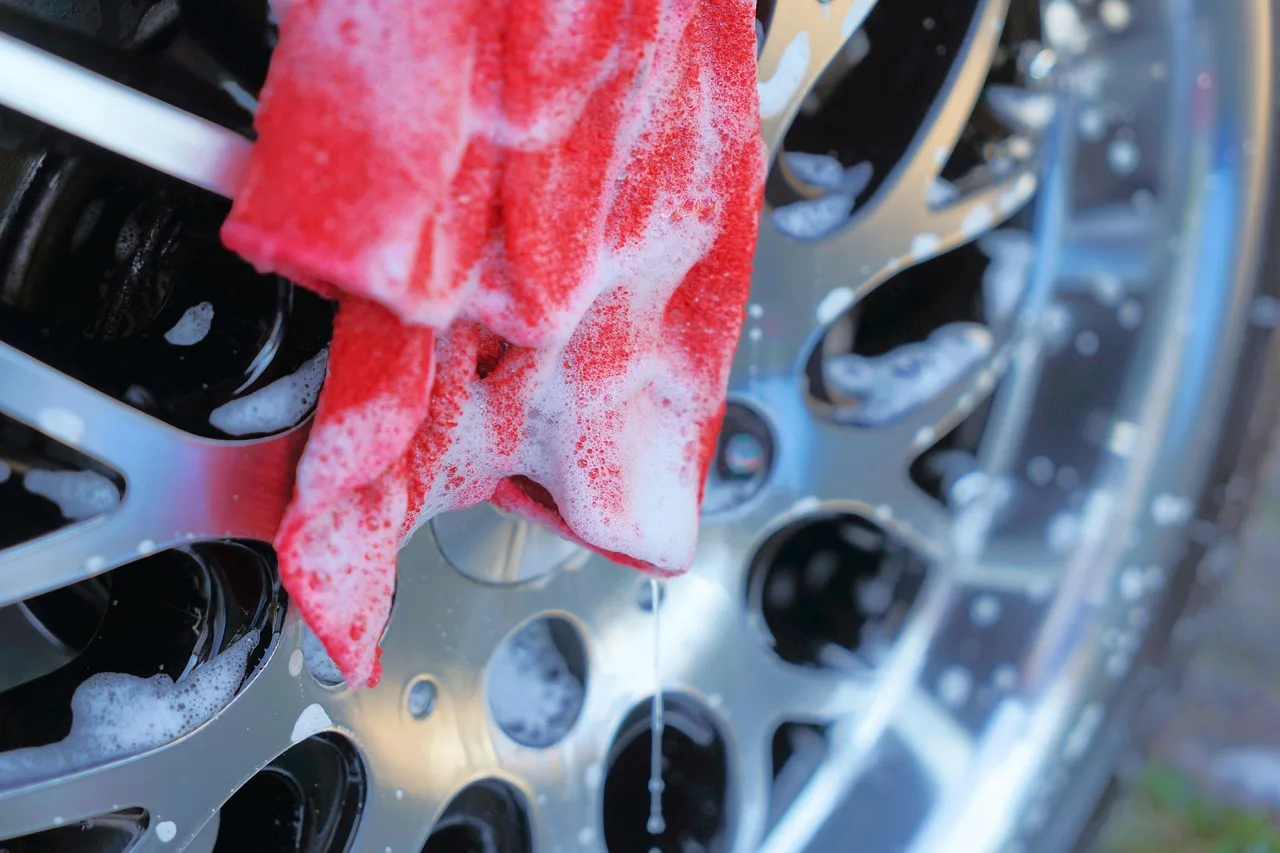
A soap solution test helps pinpoint the leak point at the bead, valve, tread, or TPMS area. Mix soap and water, apply it to suspect spots, and watch for steady bubbles. One bubble here and there is not enough; repeated bubbling at the same point is the clue.
Inflate to placard PSI. Bring the tire to the cold pressure listed on the door placard, then inspect it before driving. Correct inflation helps small leaks show up in a repeatable way.
Brush the bead area. Coat the rim bead seat and the tire bead all the way around. Slow bubbling at the edge of the wheel often means the seal is failing at the bead, especially if corrosion or dirt is present.
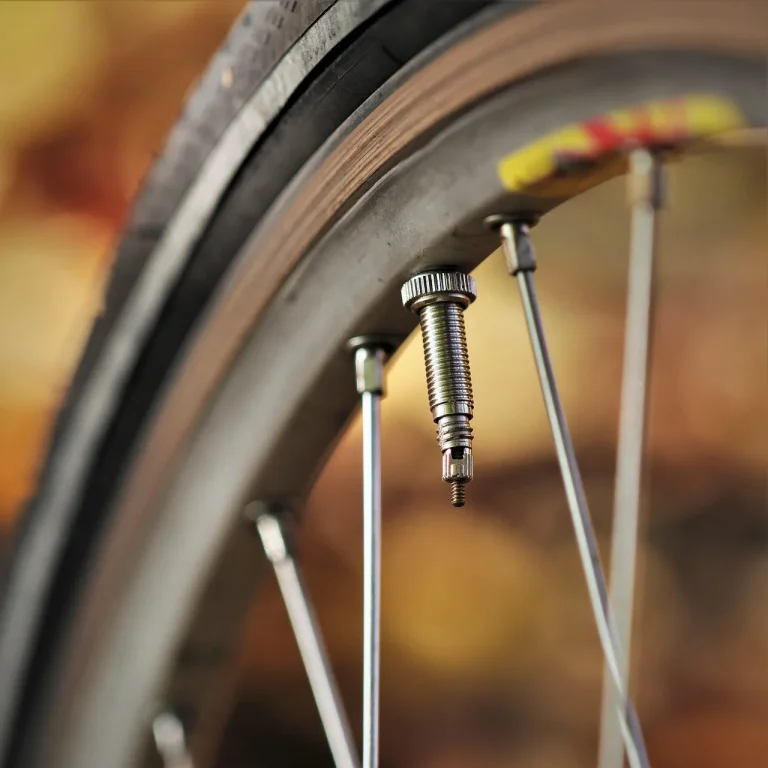
Check the valve stem. Apply soap around the stem base and the valve core. Rubber stems can crack, metal stems can leak at the seal, and a loose core can mimic a rim leak.
Inspect the TPMS area. On direct TPMS systems, soap the sensor base and service kit area if visible. A damaged seal or aging service kit can leak air and look like a bead problem from the outside.
Scan the tread carefully. Rotate the tire and check the tread surface and shoulder for small punctures. Nails and screws can leak slowly enough that the tire still looks normal.
A common first-timer mistake is stopping at the sidewall because it looks fine. The sidewall can be perfect while the bead, valve, or TPMS seal is bleeding air. If the soap test finds nothing outside, the leak may only appear after demounting the tire.
What corrosion and winter roads do to the bead seal
Corrosion on steel wheels can interrupt the bead seal, and that issue is more common in winter salt regions. Rust, dirt, and impact damage can keep the tire bead from sealing evenly against the rim. Freeze-thaw cycles can make an existing weak seal leak more often on cold mornings.
Steel wheel corrosion
Steel wheels can rust at the bead seat, especially where road salt collects. Even light corrosion can leave a rough surface that allows air to escape under pressure. Cleaning and resealing may solve it if the wheel is otherwise sound.
Impact damage and dirty sealing surfaces
A pothole strike can deform the rim lip or disturb the bead seat. Dirt trapped between the tire bead and wheel can also create a tiny leak. That kind of leak may come and go, which makes diagnosis frustrating if you only check the tire when it is warm.
When should you reinflate, monitor, or go to a shop?
If all four tires are roughly low by a similar amount after a cold snap, reinflate to the door placard PSI and monitor the next cold morning. If one tire keeps losing pressure, or if it drops more than about 1–2 psi beyond the others after the same temperature swing, schedule an inspection.
Safe monitoring thresholds
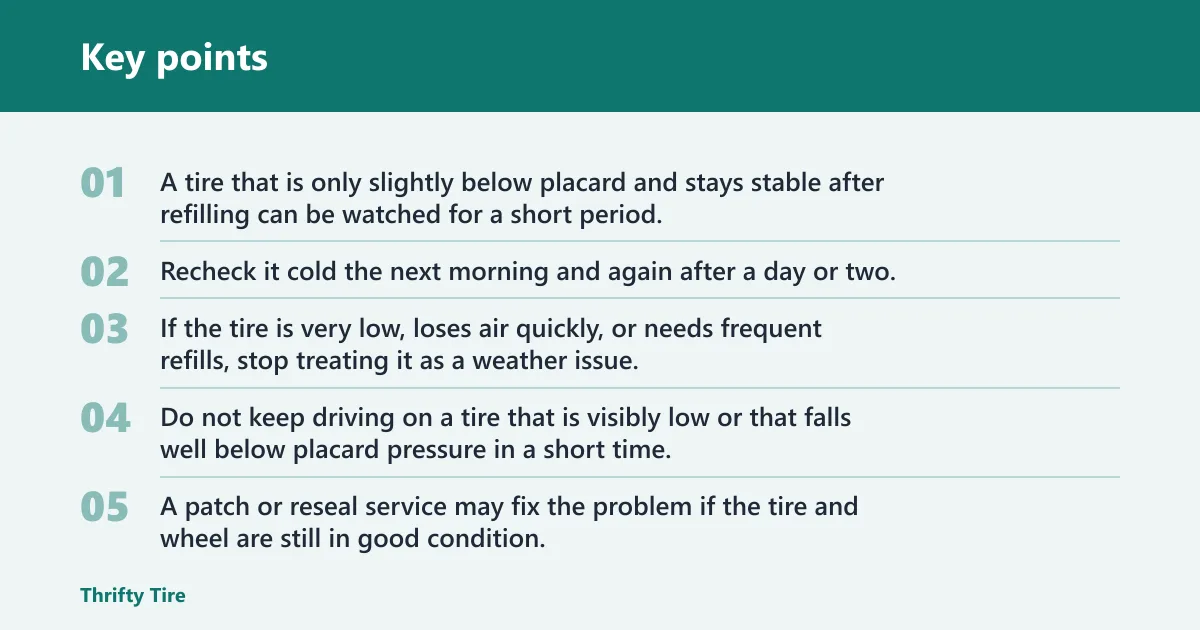
A tire that is only slightly below placard and stays stable after refilling can be watched for a short period. Recheck it cold the next morning and again after a day or two. Stability matters more than appearance.
Signs that need immediate inspection
If the tire is very low, loses air quickly, or needs frequent refills, stop treating it as a weather issue. Do not keep driving on a tire that is visibly low or that falls well below placard pressure in a short time. That raises heat, wear, and failure risk.
Picture a rear tire that reads about 28 psi on Monday morning, about 24 psi on Wednesday, and about 20 psi by Friday while the others stay near 33 psi. That is not normal temperature variation. It needs a leak check at the valve, bead, TPMS seal, and tread, not another guess.
Does a bead leak mean a new tire?
Not always. A bead or rim leak often calls for demounting the tire, cleaning the bead seat, removing corrosion, resealing, or replacing a damaged valve stem or wheel part. A patch or reseal service may fix the problem if the tire and wheel are still in good condition.
Frequently asked questions
Can a tiny rim leak really lower tire pressure overnight?
Yes. A tiny leak at the rim bead, valve stem, or TPMS seal can drop pressure enough to show up the next cold morning. If the loss is consistently more than about 1–2 psi beyond normal temperature change, treat it as a real leak and inspect the wheel.
Why does my tire look fine but keep losing PSI when it’s cold?
Because the leak may be at the bead, valve, or TPMS seal instead of the tread or sidewall. Those leak points can be hidden. Cold air also lowers pressure in every tire, which can make a small leak stand out only on cold mornings.
How do I tell if the leak is in the tire or the wheel rim?
Start with a cold PSI check against the door placard, then use a soap solution test at the bead, valve, TPMS area, and tread. Bubbles at the rim edge point to a bead or rim seal issue. Bubbles on the tread point to a puncture.
Can temperature drops alone explain a low cold tire reading?
Yes, if all four tires fall by a similar amount after the same weather change. No, if one tire keeps dropping more than the others or needs repeated refills. A one-tire pattern points to a slow leak, not temperature alone.
Will a valve stem leak act like a rim leak?
Yes. A leaking valve core or stem base can look like a rim leak because both can make the tire lose air without visible sidewall damage. Soap solution around the stem usually reveals the source. Replacing a valve core or stem is often a simple fix.
Is it safe to drive on a tire with a small slow leak?
Only for short distances if the tire is still near placard pressure and you are going straight to repair or inspection. Do not keep topping it off and ignoring it. Slow leaks can become fast leaks, and low pressure raises heat and damage risk.