Performance Brake Rotor Replacement Cost: What You Pay
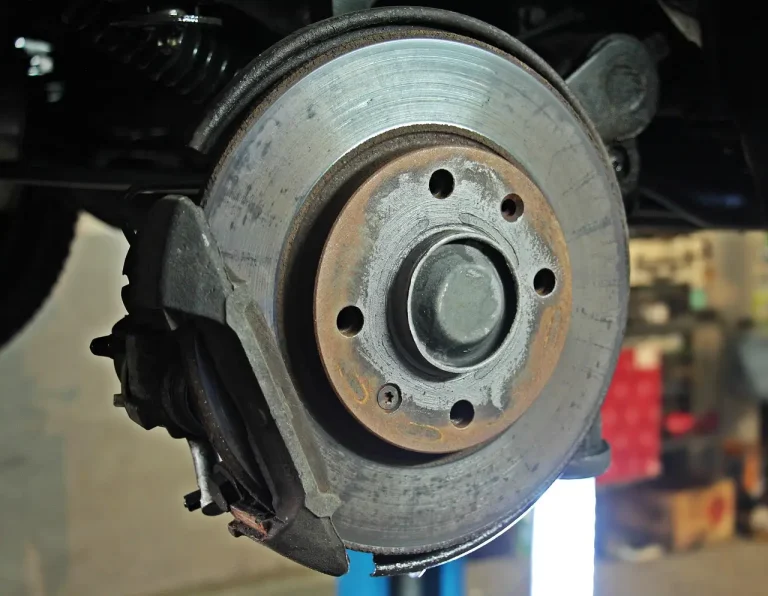
Performance brake rotor replacement usually lands higher than a basic rotor job because the parts are larger, more specialized, or both. The total cost is best viewed by axle: stock-like parts can be lower, drilled or slotted rotors usually cost more, and track-focused setups can climb well above standard replacement pricing before labor is added.
How much do performance rotors cost to replace?
Performance rotor cost table
| Rotor type | Typical parts price | Labor range | Total per axle | Main cost driver |
|---|---|---|---|---|
| Stock replacement rotor | $150 to $250 | $200 to $350 | $350 to $600 | Fitment |
| Premium slotted/drilled rotor | $250 to $500 | $225 to $400 | $475 to $900 | Cooling design |
| OEM performance rotor | $350 to $700 | $250 to $450 | $600 to $1,150 | Brand premium |
| Specialty performance rotor | $800 to $2,500+ | $300 to $600+ | $1,100 to $3,100+ | Material |
Those bands sit above the broad market average because the job often includes more than a simple disc swap. Rotor replacement averages, front-axle replacement pricing, and full pad-and-rotor replacement totals can all move upward once the estimate includes labor, hardware, and vehicle-specific parts.
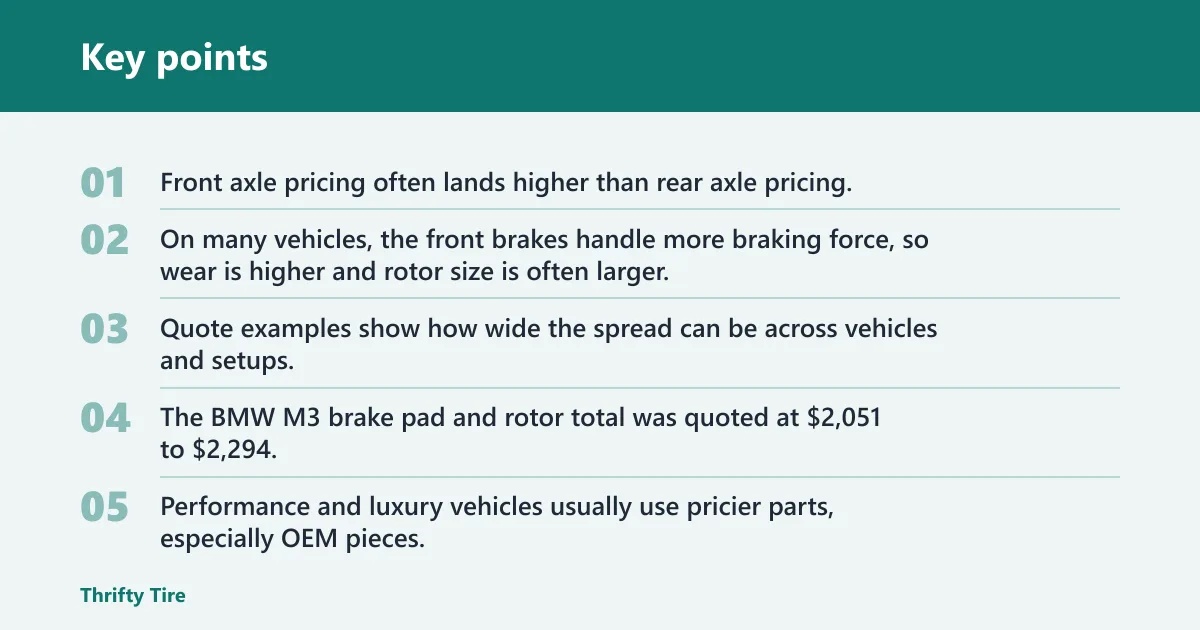
Front axle pricing often lands higher than rear axle pricing. On many vehicles, the front brakes handle more braking force, so wear is higher and rotor size is often larger. That raises parts cost and labor time, especially on performance cars with bigger calipers and thicker rotors.
Quote examples show how wide the spread can be across vehicles and setups. A Honda Civic Sport rotor replacement was quoted at $430 to $549 per axle, while a BMW M3 rotor replacement was quoted at $1,014 to $1,114 per axle. The BMW M3 brake pad and rotor total was quoted at $2,051 to $2,294.
Why performance rotors cost more
Performance and luxury vehicles usually use pricier parts, especially OEM pieces. Larger diameters, thicker profiles, and more complex venting raise material and machining cost. Bigger brakes also need tighter fitment, so the rotor is not a simple one-size replacement.
Heat management is another price driver. Slotted and drilled rotors are built to move heat, clear gas, and keep the pad face cleaner under repeated stops. That design work adds cost, and it can add wear if the rotor is used outside its intended job.
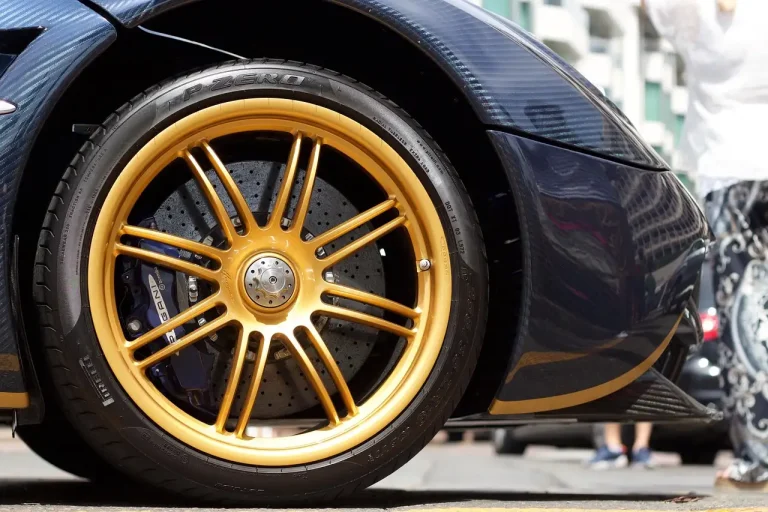
Brand and construction matter too. One-piece iron rotors usually cost less than specialized assemblies, while hat-mounted designs separate the friction ring from the hat for weight and heat reasons. Carbon-ceramic rotors sit at the far end of the price scale because the material and manufacturing process are far more expensive.
A larger rotor diameter can also push the quote up even if the caliper stays the same, because the rotor uses more material and may require a more exact fit to the hub and wheel package.
What does brake rotor labor add to the total?
Labor usually adds a meaningful amount to the axle total, and that is before any extra inspection or hardware work. Independent shops are often lower than dealerships, but the final price depends on the vehicle, the brake package, and whether the job is a plain rotor swap or a broader brake service.
Independent shop versus dealership pricing
An independent brake job is often the lower-cost path when the vehicle uses common parts and standard hardware. Dealerships usually charge more per hour, and they may specify OEM rotors or dealer-supplied hardware. That can be worth it for some owners, but it is not automatically better value.
Performance cars can narrow the gap because the job itself is more specialized. Larger rotors, electronic parking brake systems, and caliper hardware checks can add time. If the quote includes brake fluid service, pad sensors, or calibration work, the labor number can climb quickly.
What changes the quote?
A rotor estimate is rarely just “parts plus labor.” The quote can change based on rotor size, 1-piece versus 2-piece construction, pad sensor replacement, electronic parking brake setup, hub corrosion cleanup, dealer labor rates, and the complexity of performance calipers.
-
Confirm axle and fitment.
Check whether the quote is for the front axle, rear axle, or both. Front axle brake service is often priced separately because the parts are larger and wear faster on many vehicles. -
Ask what labor includes.
Make sure the estimate covers inspection, rotor installation, pad retraction, and hardware replacement if needed. Some shops quote only rotor swap labor, while others bundle pad service and a brake inspection. -
Compare parts lines.
Separate OEM rotors, aftermarket performance rotors, and pads on the estimate. The part choice often explains more of the spread than the labor line does.
Can you resurface performance rotors?
Sometimes, but only if rotor thickness allows it. Resurfacing uses a lathe to shave off the rough outer surface, and many modern rotors are too soft or thin to resurface. Specialty rotors may also be too expensive or too thin to justify machining instead of replacement.
When resurfacing is possible
Resurfacing can work when the rotor still sits above the minimum thickness listed by the manufacturer and the surface issue is light, such as minor scoring or uneven pad deposit. It is most useful on simple iron rotors when a shop still has the equipment and chooses to offer the service.
Do not assume every shop machines rotors now. Many modern shops skip machining because replacement rotors are often inexpensive enough, and because thin rotors may not have enough material left for a safe cut. That is especially true on performance rotors with a shorter thickness margin.
Why thin or specialty rotors need replacement
Track-oriented rotors and high-output OEM performance rotors can run hot and shed material faster than a plain commuter rotor. If a rotor is warped, cracked, or already at or near its minimum thickness, replacement is the correct call. Resurfacing cannot fix a rotor that is already out of spec.
A common first-timer mistake is to ask for machining after the steering wheel shakes under braking and the rotor has already been cut once. If the rotor is now below minimum thickness, the shop should replace it instead of taking off more material.
Are OEM and aftermarket rotors priced differently?
Yes. OEM replacement rotors usually cost more than generic aftermarket parts because they match factory fitment and original equipment compliance. Aftermarket performance rotors can cost less or more depending on design, but drilled, slotted, and one-piece iron options often price differently from OEM parts.
OEM fitment and compliance
OEM rotors are built to match the vehicle’s original dimensions, thermal expectations, and hardware. On luxury and performance cars, that factory match can come at a premium. Buyers often pay more for the certainty that the rotor will fit without changes to calipers, hats, or sensor hardware.
Aftermarket drilled, slotted, and one-piece iron rotors
Aftermarket performance rotors span a wide range. Some are plain one-piece iron replacements meant to look stock but resist heat better, while others add slots or drill patterns for gas and dust control. Those design choices can raise the price, but they do not always help every driver.
Performance rotors are not one product category. The price follows the application, from street use to road racing, circle track, off-road, and drag racing.
Hat-mounted and carbon-ceramic exceptions
Hat-mounted rotors separate the friction ring from the center section, which can reduce mass and improve heat handling in demanding use. They also raise cost because the assembly is more complex. Carbon-ceramic rotors are far more expensive again, and replacement pricing reflects both material cost and limited fitment.
This is why performance rotor types matter: a rotor built for the street is not priced the same way as one built for repeat track use.
Do you need pads with new rotors?
Not always. You can replace rotors without replacing pads if the pads still have enough material, wear evenly, and match the new rotor surface. Pad and rotor kits make sense when both parts are near the end of service life or when you want a clean benchmark for the whole job.
When pads can stay in service
If the pads are still thick enough and show even wear, a rotor-only job can be reasonable. That said, used pads on new rotors can leave uneven transfer patterns if the pad surface is already glazed or tapered. The shop should inspect both parts before approving the work.
Why front and rear quotes often differ
Front and rear brake service often price differently because the front axle usually does more stopping work and may use larger rotors. On many enthusiast cars, the front set is also more likely to be performance-oriented. That means a front-only quote can be much higher than a rear-only quote, even on the same vehicle.
-
Measure pad thickness.
Replace the pads if they are near the wear limit, uneven, or glazed. That avoids paying labor twice if the pad surface will not seat well on the new rotor. -
Check rotor thickness.
Compare the current rotor to the minimum thickness spec. If it is too thin for resurfacing, replacement is the only safe option. -
Price the bundle.
Compare a rotor-only quote with a pad and rotor kit quote. In some cases, the bundled parts total is low enough that replacing both makes better sense.
Frequently asked questions
How much does performance brake rotor replacement cost?
Most performance rotor jobs land above basic stock replacement because the parts are larger, more specialized, or both. A stock-like axle can fall around $350 to $600 total, while drilled, slotted, and OEM performance setups often run higher. Track-focused hardware can push well past that range.
Why are performance brake rotors more expensive than stock rotors?
They usually use larger diameters, thicker profiles, and more complex cooling features. OEM performance parts can also carry a brand premium, and specialty designs such as hat-mounted or carbon-ceramic rotors cost more to make and fit. Heat management is a real engineering cost, not a styling add-on.
Do drilled and slotted rotors cost more to replace?
Usually yes. The slots or drill pattern add machining cost, and performance-focused rotors are often sold in smaller production runs than plain replacements. They may also wear differently, so the total ownership cost can be higher if the car sees hard street driving or repeated track use.
Is it cheaper to replace rotors at a shop or dealership?
Independent shops are usually cheaper because labor rates are lower. Dealerships often charge more for labor and may insist on OEM parts, which can raise the final bill. A dealership may still be the better fit for certain performance or warranty-sensitive jobs, but price is rarely the lower one.
How much do performance brake rotors cost by axle?
For common enthusiast builds, stock-like rotors can run $350 to $600 per axle, premium drilled or slotted rotors about $475 to $900, OEM performance rotors about $600 to $1,150, and specialty performance rotors $1,100 to $3,100+. Front axles often sit at the higher end of those ranges.
Can I replace performance rotors without replacing pads?
Yes, if the pads still have usable thickness, even wear, and no glazing or taper. That said, pads and rotors are often replaced together because both are wear items and the labor overlaps. If the pad surface is poor, the new rotor may not bed in correctly.
Are premium brake rotors worth the extra money?
They can be, but only for the right use case. If you tow, drive hard on mountain roads, or track the car, the added heat capacity and fade resistance may justify the cost. For ordinary commuting, a good stock-style rotor often makes more sense.
What makes a BMW or other performance car brake job cost more?
Performance cars often use larger rotors, pricier OEM parts, and more specialized labor. Bigger hardware and tighter fitment push the quote up fast.