Brake Job Cost: What You Should Expect to Pay
A brake job often costs about $250 to $800 per axle for pads and rotors, while pads-only work is often about $150 to $300; a fair quote should match measured wear on each axle and avoid parts that inspection does not support. Approving the wrong estimate can cost you hundreds in upsells or leave you driving on worn brake parts. This guide breaks down normal price ranges, safety-related repairs, and the line items that should prompt questions.
Use the axle as the unit that matters. Front and rear brake work is quoted separately because pad size, rotor size, parking brake design, and labor access often differ from one end of the vehicle to the other. A four-wheel total means less until you know what each axle actually needs.
A fair quote comes down to three checks: the service tier being recommended, the inspection evidence behind each added line item, and whether the estimate spells out parts and labor clearly. Those checks matter more than chasing the lowest number.
What should a brake job cost per axle?
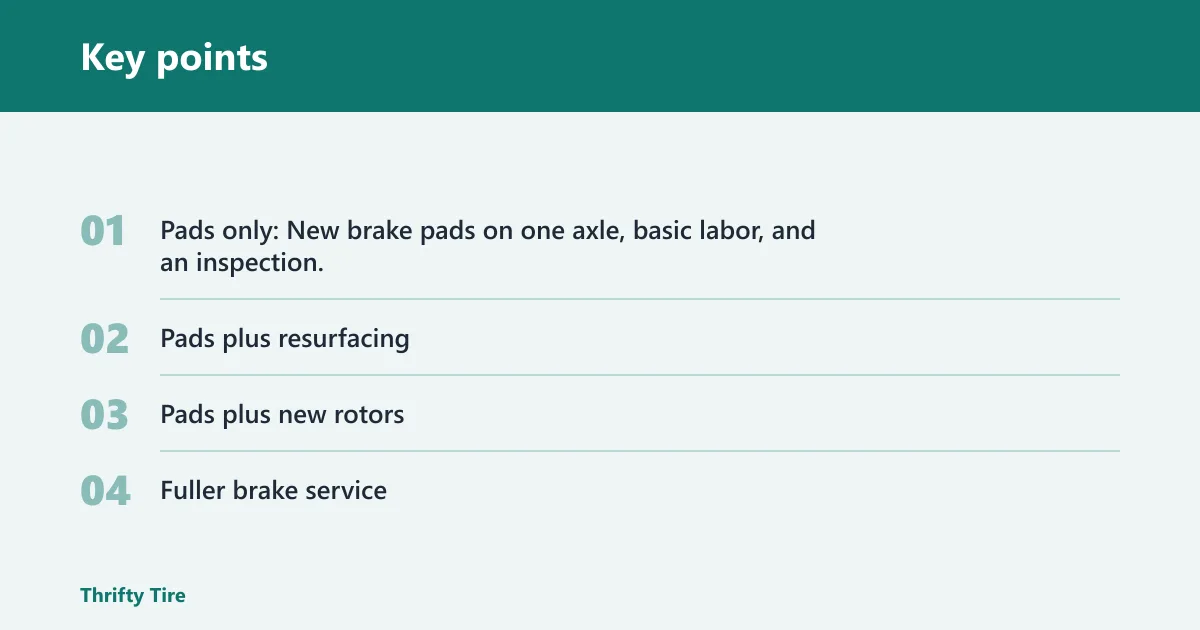
Per axle, brake pricing usually falls into tiers: pads only at the low end, pads plus resurfacing in the middle, pads plus new rotors at the common full-service level, and higher quotes when fluid work or caliper-related repairs are added. A fair price follows the actual condition of that axle.
Use per-axle pricing as the base comparison
Brake work is commonly sold per axle because pad replacement is normally done in pairs on the same axle. Replacing only one front pad or one rear pad is not standard service. Front and rear estimates should stand on their own, with separate parts, labor, and inspection findings.
For a basic comparison, think in service tiers instead of one national average. That keeps a pads-only quote from being judged against a pad-and-rotor quote as if both cover the same work.
Low, typical, and high quote bands by tier
Pads-only work is often quoted below a pad-and-rotor job because it skips rotor replacement. At the same time, average brake pad replacement costs start around $335 per axle, and pad replacement averages $335 to $394 per axle. If a quote is far below that, ask what is missing: hardware, inspection steps, or rotor work that may actually be needed.
Rotor replacement averages $574 to $698 per axle. Pads and rotors together average $909 to $1,092 per axle. All four pads and rotors average $1,818 to $2,184 on a car. Those figures are useful anchors, but only when the shop is quoting the same scope.
A high quote per axle can still be reasonable when it includes fluid service, electronic parking brake setup, seized hardware removal, pad wear sensor replacement, or caliper work. The number alone is not the issue. The estimate needs to say why.
What each tier usually means
- Pads only: New brake pads on one axle, basic labor, and an inspection. This can be appropriate when rotor thickness, surface condition, and runout remain within specification.
- Pads plus resurfacing: New pads and lathe-based rotor machining. Labor still applies even without new rotors.
- Pads plus new rotors: New pads, new rotors, installation labor, and usually hardware. This is the common quote when rotors are too worn, warped, grooved, cracked, or otherwise unsalvageable.
- Fuller brake service: Pads and rotors plus brake fluid work, bleeding, caliper-related repairs, parking brake service, or sensor replacement.
Say your front brakes squeak lightly, the pedal feels normal, and the shop measures rotor thickness within spec. Pads-only may be enough on that axle. If the same car also has steering-wheel vibration during braking, the quote should explain whether resurfacing or rotor replacement is being recommended and what finding led to that call.
What is included in a brake job estimate?
A solid brake estimate should list the axle, the parts being replaced or machined, the labor tied to those parts, and any conditional items such as fluid service, sensors, caliper work, or parking brake adjustment. If the line items are vague, the quote is hard to judge and easy to pad.
Core line items that belong on most quotes
At minimum, a clear estimate should name the pads, the rotor decision, and labor. If rotors are not being replaced, the quote should say whether they are being resurfaced or reused as-is after measurement. It should also name any hardware kit, because clips, shims, and related small parts are common wear or service items.
Shop supplies and disposal fees can be legitimate, but they should be labeled plainly. “Miscellaneous” by itself is not enough. If the shop charges extra for coated rotors, premium friction material, or branded upgrades, that should be spelled out too.
Conditional items that may belong on a fuller brake job
A fuller brake estimate may include a brake fluid bleed or flush, caliper inspection or repair, and rear parking brake adjustment or setup. Those items are not automatic on every basic pad replacement, but they are normal when the repair scope is broader or when inspection shows related faults.
Brake fluid matters because the hydraulic system relies on it to transfer pedal force to the calipers. If air is in the brake lines, bleeding is required. If the fluid is contaminated or the repair opened the hydraulic system, added labor and fluid service may be justified. KMF Automotive says brake repair can include pads, rotors, fluid, ABS sensors, and the booster, which is a useful reminder that the scope can extend beyond friction parts when diagnosis points there.
Calipers belong on the inspection list even if they are not being replaced. Seized slide pins, sticking pistons, torn dust boots, and leaks can turn routine pad service into a larger repair. The quote should identify the failed part and the side affected.
Parking brake work is especially relevant on many rear brake jobs. Some vehicles use drum-in-hat parking brakes inside the rear rotor hat, while others use integrated rear calipers. Adjustment or service may be appropriate, but it should match a real finding instead of appearing by default without explanation.
Named fees beat vague fees
If the estimate adds brake fluid service, pad wear sensors, electronic parking brake service mode, rotor set screws, or seized hardware labor, those charges should be listed separately. A high total is much easier to judge when each cost has a stated reason.
Brake quote table
| Service line item | What it includes | Essential? | Common price driver | What to question if the quote is high |
|---|---|---|---|---|
| Brake pads, one axle | New pads, installation labor, basic inspection | Yes when pads are worn | Pad material, axle, vehicle model | Are hardware parts included, and are the rotors being measured or ignored? |
| Rotor replacement, one axle | New rotors and labor to install them | Yes when rotors are too worn, warped, cracked, or damaged | Rotor size, coated or premium parts, difficult removal | What measurement or defect makes replacement necessary instead of reuse or resurfacing? |
| Rotor resurfacing | Lathe machining of existing rotors, plus labor | Situational | Rotor condition and machine time | Are the rotors thick enough after machining, and is machining worth it on this design? |
| Pad and rotor package | Pads, rotors, labor, often hardware | Yes when both friction parts and rotors need service | Axle, rotor size, parts grade | Does the package hide separate charges for hardware or shop fees? |
| Hardware kit | Clips, shims, springs, related small install parts | Usually appropriate | Vehicle-specific hardware | Is it already bundled with the pad set or charged twice? |
| Brake fluid service | Fluid exchange or bleed, depending on condition and repair scope | Situational | Contaminated fluid, air in lines, opened hydraulic system | Is this a full flush, a bleed, or both, and what finding supports it? |
| Caliper service or replacement | Slide service, caliper replacement, or related labor | Only when inspection finds a fault | Seized pins, sticking piston, leaks, torn boots | Which caliper failed, on what side, and what symptom or inspection result proves it? |
| Pad wear sensor | Sensor replacement where fitted | Situational | Vehicle design, one-time-use sensor style | Is the sensor actually damaged or triggered, and is it one-time-use on this car? |
| Parking brake adjustment | Adjustment or setup during rear brake service | Situational | Rear brake design and current adjustment | Does the vehicle need this now, or is it being added automatically? |
| Shop supplies or disposal | Cleaners, lubricants, disposal charges | Common but should be modest and named | Shop policy | What does the fee cover, and why is it not itemized more clearly? |
When is a brake quote fair, high, or suspiciously low?
A fair brake quote names the axle, explains the rotor decision, and ties extra charges to inspection findings such as low rotor thickness, sticking calipers, or contaminated fluid. A low quote can be risky when it skips hardware or measurements. A high quote needs proof, not blind trust.
Signs the quote reflects real repair scope
Look for specifics: front or rear axle, pad brand or grade, rotor replacement versus resurfacing, hardware, fluid work if needed, and caliper inspection notes. A fair estimate can run higher than average if it documents seized parts, rear parking brake complexity, or electronic parking brake procedures.
Suppose a rear quote includes extra labor because the vehicle uses an integrated electronic parking brake. That added charge can make sense if the estimate names the setup procedure instead of burying it in a generic labor line.
Low quotes that can cost more later
Be careful with prices that look low because the job scope is thin. Warning signs include no hardware listed, no rotor measurements, vague rotor resurfacing on already thin rotors, or bundled fees that hide what parts are and are not included.
A common first-timer mistake is comparing a pads-only estimate to a pad-and-rotor estimate and assuming the cheaper shop is simply priced better. If one quote includes new rotors and the other does not, they are fixing different problems.
High-quote red flags
Ask more questions when a shop recommends calipers, fluid flush, pad sensors, and rotors without giving a measurement or failure reason. A second opinion is sensible when major items are added to both axles at once even though symptoms point to only one axle.
If the shop says the rotors “look bad,” ask for the measured thickness and whether there is warping, heat spotting, heavy grooves, cracking, or runout beyond spec. If the answer stays vague, the price may be inflated.
How much do pads, rotors, and resurfacing usually add?
Pads are the lowest tier, rotors are the larger parts cost, and resurfacing sits between reuse and replacement because labor still applies. The right comparison is simple: what extra problem is this next line item solving on this axle?
Brake pad replacement cost per axle
Brake pads are wear-and-tear components, so they are often the first brake part replaced. Average brake pad replacement costs start around $335 per axle, and pad replacement averages $335 to $394 per axle. Pads can sometimes be replaced without rotors when rotor thickness, surface condition, and runout remain within spec.
Rotor replacement cost per axle
Rotors may be replaced because they are too worn, warped, heat-spotted, grooved, cracked, or damaged. Average brake rotor replacement costs start around $571, and rotor replacement averages $574 to $698 per axle. When a shop quotes pads and rotors together, the average is $909 to $1,092 per axle.
When resurfacing makes sense, and when it does not
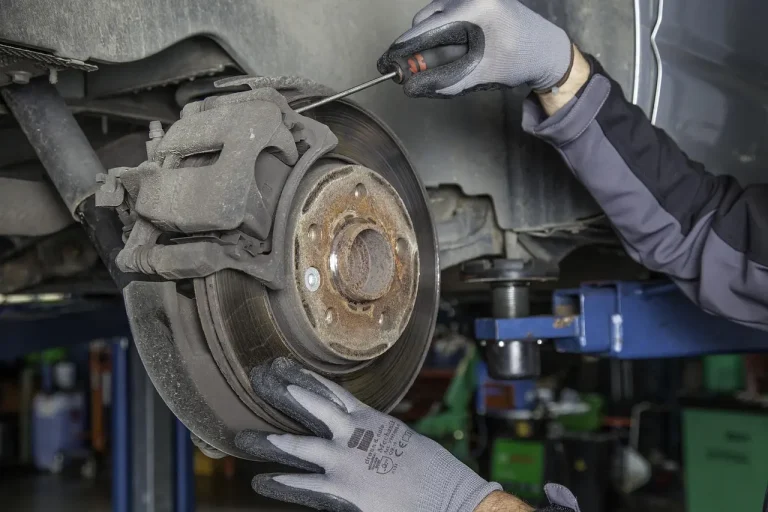
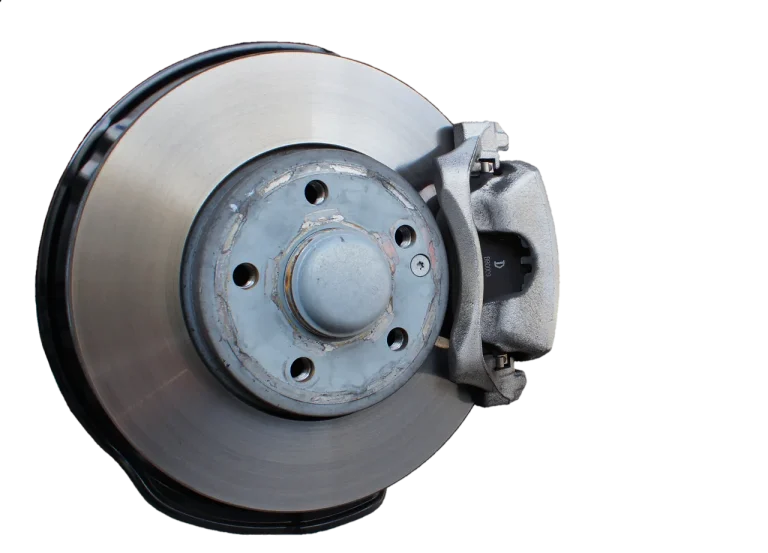
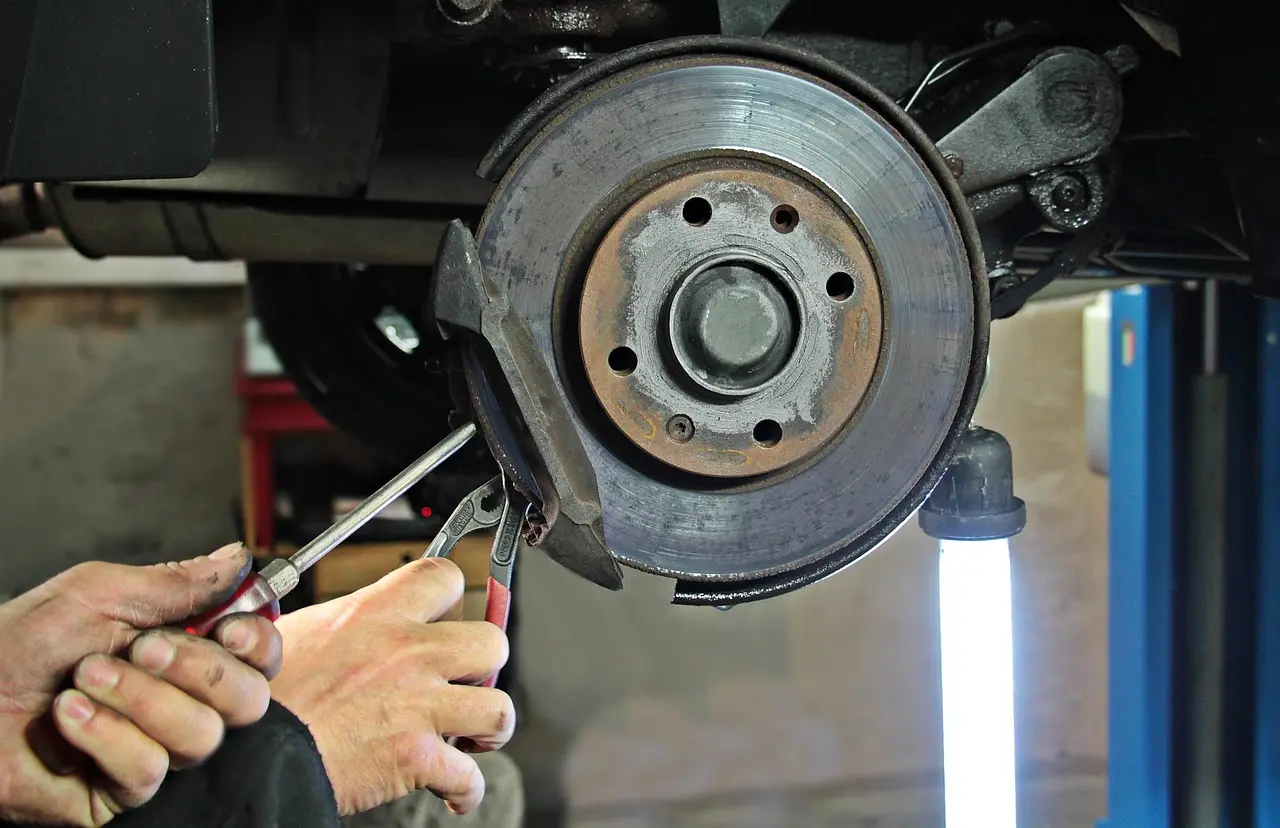
Some mechanics resurface rotors instead of replacing them. The process uses a brake lathe to machine the friction surface. That can be reasonable when the rotor is thick enough, the surface damage is minor, and the finished rotor will remain within specification.
Not all rotors can be resurfaced. Modern low-mass rotor designs often leave less machine margin. Resurfacing is usually poor value on thin rotors, heavily grooved rotors, badly warped rotors, cracked rotors, or rotors already near minimum thickness because you still pay labor and may soon need replacement anyway.
Picture a front rotor with a deep outer lip, blue heat marks, and pedal pulsation during stops. Even if machining is technically possible, replacement may be the better value if the finished thickness would end up near the limit.
Why are front brakes often more expensive?
Front brakes are often pricier because they handle more stopping load, usually wear faster, and may use larger pads and rotors. Many vehicles also place more complex hardware, vented rotor designs, or sensor-related parts up front, which raises both parts cost and labor.
Front axle load and wear
Under braking, weight transfer increases the load on the front axle. That usually means faster pad wear and more heat in the front rotors. Shops therefore replace front components more often, and the parts themselves are often larger than the rear equivalents.
Larger parts and added hardware
Front rotors are commonly larger, and larger rotors generally cost more. Some vehicles also use costlier pad wear sensors, anti-rattle hardware, or more expensive rotor designs on the front axle. That alone can explain a front quote that is higher than the rear quote even on the same car.
When the rear axle can still cost more
Rear brakes are not always the cheaper side. Electronic parking brake systems, drum-in-hat parking brake hardware, and stubborn corrosion can raise rear labor. On some models, the rear quote climbs because the service includes parking brake adjustment or setup steps that the front axle does not need.
What makes one vehicle’s brake job cost more than another’s?
Vehicle make and model change brake pricing through rotor size, pad shape, brake package design, sensor count, parking brake type, and labor access. Larger trucks, luxury cars, and performance models often carry higher parts costs, while corrosion and seized hardware can push labor up on any vehicle.
Vehicle-specific spread is real
Model-based examples show why one average number is never enough. A Honda Civic Sport brake pad and rotor job can total $708 to $884 for one axle. A BMW M3 brake pad and rotor job can total $2,051 to $2,294 for one axle. Those are both one-axle jobs, yet they sit in very different price bands.
Luxury, truck, and performance patterns
Luxury and performance vehicles often use larger rotors, more expensive pad compounds, and model-specific sensors or hardware. Trucks and SUVs can bring heavier-duty parts and larger rotor diameters. The price jump is usually parts-driven first, then labor-driven if packaging is tight or corrosion is heavy.
Dealer versus independent shop pricing
Dealer quotes are often higher because they may use original-equipment parts pricing and follow more model-specific service procedures by default. Independent shops can be lower, but scope is still the main question. Compare part grade, rotor decision, hardware inclusion, and whether fluid or sensor work is being added for a stated reason.
Which add-ons are necessary and which are upsells?
Necessary add-ons solve a found problem: air in the lines, contaminated fluid, failed calipers, worn sensors, or parking brake issues. Upsells are charges added without a measurement, symptom, or defect. The line between the two is simple: the shop should be able to say what failed and why.
Brake fluid flush versus required bleeding
Bleeding is required when air is in the brake lines or the hydraulic system has been opened during repair. A flush may be recommended when the fluid is contaminated or overdue by service schedule, but it is not the same thing as routine pad replacement. Ask which service the quote includes.
If the estimate says “full brake job,” fluid work may be part of that scope because that level of service often includes a brake fluid bleed or flush when inspection or repair conditions call for it. If the estimate is only for pads and rotors on one axle, fluid service should appear as a separate, explained line.
Caliper work after inspection findings
Calipers should be inspected, not automatically replaced. Added caliper cost is more credible when the quote identifies a seized slide pin, sticking piston, torn boot, uneven pad wear, or visible leak. If none of that is named, the recommendation needs more support.
Parking brake adjustment, hardware kits, and sensors
Parking brake adjustment can be appropriate during rear service, especially with drum-in-hat or integrated rear parking brake designs. Hardware kits are often a normal part of quality brake service. Pad wear sensors are more conditional. Some vehicles need a new sensor when it has been triggered or damaged; others do not.
Premium-coated rotors and branded pad upgrades sit in the optional bucket unless the shop explains a real benefit for your use. If the base repair already restores safe braking, upgrades should be presented as choices, not as mandatory parts.
How should you compare two brake quotes line by line?
Start by matching the same axle and the same service tier. Then compare pads, rotors or resurfacing, hardware, labor, fluid work, sensors, and parking brake lines one by one. A quote is easier to trust when every higher charge has a plain reason attached.
Step-by-step quote comparison
- Confirm both estimates are for the same axle: front or rear.
- Check the service tier: pads only, pads plus resurfacing, pads plus new rotors, or fuller brake service.
- Match the parts grade where possible, including coated versus standard rotors.
- Ask whether hardware is included or billed separately.
- Ask for the rotor measurement and the stated reason for resurfacing or replacement.
- Review labor lines for seized hardware, electronic parking brake procedure, or difficult rotor removal.
- Treat fluid service, calipers, sensors, and parking brake work as conditional items that need a stated finding.
- Question vague fees until they are named clearly.
Questions that expose vague or inflated estimates
Ask these directly:
- What is the measured rotor thickness on this axle?
- If the rotors are being replaced, what defect or measurement rules out resurfacing or reuse?
- Is hardware included with the pads, or is it a separate line?
- Is the fluid charge for a bleed, a flush, or both?
- Which caliper, pin, or sensor failed, and what did you find?
- Does this rear quote include parking brake adjustment because the design requires it, or because you found a problem?
If a shop can answer those questions in plain terms, the quote is usually easier to defend. If the answers stay broad, a second estimate is worth the time.
Frequently asked questions
What should a brake job cost?
A brake job should cost an amount that matches the actual service tier on the axle being repaired. Pads alone cost less than pads and rotors, while fluid work, caliper issues, sensors, and parking brake service add cost only when inspection findings support them.
What does a brake job cost today?
Use those numbers only after matching the same axle and repair scope.
How much does a full brake job cost?
A full brake job usually costs more than a basic pad-and-rotor quote because it can include brake fluid bleeding or flushing, brake caliper inspection, and parking brake adjustment or setup where needed. On a car, all four pads and rotors average $1,818 to $2,184 before added caliper or fluid-related repairs.
How much should a brake job cost per axle?
Per axle is the right way to judge brake pricing. A fair quote explains where your axle falls.
What is included in a brake job cost estimate?
A strong estimate names pads, rotors or resurfacing, labor, and hardware first. Depending on the vehicle and findings, it may also include brake fluid work, caliper inspection or replacement, pad wear sensors, and parking brake adjustment. Vague fees should be questioned until they are itemized.
Why are front brakes more expensive to replace?
Front brakes are often more expensive because they handle more braking load and commonly use larger pads and rotors. Many vehicles also put more expensive hardware or sensors on the front axle. Rear brakes can still cost more when parking brake design or corrosion adds labor.