How to Read Tire Size Numbers on the Sidewall
Read a tire sidewall by matching the full size code, load index, and speed rating to the vehicle door-jamb placard. If any of those do not match the placard, do not assume the tire is correct. Using the wrong size or rating can hurt handling, clearance, load capacity, and safety. This guide breaks down each sidewall marking and shows how to verify it against the placard before you buy or install.
Read the sidewall code
A typical sidewall string looks like P225/65R17 95H or 205/55 R 16 91V. The size code, load index, and speed rating usually sit together on the sidewall, while the DOT date code appears elsewhere in a longer DOT marking. Start with the full string, then compare it with the door-jamb placard.
Sample size string breakdown
Use P225/65R17 95H as a reading template. P is the tire type prefix, 225 is width in millimeters, 65 is the aspect ratio, R means radial construction, 17 is rim diameter in inches, 95 is the load index, and H is the speed rating.
Where the markings usually appear
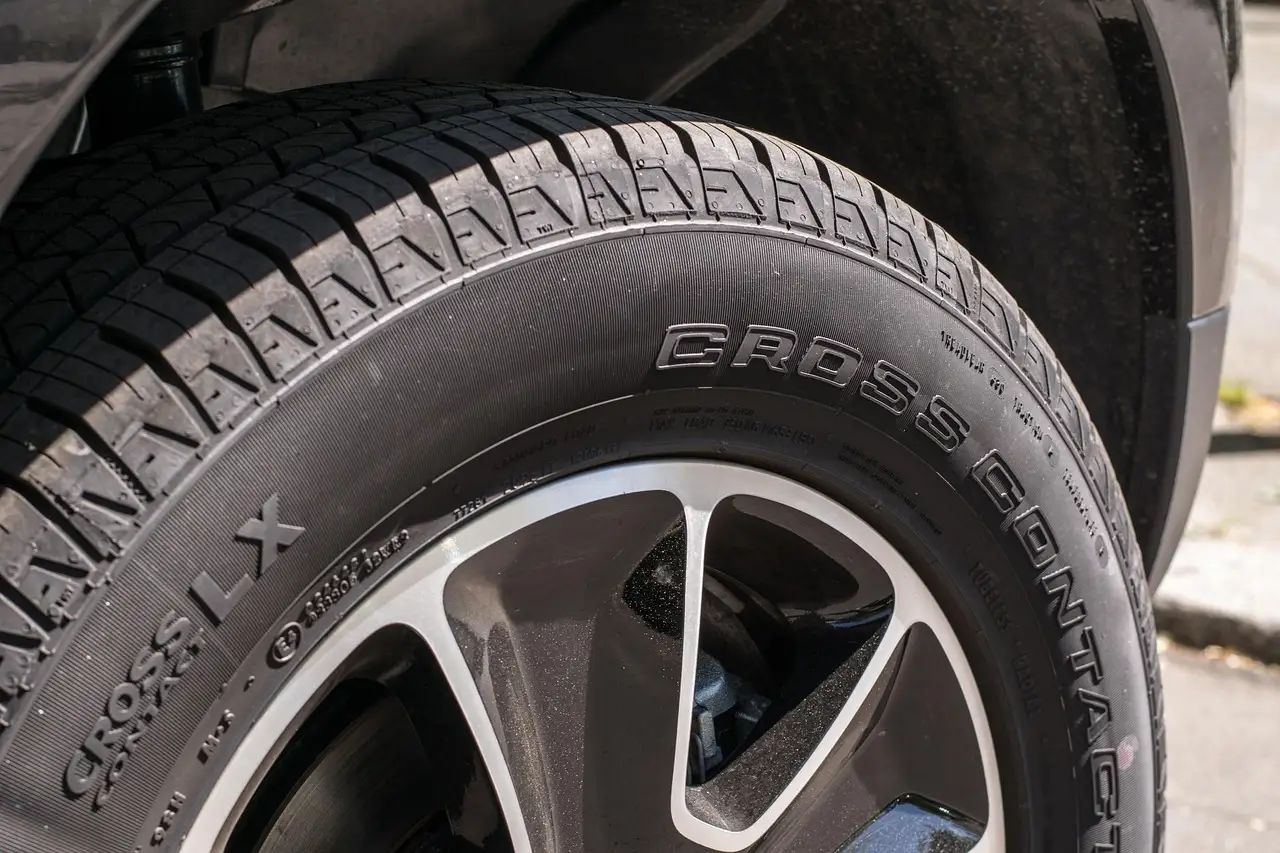
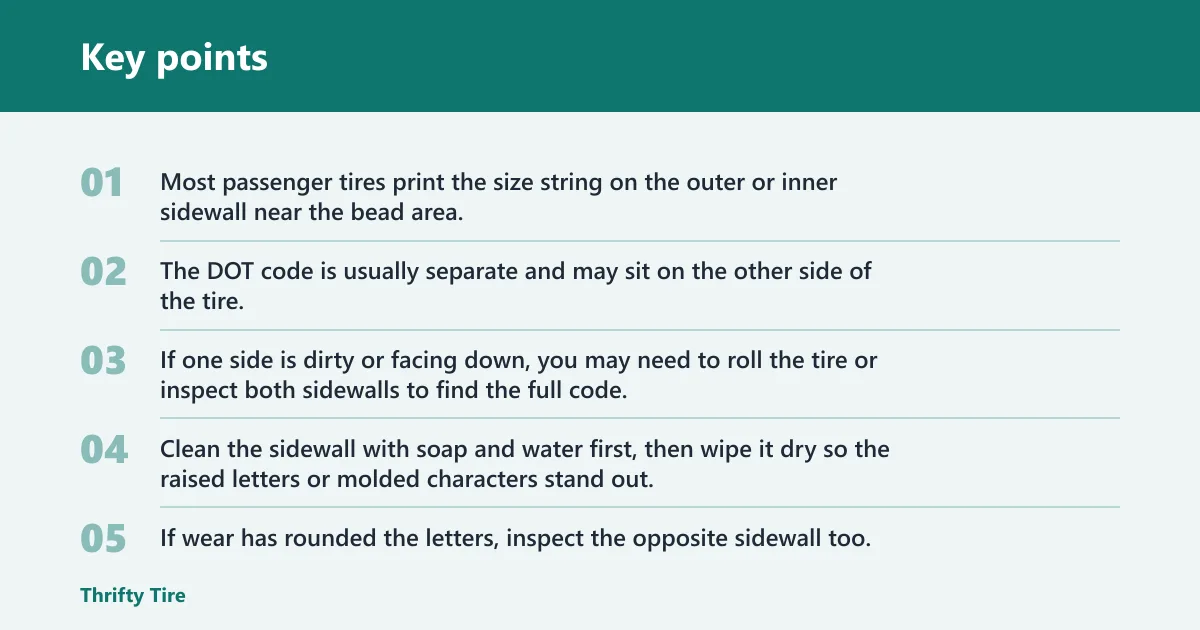
Most passenger tires print the size string on the outer or inner sidewall near the bead area. The DOT code is usually separate and may sit on the other side of the tire. If one side is dirty or facing down, you may need to roll the tire or inspect both sidewalls to find the full code.
What to do when the sidewall is dirty or worn
Clean the sidewall with soap and water first, then wipe it dry so the raised letters or molded characters stand out. If wear has rounded the letters, inspect the opposite sidewall too. If the size is still partly hidden, use the visible numbers as a clue and confirm the full code before mounting.
A common mistake is spotting the large numbers on the sidewall and assuming they tell the whole story without checking the aspect ratio, load index, and speed rating. For example, a tire may show 205/55R16 clearly, but the load index and speed rating can still differ from the placard.
What the prefix means
The letter before the size tells you the tire type. P means Passenger, LT means Light Truck, and some Euro-metric sizes have no prefix at all. That prefix matters because it can signal different load ranges and intended use, so you should compare it with the placard instead of guessing.
P for passenger
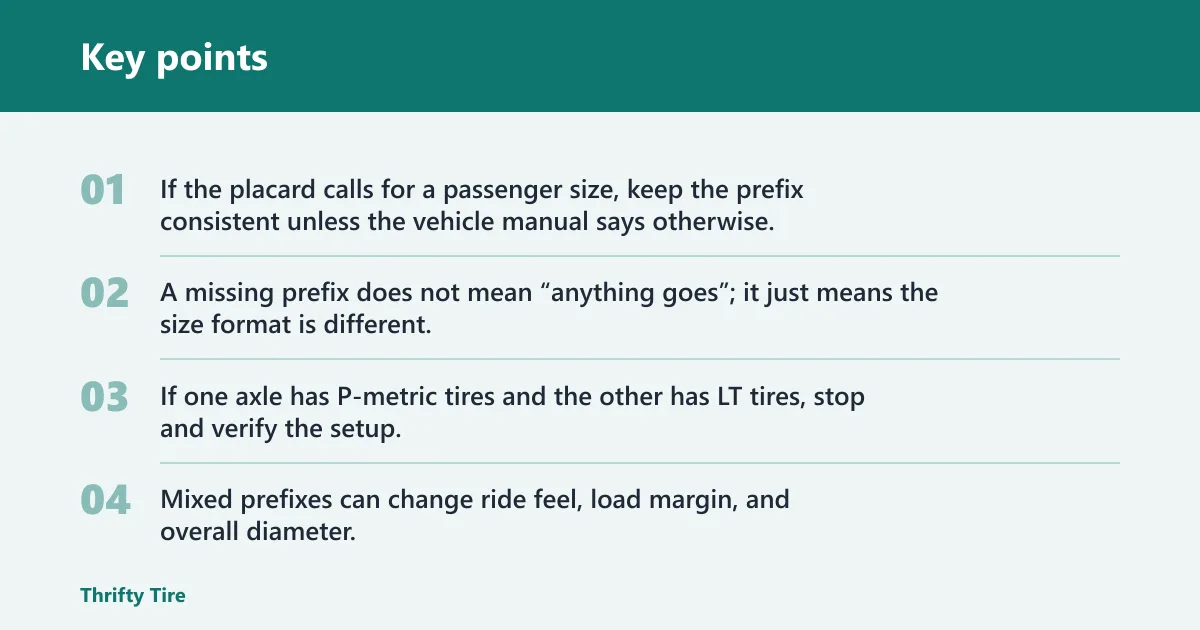
A P prefix marks a passenger-size tire. That does not automatically make it right for every car or crossover, but it is the common prefix for many road tires. If the placard calls for a passenger size, keep the prefix consistent unless the vehicle manual says otherwise.
LT for light truck
An LT prefix marks a light truck tire. These sizes are built for heavier loads and different use cases than passenger sizes. If your vehicle came with LT tires from the factory, the placard and manual should say so; do not swap to a passenger size without checking load needs first.
No prefix on Euro-metric sizes
Some sizes have no prefix at all. Those Euro-metric sizes still need the same checks for width, aspect ratio, load index, speed rating, and rim diameter. A missing prefix does not mean “anything goes”; it just means the size format is different.
Mixed-prefix fitment warnings
If one axle has P-metric tires and the other has LT tires, stop and verify the setup. Mixed prefixes can change ride feel, load margin, and overall diameter. Staggered fitments and special trim packages can also use different front and rear sizes, so the placard and manual matter more than the current mix on the vehicle.
How to read width, ratio, and rim diameter
The middle of the size string tells you the tire’s basic geometry. In P225/65R17, 225 is the section width in millimeters, 65 is the aspect ratio, and 17 is the wheel diameter in inches. Those three numbers control fitment, sidewall height, and how the tire sits on the wheel.
Section width in millimeters
225 indicates tire width in millimeters. Width affects how much space the tire needs in the wheel well and how it contacts the road. Wider is not automatically better. The placard sets the size range the vehicle was designed around.
Aspect ratio as sidewall height
65 is the aspect ratio. It is the sidewall height as a percentage of the tire width. A lower ratio means a shorter sidewall. A higher ratio means a taller sidewall. That change affects ride feel, steering response, and curb protection.
Construction letter and rim diameter
R stands for radial construction. Most modern road tires use radial construction. The final number gives the wheel size the tire fits. 17 is the wheel diameter in inches. The tire must match the wheel diameter exactly, or it will not mount correctly.
Suppose a placard calls for 205/55R16 and the current tire is 205/60R16; the rim diameter stays the same, while the taller sidewall changes the overall diameter. The rim diameter still matches, but the taller sidewall changes overall diameter and can affect clearance and speedometer accuracy. That is why the full code matters, not only one number.
What the load index and speed rating mean
The numbers and letters after the size show how much load a tire can carry and how fast it is rated to run continuously. The load index is a numeric code. The speed rating is a letter. Both should meet or exceed the vehicle recommendation on the placard, unless the manufacturer says otherwise.
Where these codes appear
On a full size string, the load index usually appears right after the rim diameter, and the speed rating follows it. A size may also include XL after the speed rating. If you only read the width and rim diameter, you miss two of the most important fit and safety checks.
How to read load index values
The load index converts to a maximum load per tire. For example, a 95 load index corresponds to 1,521 pounds. Use a load index chart to convert other codes to pounds or kilograms, then compare that number with the vehicle recommendation. The tire should meet or exceed the placard value, not fall below it.
Common speed rating letters
The speed rating shows a tire’s maximum continuous speed capability. Common ratings include T, H, V, W, and Y. H speed rating means 130 mph. T speed rating means 118 mph. V speed rating means 149 mph. W speed rating means 168 mph. Y speed rating means 186 mph.
When XL appears
XL means extra load. It appears after the speed rating in some sizes and signals a higher load capacity within that tire’s design. Do not treat XL as a free pass to ignore the placard. The vehicle recommendation still decides whether that tire is acceptable.
Verify the placard match
Read the sidewall first, then check the door-jamb placard and owner’s manual. The placard is the vehicle’s reference for size, load, and inflation guidance. If the current tire differs from the placard, do not assume it is an approved replacement just because it fits on the wheel.
Door-jamb placard versus sidewall
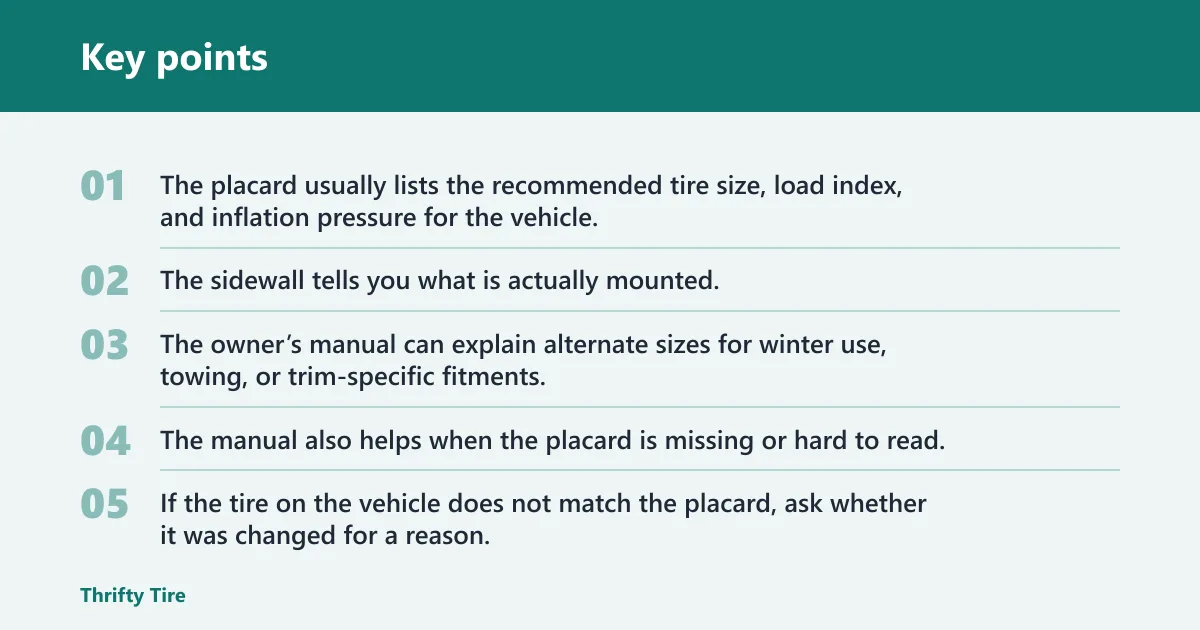
The placard usually lists the recommended tire size, load index, and inflation pressure for the vehicle. The sidewall tells you what is actually mounted. Match the two line by line. If the prefix, width, aspect ratio, rim diameter, load index, or speed rating differs, stop and verify before buying another tire.
Owner’s manual checks
The owner’s manual can explain alternate sizes for winter use, towing, or trim-specific fitments. Some vehicles allow more than one approved size, but that approval should come from the manual or placard, not from the tire already on the car. The manual also helps when the placard is missing or hard to read.
What to do if the current tire size differs
If the tire on the vehicle does not match the placard, ask whether it was changed for a reason. Use the placard as the baseline, then check for approved alternates in the manual. If the size differs on only one axle, confirm whether the vehicle uses staggered fitment before making any purchase.
Staggered fitments and off-road sizes
Some vehicles use different front and rear sizes by design. Others, especially off-road builds, may use inch-based sizing that does not follow the same format as passenger-metric sizes. Those cases need extra care because the sidewall code alone may not tell the whole fitment story. The placard and manual decide whether the setup is acceptable.
Tire sidewall checklist
Use this checklist to compare what is on the tire with what is on the vehicle. Keep the sidewall marking and the placard separate until you compare them. Then mark each line pass or fail before you buy, mount, or rotate the tire.
| Item | Sidewall marking | Door-jamb placard | Pass/fail |
|---|---|---|---|
| Prefix | P / LT / no prefix | P / LT / no prefix listed for vehicle | Pass / Fail |
| Width | 225 mm | Vehicle-listed width | Pass / Fail |
| Aspect ratio | 65 | Vehicle-listed ratio | Pass / Fail |
| Construction | R | Radial or other approved construction | Pass / Fail |
| Rim diameter | 17 in. | Vehicle-listed wheel diameter | Pass / Fail |
| Load index | 95 | Vehicle minimum or higher | Pass / Fail |
| Speed rating | H | Vehicle minimum or higher | Pass / Fail |
| DOT date | Four-digit week/year code | No placard match; check age policy separately | Pass / Fail |
Plain-text checklist: prefix, width, aspect ratio, construction, rim diameter, load index, speed rating, DOT date. Compare each item against the placard, not against memory or the size on the other tires. If one line fails, investigate before mounting the tire.
The DOT code includes a four-digit date code at the end. That format shows the week and year of manufacture. Age matters, but the date alone does not decide replacement on its own. Tire condition, storage, and remaining tread also matter, so use the DOT date as one check among several.
Frequently asked questions
What does the letter before tire size mean?
The letter before the size tells you the tire type. P means Passenger, LT means Light Truck, and some Euro-metric sizes have no prefix. That prefix matters because it can change load capacity and intended use, so you should match it to the placard when possible.
What does the number after the slash on a tire mean?
The number after the slash is the aspect ratio. In 225/65R17, the 65 is the sidewall height as a percentage of tire width. A lower number means a shorter sidewall, while a higher number means a taller sidewall. That changes ride feel and fitment.
Where do I find the load index and speed rating on a tire?
They usually appear right after the rim diameter in the size string. In P225/65R17 95H, 95 is the load index and H is the speed rating. If the tire also has XL, it appears after the speed rating on some sizes.