What Do Warped Brake Rotors Feel Like When Driving?
Warped brake rotors usually feel like a steering-wheel shake, brake pedal pulse, or whole-body vibration during braking, and the feel often gets worse as speed rises. If you ignore it, stopping distance can grow, and rotor, pad, or hub wear can spread. This guide explains the feel pattern, how speed and brake pressure change it, and how to separate rotor trouble from tire, hub, caliper, or pad problems.
Common signs of rotor-related brake vibration
The first clue is often a pulse under your foot. The symptom can feel like a soft thump, flutter, or rhythm, and it usually shows up during moderate or firm stops rather than every time the car rolls. Many drivers think a warped rotor is literally bent, but it often is not.
Brake pedal pulse
A brake pedal pulse is a rhythmic pulsation under braking. It often gets stronger as speed rises, and it is often easiest to notice during a roughly 40 mph to 70 mph stop or a downhill slowdown where the brakes stay loaded longer. If the pulse shows only when you press the pedal, rotor-related problems move higher on the list.
Steering wheel shake versus seat vibration
Steering wheel shake is more common with front brakes. You feel it in your hands while braking, and it may show up at highway exit speeds before it becomes obvious in the pedal. A seat or floor vibration points more toward the rear axle, though tires, wheels, or suspension can also send vibration into the cabin.
How speed and brake pressure change the feel
Speed and brake pressure change what you notice first. Light braking may bring a faint rhythm, while firm braking can turn that into a clear shake or pulse. Highway braking and downhill runs are common times for the symptom to show up because the rotor spends more time hot and under load.
Say your steering wheel stays calm during city driving but starts to quiver at 60 mph when you brake for an exit ramp. That pattern points more toward the front axle than a rear brake issue, especially if the vibration fades as soon as you let off the pedal.
Front rotors or rear rotors?
Front brake problems usually show up in the steering wheel and hands. Rear brake problems are often felt in the seat, floor, or whole car, and the pedal may still pulse if the defect is severe enough. Axle position changes the feel because the front end carries more braking load on most cars.
Signs the front axle is involved
Front rotor trouble often causes steering wheel shake, a pulse in the brake pedal, or both. The symptom may be strongest during medium-to-hard stops and easiest to repeat on a road with a highway-speed deceleration. If the wheel shimmy tracks with pedal pressure, the front rotors, hub face, or front caliper hardware deserve attention first.
Signs the rear axle is involved
Rear rotor issues are more likely to feel like seat vibration, a rear-end throb, or a pulse that does not move much through the steering wheel. If the steering wheel stays mostly steady but the cabin shakes during braking, rear rotors, rear calipers, or rear wheel hardware may be involved. A strong pull still means you should think beyond the rotors.
How axle position changes where you feel the shake
Front vibration travels into the steering column. Rear vibration travels through the body structure. That is why a front issue can feel sharp and direct, while a rear issue may seem muted but broader. The same car can also show both if one axle has rotor trouble and the other has tire or suspension wear.
Rotors symptom matrix
This matrix helps you match the vibration location, the moment it appears, and the most likely next check. Use it as a road-test guide, not a final diagnosis. Visual inspection alone is not enough when the symptom is repeatable and brake-linked.
| Where you feel it | When it appears | Likely cause | Next check |
|---|---|---|---|
| Pedal | Light braking | Rotor runout | Measure rotor |
| Wheel | Firm braking | Thickness variation | Measure rotor |
| Seat | Hot brakes | Rear brake issue | Inspect caliper slide pins |
| Whole car | High speed | Tires/suspension | Road test tires |
| Pedal and wheel | High speed, downhill | Uneven pad transfer | Measure rotor |
| Any of the above | Grinding, burning smell, or pulling | Sticking caliper or major brake fault | Inspect caliper slide pins |
Why rotors feel warped when they are not
Rotor runout and thickness variation can create the same feel people call warping. Uneven pad transfer is another common lookalike, especially after heat soak or poor bedding. The rotor may feel bad even when it is not bent, because the brake pad rides over uneven friction or a rotor surface that moves side to side.
Rotor runout and hub issues
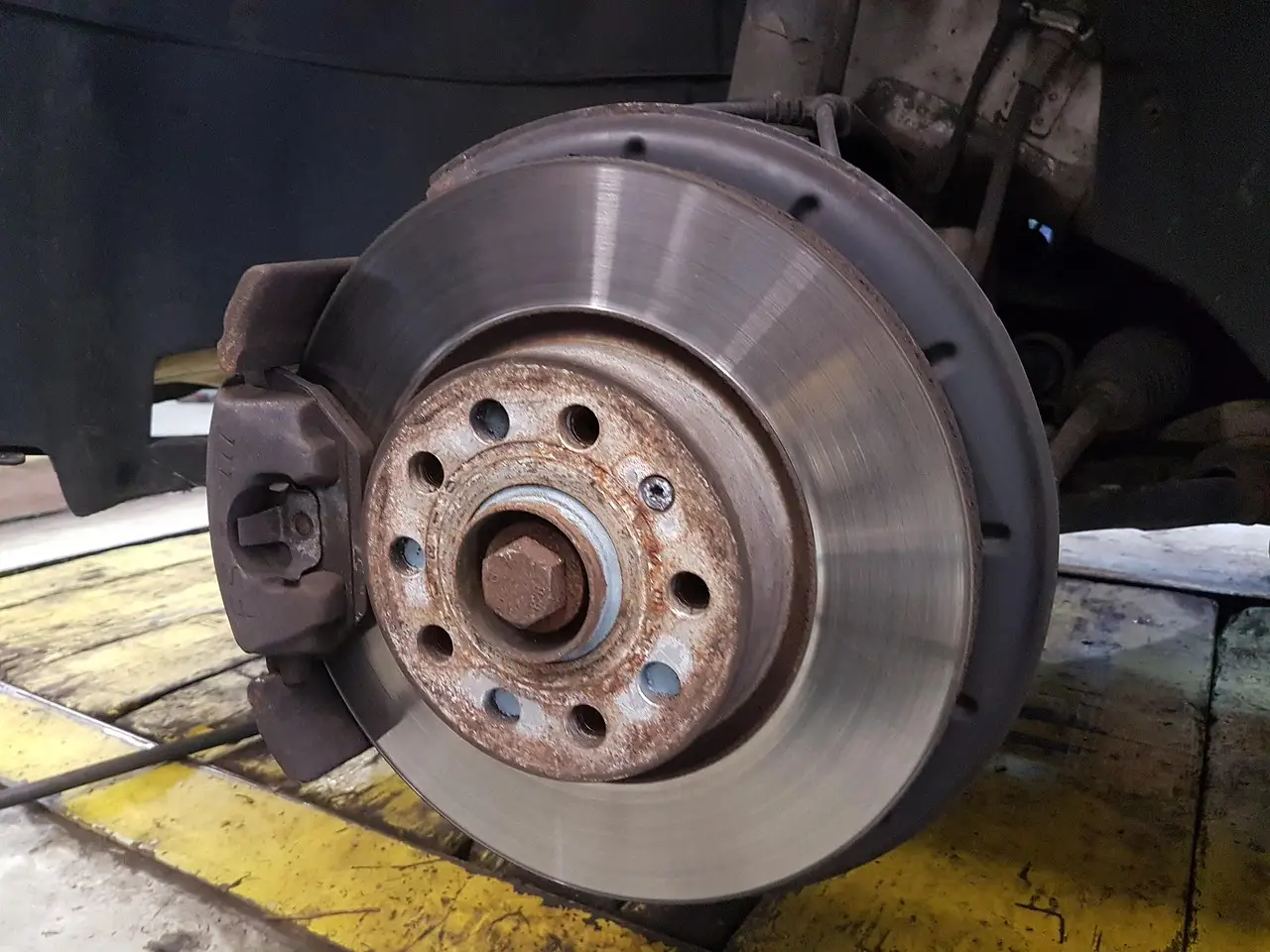
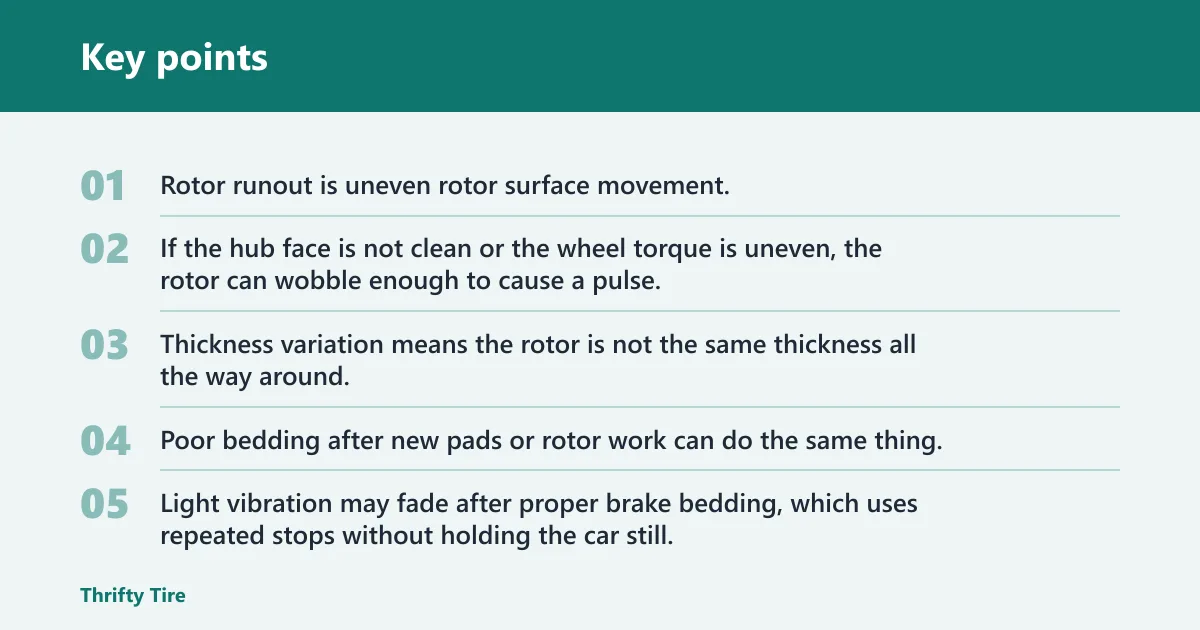
Rotor runout is uneven rotor surface movement. It can create pulsation and may come from hub issues, corrosion between the rotor and hub, or installation problems that leave the rotor seated unevenly. If the hub face is not clean or the wheel torque is uneven, the rotor can wobble enough to cause a pulse.
Thickness variation and pad deposits
Thickness variation means the rotor is not the same thickness all the way around. It can mimic a warped rotor and often needs measurement with a dial indicator or micrometer to confirm. Uneven pad transfer happens when pad material deposits on the rotor face, and it can feel almost identical to true warping.
Heat soak, poor bedding, and stopped-at-light impressions
Heat soak matters. If you make several hard stops and then hold the car at a stoplight with the brakes clamped, hot pad material can imprint onto the rotor face. Poor bedding after new pads or rotor work can do the same thing. Light vibration may fade after proper brake bedding, which uses repeated stops without holding the car still.
Suppose a driver replaces front pads, then sits at a light with the pedal pressed hard after a mountain descent. The next morning, the car shudders only on moderate braking. That pattern fits pad transfer more than a bent rotor, especially if the vibration started right after the heat event.
What else can feel similar while driving?
A brake-like shake is not always a rotor problem. Sticking calipers, slide pins, loose wheel torque, tires, and suspension wear can all produce a similar feel. The trick is to match the symptom to when it happens, because a vibration that shows up while cruising is less likely to come from rotors alone.
Sticking caliper or slide pins
A sticking caliper or seized slide pin can overheat one wheel and create rotor symptoms. That wheel may smell hot, run darker, or cool unevenly after a drive. Before replacing a rotor, check that the caliper moves freely and the slide pins are lubricated and not binding.
Wheel torque problems after service
Wheel torque specification matters. Even lug nut tightening helps the rotor seat evenly against the hub, and incorrect torque can distort rotor seating or make a good rotor feel bad. If the vibration began after tire rotation, brake work, or wheel installation, verify lug torque first and recheck it to specification.
Tires, wheels, and suspension lookalikes
If the vibration happens while cruising, tires or suspension may be the culprit instead. A bent wheel, separated tire belt, worn control arm bushing, or loose wheel bearing can mimic brake shake. A road test that compares braking and non-braking vibration helps separate these quickly.
How to check for warped brake rotors
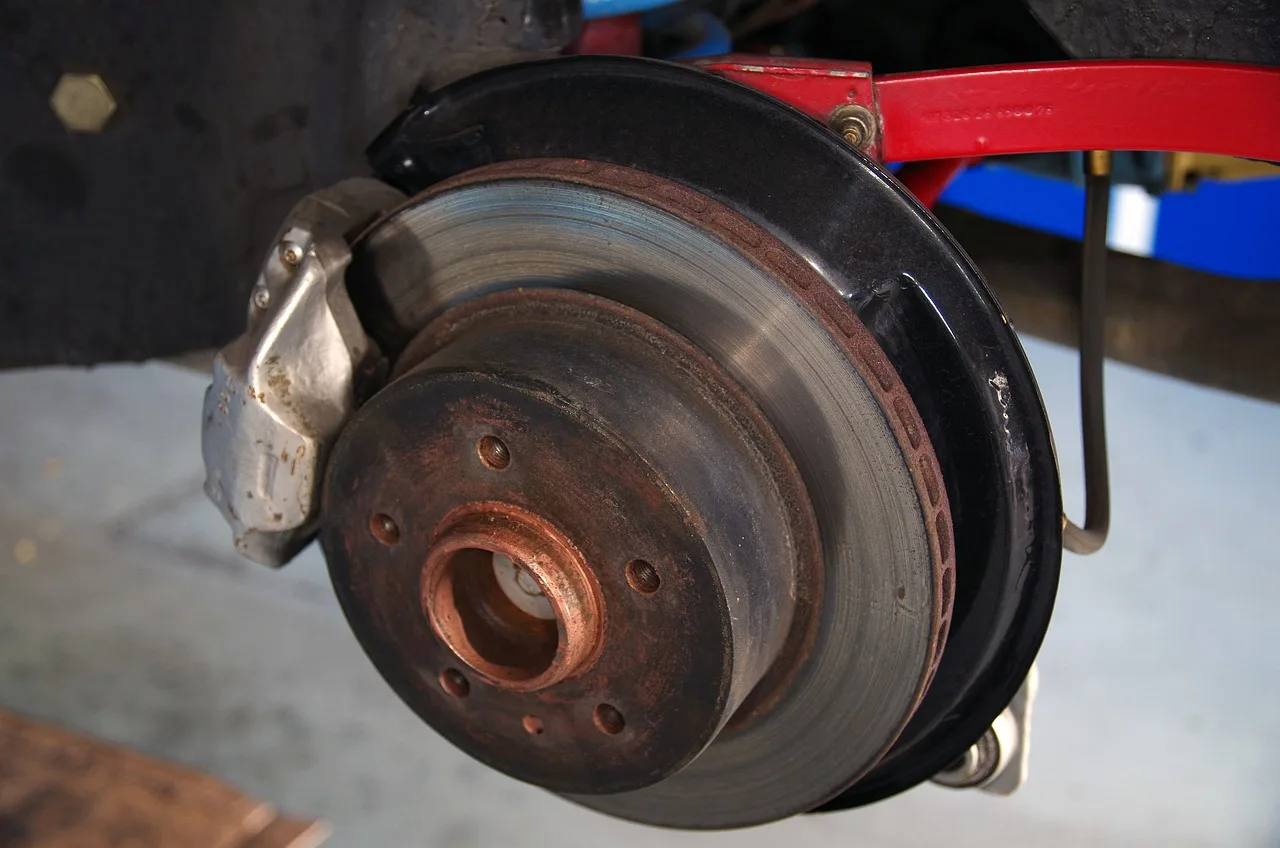
Start with a road test pattern, then inspect the brake hardware, then measure. A repeatable symptom under braking matters more than a guess from sight alone. If the vibration changes with speed, brake pressure, or axle position, you can narrow the fault before any parts come off.
-
Repeat the same stop.
Find a quiet road and make the same stop several times from the same speed, such as 30 mph or 60 mph. Use light braking once, then firmer braking, and note whether the pulse appears only under the pedal, in the wheel, or in the seat.
-
Check hot and cold behavior.
Note whether the symptom shows up only after downhill driving, towing, or stop-and-go traffic. Heat-linked vibration often points to pad transfer, a sticking caliper, or a rotor that changes behavior once it is hot.
-
Inspect caliper movement.
Look for seized slide pins, uneven pad wear, torn boots, and a caliper that does not retract cleanly. One overheating wheel can create rotor symptoms that look like warping but come from brake hardware instead.
-
Verify wheel torque.
Check that lug nuts were tightened evenly and to the correct specification. Uneven torque can change how the rotor sits on the hub, which can create runout or make a minor issue feel worse after service.
-
Measure runout and thickness.
Use a dial indicator for rotor runout and a micrometer for thickness variation. Measurements matter because a rotor can look acceptable and still be out of spec. If the numbers are uneven, the diagnosis is stronger than a visual guess.
What causes rotors to keep warping?
Heat, towing, downhill braking, corrosion, storage, and installation errors can all make the problem return. The issue may come back because the rotor never got a clean seat on the hub, the pads were not bedded properly, or the caliper hardware kept one corner hotter than the rest.
Heat, towing, and downhill braking
Repeated high-energy stops create the conditions for pad deposits, runout symptoms, and thickness variation. Towing and downhill driving keep the brakes hot for longer, which increases the chance of uneven material transfer. That is why the symptom may appear after a long descent but not during short city trips.
Corrosion and long storage
Rust and corrosion can leave high spots on the hub or rotor face. A vehicle that sits for long periods may also develop pad imprinting after the first few hot stops. If the problem appears after storage, inspect the hub face and rotor seating before blaming the rotor alone.
Installation errors and uneven lug torque
Rotor problems often come back after brake work when the rotor was not cleaned, the hub was not checked, or the wheels were tightened unevenly. Incorrect wheel torque specification can distort rotor seating and create a false diagnosis. That is why repeat failures often point to installation steps, not only to the rotor part itself.
Frequently asked questions
What do warped brake rotors feel like when driving?
They usually feel like a pulse in the brake pedal, a shake in the steering wheel, or a vibration through the seat or whole car during braking. The feel often gets stronger with speed and firmer pedal pressure, and it may be most obvious during highway exits or downhill stops.
Can warped rotors cause shaking while driving?
Yes, but the key detail is that the shake usually appears while braking. If the vibration shows up while cruising with no brake input, tires, wheels, or suspension are more likely. A brake-linked shake that starts and stops with pedal pressure points back toward the rotors or related brake hardware.
How do I check for warped brake rotors?
Road-test the car at more than one speed, then note whether the vibration changes with pedal pressure and axle position. After that, inspect calipers, slide pins, and wheel torque, then measure rotor runout and thickness variation with the proper tools. Measurement is often needed to confirm the fault.
How do I diagnose a warped brake rotor?
Start with the symptom pattern: pedal pulse, steering shake, seat vibration, or whole-car shake. Then decide whether it behaves like a front or rear issue, check for heat on one wheel, and verify rotor runout or thickness variation. Do not stop at a visual check if the symptom is repeatable.
What causes warped brake rotors?
Common causes include heat, poor bedding, uneven pad transfer, hub corrosion, and uneven wheel torque. A sticking caliper or slide pin can also overheat one corner and create rotor symptoms. The rotor often is not bent; instead, the surface or mounting condition is uneven.
How do I fix warped brake rotors?
The fix depends on the cause. Light pad transfer may improve with proper bedding, but runout, thickness variation, or damaged surfaces usually require rotor replacement or machining if the rotor is still within spec. Also correct the root cause first, such as a sticking caliper or uneven wheel torque.