Why Is My Transmission Fluid Low with No Visible Leak?
Most often, the fluid is being checked wrong or leaving in small amounts through seals, cooler lines, venting, or a torque-converter seal that may never drip onto the ground. A low level can cause slipping, overheating, and transmission damage that gets expensive fast. This guide shows how to verify the level first, then trace the most likely no-puddle loss paths by vehicle design.
How to tell if it is truly low
Start by separating a bad reading from a real loss. A low transmission-fluid reading without a visible puddle does not prove there is no leak, and repeated top-ups need investigation because transmission fluid is not normally consumed like fuel.
Fresh automatic transmission fluid, or ATF, is commonly red or pink and can darken with age. It lubricates moving parts, cools the transmission, and supports hydraulic pressure, so even a small drop in level can change how the unit shifts.
Separate low level from a bad reading
- Match the check to the vehicle. Look up the exact procedure for your transmission before adding fluid. Some vehicles use a dipstick, while others use a controlled level/fill arrangement, and the checking point can change the result.
- Check the operating state. Verify whether the engine must be running or off, whether the selector must be in park or neutral, and whether the transmission must be hot or at a specific temperature. Fluid level checks can vary with temperature, engine state, selector position, and the point where the check is made.
- Confirm the service history. If the transmission was recently serviced, consider underfill after service before assuming a hidden leak. A bad fill procedure can leave the level low from the start, and the issue may not show up until after a drive cycle.
Say your SUV has no dipstick and uses a fill plug. If the shop filled it cold when the procedure calls for a specific operating temperature, the level can read wrong even though nothing is leaking onto the ground.
Why is my transmission fluid low with no visible leak?
Fluid can disappear without a driveway puddle because some leaks happen only while driving, some get trapped inside the vehicle, and some move into another system. No puddle while parked is not a complete leak test, so a clean garage floor does not clear the transmission.
Common hidden-loss paths can include cooler lines, seals, a torque-converter seal, the bellhousing, and a heat exchanger leak. On some older automatics, a failed vacuum modulator diaphragm can also send fluid into the vacuum connection.
Where can fluid go without a driveway puddle?
Fluid can drip onto hot parts and burn off, collect in an undertray, fill the bellhousing, or move through a damaged cooler circuit. Transmission lines and fittings can leak without leaving a driveway puddle, especially if the leak shows up only at speed, under load, or when the unit is hot.
An undertray can retain fluid and hide the source. The bellhousing can do the same, which is why some leaks only appear after the vehicle is moving or after the transmission reaches operating temperature.
How hidden loss differs from a true external leak
A true external leak usually leaves a trail on the ground, but hidden loss may show up as a low reading, a smell, or shifting trouble before any puddle appears. A fluid-level check that is done wrong can look just like a real leak, which is why the first job is to verify the procedure.
Suppose a rear-wheel-drive car starts shifting late after a long highway trip, yet the driveway stays clean. That pattern can fit a hot-only leak at a line, seal, or bellhousing, not a simple pan drip.
How do you check transmission fluid correctly?
The correct check depends on the exact transmission. Some units use a dipstick, others use a controlled level/fill arrangement, and the level can change with engine state and temperature. There is no universal 90–100°C reading for transmission filling, so do not copy a number from another model.
Use the procedure for your specific vehicle. On some transmissions, the engine must idle in park after cycling the selector. On others, the final level is set through a fill plug with a scan tool or temperature target.
Dipstick procedure on vehicles that have one
- Warm the transmission. Drive long enough to bring the transmission toward normal operating temperature unless the owner information says otherwise. A cold check on a warm-calibrated dipstick can read low or high, depending on the design.
- Park on level ground. Set the parking brake and leave the engine running if the procedure calls for a running check. Move the selector through the gears if instructed, then return it to the specified position before reading.
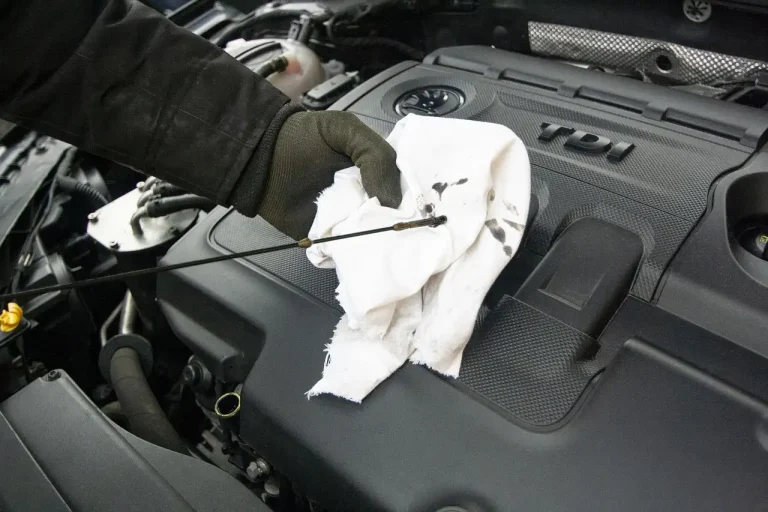
- Read both marks. Wipe the dipstick clean, reinsert it fully, then read the level against the hot or cold marks that apply to your transmission. A bad reading can happen if the stick is not seated, the vehicle is not level, or the engine state is wrong.
Controlled fill checks on vehicles without a dipstick
- Follow the fill condition. Use the exact procedure for the transmission family, including fluid temperature, engine running or off, and selector position. These systems depend on application-specific fill conditions.
- Use the correct opening. Add fluid through the specified fill port only, then let excess drain from the level point if the procedure calls for it. Do not guess by volume alone unless the manufacturer gives a fill quantity for a dry service.
- Verify after cycling. Recheck after the vehicle is brought to the required temperature and the gears are cycled as directed. A final check at the wrong temperature can leave the unit underfilled even after a service top-off.
Hidden loss paths by vehicle design
Different driveline layouts fail in different ways. Mapping the symptom to the design often tells you where to look first, especially when the transmission is low but there is no puddle under the car.
Underfill after service
An underfill after service is one of the easiest mistakes to miss. If the level drops right after a fluid change, filter change, or pan service, the problem may be a bad fill procedure rather than a leak. That is especially common on units with controlled level/fill arrangements.
Dipstick misread or wrong check conditions
A dipstick read at the wrong temperature, with the engine off when it should be running, can make a healthy transmission look low. The same problem can happen if the selector is in the wrong position or the vehicle is on a slope. Check conditions matter as much as the fluid itself.
Cooler or heat-exchanger breach
Some vehicles use a fluid-to-coolant heat exchanger, either integrated with the radiator or separate. A breach can contaminate the connected fluids, so ATF may mix with coolant without a big puddle under the vehicle. Look for milky coolant, rising fluid levels in the wrong reservoir, or an unexplained ATF drop.
Vacuum modulator leak
Some older automatic transmissions use a vacuum modulator connected to an engine vacuum source. If the diaphragm fails, fluid can be routed into the vacuum connection instead of dripping under the car. That path can cause a low level, rough shifting, and sometimes smoke from the exhaust.
Bellhousing seep
The bellhousing can trap leaked fluid, so a leak may not reach the ground. Fluid from the front seal or torque-converter area may stay inside the housing until enough collects to drip out, which means the transmission can be losing fluid while the driveway stays clean.
Operating-only leak
Some leaks occur mainly under operating conditions, not while parked. Transmission lines and fittings may open up with heat, vibration, or pressure, then seal back down once the vehicle stops. That is why a no-puddle inspection in the driveway can miss the real source.
Transmission fluid decision table
| Symptom pattern | Most likely hidden-loss path | Next check |
|---|---|---|
| Level looked low right after a service, and the vehicle shifts normally | Underfill after service | Repeat the level check using the exact service procedure and temperature requirement |
| Level looks low only on a cold read, or only with the engine off | Dipstick misread | Recheck with the correct engine state, selector position, and temperature |
| Low ATF plus oily coolant, or coolant that looks contaminated | Cooler or heat-exchanger breach | Inspect the radiator or separate heat exchanger and compare both fluid reservoirs |
| Older automatic, rough shifting, and ATF in a vacuum hose | Vacuum modulator leak | Inspect the modulator hose and the vacuum connection for wet ATF |
| Fluid loss with bellhousing dampness or a stain that appears behind the engine | Bellhousing seep | Inspect the bellhousing drain area and the front seal region after a road test |
| Level drops after a highway drive, but the car looks dry in the driveway | Operating-only leak | Inspect lines, fittings, and the undertray with the vehicle hot and after a drive |
| Slipping, delayed engagement, overheating, smoke, or loss of drive | Severe loss or active damage | Stop driving now and have the vehicle assessed |
Can you keep driving if the level keeps dropping?
Only if the transmission is still engaging normally and the level issue is being checked immediately. If the transmission is losing drive, overheating, slipping, or making noise, stop driving now. A burning smell is not proof of low transmission fluid, but smoke from fluid on a hot surface still needs assessment.
Low fluid can cause slipping, delayed engagement, harsh shifting, overheating, or noise. That is why repeated top-ups should not be treated as routine. If the level keeps dropping, the transmission is leaking or the check method is wrong, and both deserve immediate attention.
Symptoms that make this urgent
Urgent signs include slipping on acceleration, delayed engagement when shifting into drive or reverse, harsh or erratic shifts, rising transmission temperature, warning lights, or a loss of drive. A hot smell or smoke can appear after fluid lands on a hot exhaust or case, but that still does not identify the source.
When to stop driving now
Stop driving if the transmission stops moving the vehicle properly, the temperature warning appears, the fluid is foaming or leaking fast, or the level keeps falling after a correct check and refill. Bar’s Leaks calls an automatic transmission “hard-working” and warns that running it with low or no fluid is a “big no-no”.
Frequently asked questions
Why is my transmission fluid low but there is no leak on the ground?
That usually means the fluid is being checked wrong, escaping only in small amounts, or staying inside the vehicle. It can hide in the bellhousing, under an undertray, in a cooler circuit, or in a vacuum line on older automatics. A clean driveway does not rule out a loss.
Can transmission fluid get low without a visible leak?
Yes. F1 says a low reading without a visible puddle does not prove there is no leak. The fluid can leave only while driving, drip onto hot parts and burn off, or move into coolant through a breached heat exchanger. A correct vehicle-specific check is the first step.
Where can transmission fluid go if I do not see a puddle?
It can collect in an undertray, stay inside the bellhousing, move into a vacuum connection on some older transmissions, or mix with coolant in a failed heat exchanger. It can also leak from lines and fittings only at speed or under load, which may leave no driveway spot.
Can overfilling or a bad fill procedure make the level look low?
Yes. A bad fill procedure can leave the transmission underfilled after service, and a wrong check can make the level look low even when it is close to correct. Because F2 says temperature, engine state, selector position, and checking point matter, the exact procedure matters more than a quick glance.
Could coolant and transmission fluid be mixing without me noticing?
Yes. Some vehicles use a fluid-to-coolant heat exchanger, integrated with the radiator or separate, and a breach can contaminate both fluids. The mix may not produce a puddle. Check for ATF in the coolant, coolant in the transmission, or unexplained changes in either reservoir.
Can a transmission leak happen only while driving?
Yes. Some leaks occur mainly under operating conditions, not while parked. Heat, pressure, and vibration can open a line, fitting, or seal enough to leak on the road and then close up at rest. That is why a parked inspection can miss the source.