Brake Pad Replacement Cost: What You’ll Actually Pay
Brake pad replacement usually costs about $150 to $400 per axle, while quotes can climb to about $300 to $800 per axle when rotors are worn or replaced. Paying for the wrong line items can waste hundreds. Skipping needed parts can leave you with noise, vibration, longer stops, or uneven brake wear. This guide breaks down pads, labor, rotors, hardware, fluid, and caliper charges so you can see which add-ons are justified.
The useful question is not “what do pads cost,” but “what is this estimate charging for, and why?” A solid quote separates pad type, axle, labor, rotor condition, hardware, fees, tax, and inspection notes. If any of those are missing, the low number may be incomplete rather than cheap.
What does brake pad replacement cost usually include?
A brake pad replacement quote should show the axle being serviced, the pad set, labor, and the smaller charges that turn a headline price into the real total. Many estimates also include hardware kits. Some add rotor work, shop fees, taxes, or inspection notes that explain why extra parts are being recommended.
Parts lines
The core parts line is the brake pad set for one axle. Pads are replaced in pairs by axle, not one wheel at a time, because left and right pads need matched friction material and similar thickness.
Front and rear pad sets often cost different amounts. Front pads on many vehicles are larger and do more of the stopping, so they may wear faster. Rear pads can still cost more on vehicles with integrated parking brake hardware or rear calipers that take longer to service.
Common pad material choices:
- Organic: usually the lowest-price option; often quieter at first, but generally shorter-lived and less heat-tolerant.
- Semi-metallic: commonly mid-priced; handles heat well and is widely used on trucks, SUVs, and many daily drivers, but can be noisier and dustier.
- Ceramic: often the highest-priced common option; typically lower dust and quieter operation, but cost more and are not automatically the best match for every vehicle.
A separate brake hardware kit line is common and often proper. That kit can include abutment clips, anti-rattle clips, shims, and sometimes guide pin boots or related small parts. Fresh hardware helps the pads slide correctly and cuts down on post-repair noise complaints.
Labor lines
Labor is usually billed per axle. A common structure for a straightforward pad job is about 1.0 to 1.5 labor hours per axle, though premium vehicles, seized fasteners, electronic parking brake service mode, or heavy corrosion can push labor higher.
The shop labor rate matters as much as the time billed. An independent shop at $110 per hour and a dealer at $190 per hour can quote very different totals for the same 1.2-hour front brake job.
Regional pricing affects the labor line more than the pad line. Dense urban areas, dealer service departments, and shops that specialize in BMW, Mercedes-Benz, Audi, Porsche, or similar makes often bill at higher rates than general repair shops in lower-cost areas.
Fees, tax, and inspection notes
Many quotes include a small shop fee, environmental fee, or disposal charge. Those line items are usually modest, often in the $10 to $40 range, but they should still be listed clearly.
Sales tax is often applied to parts and sometimes certain fees, depending on local rules. A quote that skips tax can look cheaper than the invoice you actually pay.
The inspection notes matter. If the estimate says “replace rotors below minimum thickness,” “outer pad at 2 mm,” or “left front caliper sticking,” that is useful evidence. If it only says “recommended service,” ask for the measurable reason.
How much should you expect to pay by axle?
For pad replacement alone, a reasonable working range is about $150 to $400 per axle. Rear brakes often land near the lower or middle part of that range, while front brakes can run higher. A two-axle job commonly totals about $300 to $800 before rotor or caliper problems enter the estimate.
Front axle pad replacement
Front axle service often costs more because the front brakes do more work, pad sets may be larger, and rotor issues are more common there. On a compact sedan with basic pads, a front pad job may stay near the lower half of the range. On a truck, turbo performance car, or luxury SUV, the same axle can move near the top.
Shops usually quote the front axle as one service line, not two separate wheels. That is the right way to read the estimate.
Rear axle pad replacement
Rear axle pad replacement can be cheaper, but not always. Rear electronic parking brake motors, drum-in-hat parking brake assemblies inside rear rotors, or difficult caliper designs can raise labor.
If a quote shows rear pads costing more than front pads on the same vehicle, that is not automatically wrong if the rear setup uses a more specialized pad shape or extra parking brake-related labor. The estimate should say so.
All 4 wheels and two-axle quotes
If both axles need pads only, many drivers will see totals in the $300 to $800 range. Once rotors are added on both axles, the job can move past that quickly because rotor parts costs are doubled and labor rises.
“All 4 wheels” does not always mean the same parts mix front and rear. One axle may need pads only while the other needs pads and rotors. Read each axle separately before comparing totals.
Why is one brake quote higher than another?
Brake quotes rise for specific reasons: pad material, rotor condition, labor rate, vehicle complexity, and added repairs such as hardware, caliper work, or fluid service. A higher quote may be justified, but only if the estimate identifies the parts and findings behind the difference instead of hiding them inside a single package price.
Pad material and part quality
A ceramic pad set usually costs more than an organic or many semi-metallic sets. That difference alone can shift an axle quote by dozens of dollars. On some vehicles, OEM-equivalent pads also include chamfers, shims, and wear indicators that cheaper sets skip.
Wear indicators are worth checking on the estimate or inspection report. Many pads use a small metal tab that squeals when friction material gets low. Electronic wear sensors are used on some vehicles and can add a sensor replacement line if the sensor was triggered or damaged during removal.
Pad thickness should be measured in millimeters. As a common rule of thumb, 3 mm or less is replacement time soon, and 2 mm or less is typically considered due now. Exact limits vary by maker, so the shop should tie the recommendation to the actual measured thickness and the vehicle’s service information.
Labor rate, vehicle design, and regional pricing
The same front pad service can cost much more on a premium German SUV than on a compact Japanese sedan. Larger brake components, electronic service procedures, two-piece rotors, fixed multi-piston calipers, or wheel designs that take longer to work around all add time.
Labor rate differences create big quote spreads. A 1.3-hour axle service at $125 per hour is $162.50 in labor. The same 1.3 hours at $185 per hour is $240.50 before parts, fees, or tax.
Added work: rotors, hardware, fluid, and calipers
Most sharp jumps in total come from rotor replacement, not from the pads themselves. New rotors often add $150 to $400 per axle to the finished bill once parts and extra labor are counted.
Hardware kits are smaller charges, often $15 to $40 per axle, but they are common and often proper. Brake fluid flushes are usually separate services, often roughly $80 to $150 depending on vehicle and shop rate. Caliper service or replacement is where quotes can climb fast, especially if a sticking caliper caused uneven pad wear or overheated a rotor.
Picture two estimates for the same front axle on the same car. One is $220 for pads, hardware, labor, fees, and tax. The other is $515 because it includes pads, hardware, two rotors, and another half-hour of labor. That higher number may be reasonable if the rotors are scored, vibrating, or below minimum thickness.
When do rotors change the total?
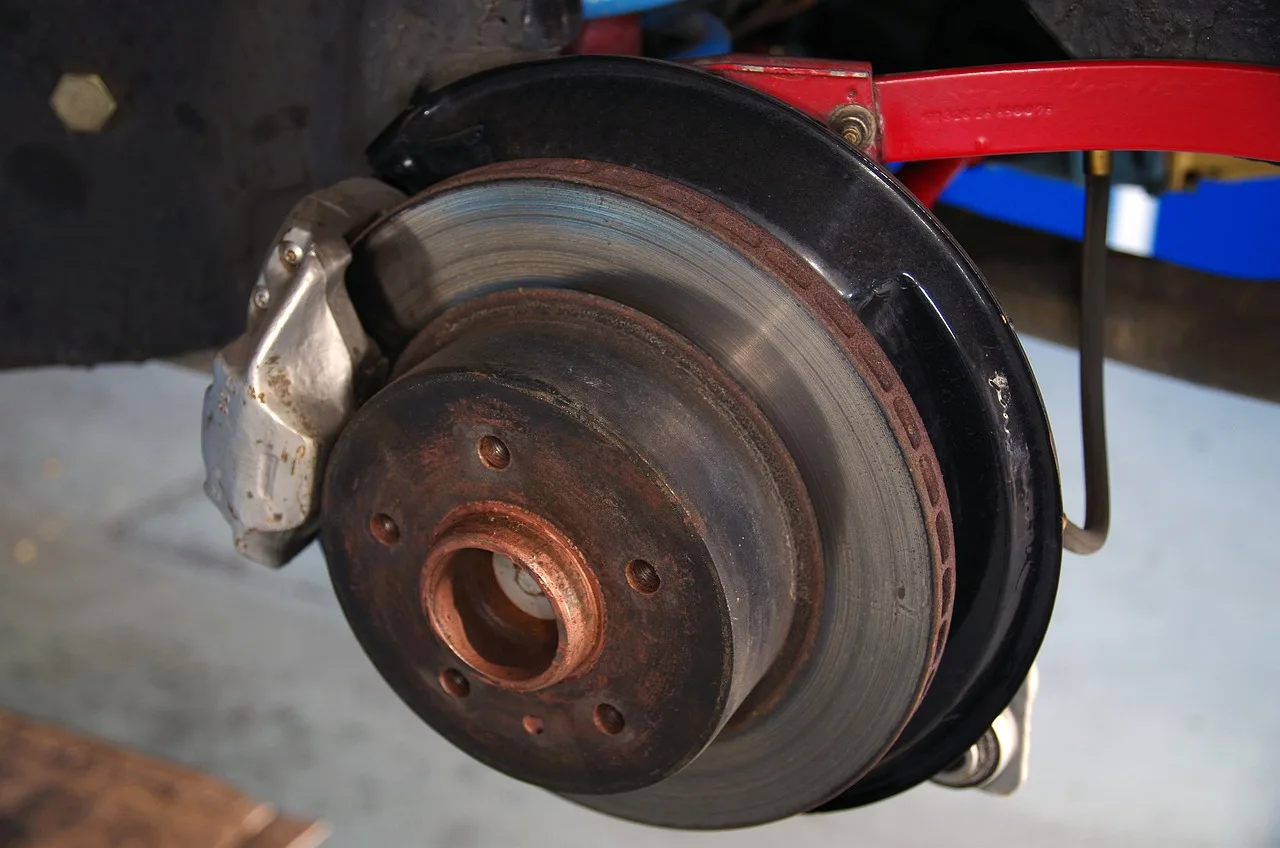
Rotors change the total when they cannot be safely reused with new pads. If rotor thickness is still above the manufacturer’s minimum and the surface is smooth enough, reuse may be possible. If the rotors are too thin, deeply scored, heat-spotted, or causing brake pulsation, resurfacing or replacement can add a large new parts-and-labor line.
Rotor reuse versus resurfacing versus replacement
Rotor reuse is the lowest-cost path, but it only makes sense when the rotor face is in good condition and thickness remains above spec. Many modern rotors start relatively thin and do not leave much material for machining.
Resurfacing, where still offered, costs less than replacement but more than reuse. It is only valid if the rotor will remain above the stamped or specified minimum thickness after machining. Many shops replace instead of resurface because parts pricing, labor time, and thin modern rotors often make replacement the cleaner option.
Replacement is required when the rotor will be below minimum thickness, has heavy scoring, heat checking, cracking, or enough runout to create pulsation. “Warped rotors” is the common phrase, though the issue may be runout or uneven pad deposits rather than a visibly bent disc.
Minimum thickness, scoring, and vibration findings
Minimum rotor thickness matters because it affects heat capacity and stopping consistency. A rotor below spec cannot absorb and shed heat as intended, and machining it thinner can make that worse.
Ask the shop to show the measurement or inspection note. A good estimate will say something like “LF rotor 22.2 mm, min 23.0 mm” or “both fronts heavily scored.” That is a concrete reason. “Rotors recommended” without a measured or visible basis deserves a follow-up question.
Say your front pads are at 2 mm, but the rotors measure above minimum and the surface is smooth with no pulsation complaint. That is a real case where a pad-only quote may be enough. Change only one variable, and the total changes sharply.
What rotor replacement adds to the estimate
Rotor parts prices differ by vehicle size and quality. A compact car may use modestly priced rotors. A heavy half-ton truck or luxury performance sedan can use much pricier rotors, especially if they are larger, coated, vented, or brand-specific.
Rotor replacement also adds labor. Even if the labor increase is not huge, the parts cost per axle usually is.
When rotors can be reused and when they can’t
If your pads are worn but the rotors are still within spec, smooth, and free of deep grooves or cracks, a pad-only brake job can be the right move. The supporting guide explains the key checks that separate a simple pad replacement from a more expensive rotor-and-pad job, so you can judge whether a quote is complete or if it’s skipping an important inspection.
It also covers the warning signs that point to rotor replacement, like pulsing, vibration, or visible damage, plus why the rotor decision affects both safety and labor cost. For a clear breakdown, see rotor replacement guide.
Which extra charges are justified?
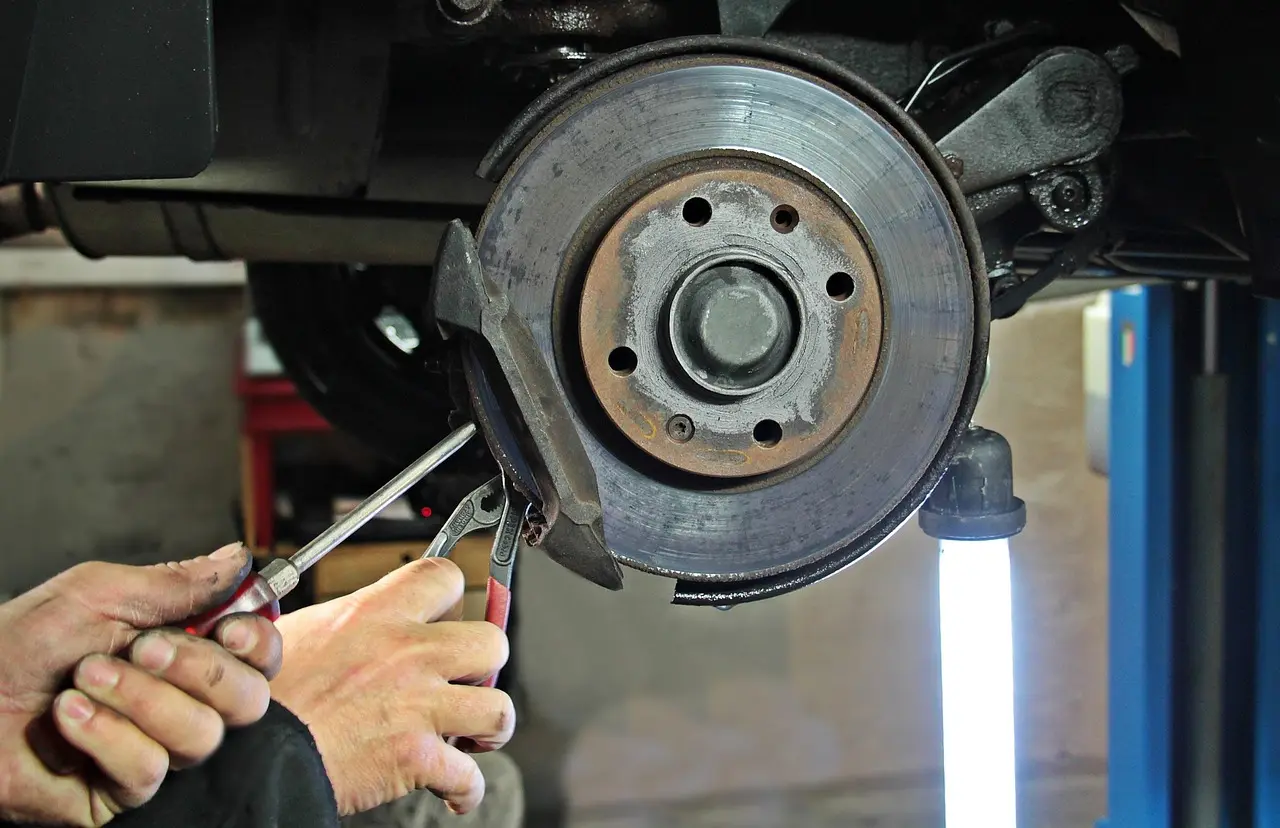
Some added charges belong on many brake jobs, while others should appear only when inspection findings support them. Hardware kits and slide-pin cleaning are common and sensible. Brake fluid flushes, rotor replacement, and caliper work need a clearer reason because they are situational rather than automatic parts of every pad service.
Brake hardware kits and slide-pin service
Clips, shims, and anti-rattle hardware are small parts, but they affect pad movement and noise control. Replacing worn or corroded hardware is a normal line item on many modern brake jobs.
Guide pins should move freely and be cleaned and lubricated if the design calls for it. If the estimate lists hardware or slide-pin service, that usually supports proper pad wear and quieter operation rather than padding the bill.
Caliper service or replacement for sticking or uneven wear
A sticking caliper or seized slide can wear one pad much faster than its mate. It can also overheat a rotor, pull the car under braking, or leave one wheel much dustier than the other.
If the estimate adds caliper service or replacement, the inspection notes should mention one or more of these findings:
- Inner and outer pad wear that is badly uneven
- One side of an axle worn much more than the other
- Caliper piston not retracting
- Seized slide pins or torn pin boots
- Heat-damaged rotor or dragging brake complaint
Caliper costs vary widely by vehicle. A remanufactured floating caliper may add a moderate amount. A premium fixed caliper can add much more, and labor rises if the brake system then needs bleeding.
Brake fluid flushes and separate service lines
Brake fluid is not automatically part of pad replacement. It should usually appear as its own line item, not hidden inside the pad job.
Many manufacturers call for brake fluid replacement on a time basis, often around every 2 to 3 years, though schedules vary. A flush can be reasonable if the vehicle is due by time, the fluid shows contamination or high moisture, or the brake hydraulic system was opened during caliper replacement. It is less convincing when added to a simple pad job with no supporting note.
How do vehicle type and brake layout affect cost?
Vehicle type changes both parts and labor. Compact cars usually use smaller, cheaper brake components. SUVs and trucks often need larger pads and rotors. Luxury and performance models add labor time and higher-spec parts. EVs and hybrids may wear pads more slowly because regenerative braking reduces friction-brake use, but inspection still matters.
Compact cars versus SUVs and trucks
Compact cars tend to be the least expensive brake jobs. Parts are often lighter and more common, and labor access is usually simpler.
SUVs and trucks can push costs up because of larger pads, larger rotors, heavier-duty hardware, and higher curb weight. That extra mass means more heat load on the brakes, especially in towing or stop-and-go use.
Luxury and performance vehicles
Luxury and performance models often cost more for three reasons: pricier parts, higher shop labor rates, and more involved service procedures. Electronic pad wear sensors, fixed multi-piston calipers, large wheels, two-piece rotors, or maker-specific scan-tool steps all raise the quote.
Dealer quotes are often highest, but an independent specialist can also charge more than a general repair shop because the labor rate reflects vehicle complexity and parts sourcing.
EVs, hybrids, and regenerative braking
EVs and hybrids often use regenerative braking to slow the vehicle, which can extend pad life. That changes replacement timing, not the need for inspection.
Longer pad life can bring another issue: corrosion from light friction-brake use. Rotors and slide hardware may need closer attention because the brakes may sit unused more often. A low-mileage EV can still need brake service if rotor surfaces rust heavily or caliper slides bind.
Brake quote decoder table
| Scenario | Parts | Labor | Shop fees | Tax | Total | Why the total changes |
|---|---|---|---|---|---|---|
| Pad-only front axle | Front ceramic pad set $85 Hardware kit $20 | 1.2 hr at $140/hr = $168 | $18 | $8 | $299 | Rotor thickness is above minimum, surfaces are smooth, and no caliper fault is noted, so the quote stays limited to pads, hardware, and labor. |
| Pads plus rotors front axle | Front ceramic pad set $85 Hardware kit $20 2 front rotors $180 | 1.5 hr at $140/hr = $210 | $18 | $22 | $535 | The jump comes from rotor parts and added labor. This is the kind of increase a shop should support with thickness measurements, scoring, or pulsation notes. |
| Pads plus rotors plus caliper service front axle | Front ceramic pad set $85 Hardware kit $20 2 front rotors $180 1 replacement caliper $165 Brake fluid/top-off supplies $15 | 2.3 hr at $140/hr = $322 | $22 | $34 | $843 | A sticking caliper adds both parts and labor, and the hydraulic system may need bleeding. Uneven pad wear or drag complaints should appear in the inspection notes. |
How to read a brake estimate before you approve it
What to verify on the parts lines
Check that the quote names the axle, the pad type, and any extra parts. “Brake service” by itself is too vague.
- Pad material listed as ceramic, semi-metallic, or organic
- Front axle, rear axle, or both clearly identified
- Rotor reuse, resurfacing, or replacement stated plainly
- Hardware kit listed if included
- Wear sensor or caliper parts listed only when needed
What to verify on the labor and fee lines
Labor should be separate from parts. If a shop uses package pricing, ask what labor time and rate are built into it.
Watch for fees and tax. They are legitimate when clearly listed, but they can make a low-looking quote stop being low.
What inspection notes should support added work
Added work should match measurable findings. Pad thickness in millimeters, rotor thickness versus minimum spec, scoring, runout complaints, or seized caliper slides are the kinds of notes that justify a higher total.
- Read the axle line. Confirm whether the quote is for the front axle, rear axle, or both. Many misunderstandings happen because one estimate is for one axle and another is for all 4 wheels.
- Check pad material. Compare ceramic, semi-metallic, or organic like for like. A cheaper quote may use a lower-cost pad compound or omit a wear sensor that another estimate includes.
- Match rotor treatment. Verify whether each quote reuses, resurfaces, or replaces rotors. This is often the single biggest difference between two totals.
- Verify hardware charges. Look for clips, shims, and pin service. If one quote omits them, ask whether they are unnecessary on that vehicle or simply not included.
- Read the inspection notes. Before you approve extra work, ask for pad thickness, rotor thickness, and any uneven wear findings in writing. Those measurements separate needed work from generic recommendations.
- Add fees and tax. Compare final out-the-door totals, not subtotal parts and labor alone. A quote that leaves off fees or tax is not ready for a real apples-to-apples comparison.
When is a higher quote worth paying?
A higher brake quote is worth paying when it reflects measurable wear, damaged rotors, seized hardware, a sticking caliper, or higher-spec parts that fit the vehicle properly. It is harder to justify when the estimate is vague, bundles everything into one line, or recommends fluid, rotors, and calipers without measurements or symptoms.
Cases where the extra cost reflects real wear or damage
If pads are at 2 mm, rotors are below minimum thickness, and the right front inner pad is worn far more than the outer, a higher quote that includes rotors and caliper service is grounded in real findings. That is not the same as upselling.
A luxury SUV with electronic wear sensors and coated rotors will also carry a fair premium over a compact sedan with simple floating calipers. The right comparison is similar vehicle, similar parts, similar scope.
Cases where a cheaper quote may be incomplete
A cheaper quote can omit hardware, tax, shop fees, or rotor treatment. It can also quote one axle while another shop quoted both axles.
A common first-timer mistake is comparing a $189 “front brake special” with a $470 detailed estimate that includes pads, hardware, fees, tax, and documented rotor replacement. The first number may be real for pads only, but it is not the same job.
How to compare two estimates line by line
Match the axle first, then pad material, then rotor scope, then labor, then fees and tax. Ask each shop for the same scope in writing: front or rear axle, pad compound, rotor reuse or replacement, hardware, shop fees, and tax. If one quote still sits much higher, ask what measured finding or part specification explains the gap.
If the shop cannot point to thickness, damage, or a clear part-quality difference, that higher total is harder to defend. If it can, the more expensive quote may be the more complete one.
Frequently asked questions
How much does brake pad replacement actually cost?
Pad replacement alone usually runs $150 to $400 per axle. If rotors are worn, damaged, or below minimum thickness, quotes often move to $300 to $800 per axle. The real number depends on axle, pad material, labor rate, and whether the estimate includes hardware, fees, tax, or caliper work.
What is included in a brake pad replacement quote?
A complete quote should list the axle being serviced, the brake pad set, labor, any hardware kit, shop fees, taxes, and inspection notes. Rotor work, brake fluid, wear sensors, and caliper parts may appear too, but those are situational items that should have a written reason.
Why is one brake pad quote so much higher than another?
The biggest price differences usually come from rotor replacement, labor rate, pad quality, and vehicle complexity. A higher quote can also include hardware, sensors, tax, and fees that a cheap-looking estimate leaves out. Compare scope line by line before assuming one shop is overcharging.
Do I need new rotors with new brake pads?
No. Rotors do not need automatic replacement every time pads wear out. They do need replacement or resurfacing when they are below minimum thickness, heavily scored, cracked, heat-damaged, or causing pulsation. The estimate should tie rotor charges to measurements or clear surface-condition notes.
How much should brake pad replacement cost for all 4 wheels?
For pads only on both axles, many drivers will see totals from $300 to $800. If both axles also need rotors, the bill can climb well past that because rotor parts and extra labor are doubled. Always check whether “all 4 wheels” includes the same work front and rear.
What should a brake pad replacement estimate look like?
A solid estimate breaks out parts, labor, fees, tax, and inspection findings. It names front or rear axle, pad material, rotor status, and any added hardware, fluid, sensor, or caliper lines. The best estimates also include measured pad thickness and rotor condition so the added charges are easy to judge.