Should You Check Tire Pressure Before or After Driving?
Check tire pressure before your first drive whenever you can; if you must check after driving, use that reading only to spot a problem and set final pressure only when the tire is cold. Bad timing can leave you underinflated or overinflated, which hurts wear, grip, and fuel economy. This guide explains why cold readings are the standard, how long to wait after driving, and how to adjust pressure correctly.
Quick answer
The best answer is simple: check tire pressure before your first drive of the day. That gives you a cold tire pressure reading, which is the target used by the vehicle manufacturer. If you only have a hot reading, treat it as diagnostic data, not the number to set and walk away from.
Cold means the tires have had time to return to ambient temperature after driving. A practical rule is at least three hours parked. Sunlight can warm a parked tire a little, but a tire warmed by highway driving is different, because the internal air and casing heat up much more.
Cold tire pressure basics
Cold tire pressure is the PSI you measure before driving or after the tire has cooled. That is the number tied to the door jamb sticker and the owner’s manual. It is the pressure the vehicle maker expects you to use when setting the tires, not the hot reading you see after a trip.
Driving heats the tire and raises PSI, so a hot tire pressure reading is usually higher than the cold one. Temperature changes also affect pressure even when the car has not moved. A common rule of thumb is about 1 PSI for every 10 degrees of temperature change.
That matters because a tire that is correct when cold can look low after a cold snap, or high after a warm afternoon in the sun. The reading is still useful, but only if you know whether the tire warmed from weather or from driving.
When to check tire pressure
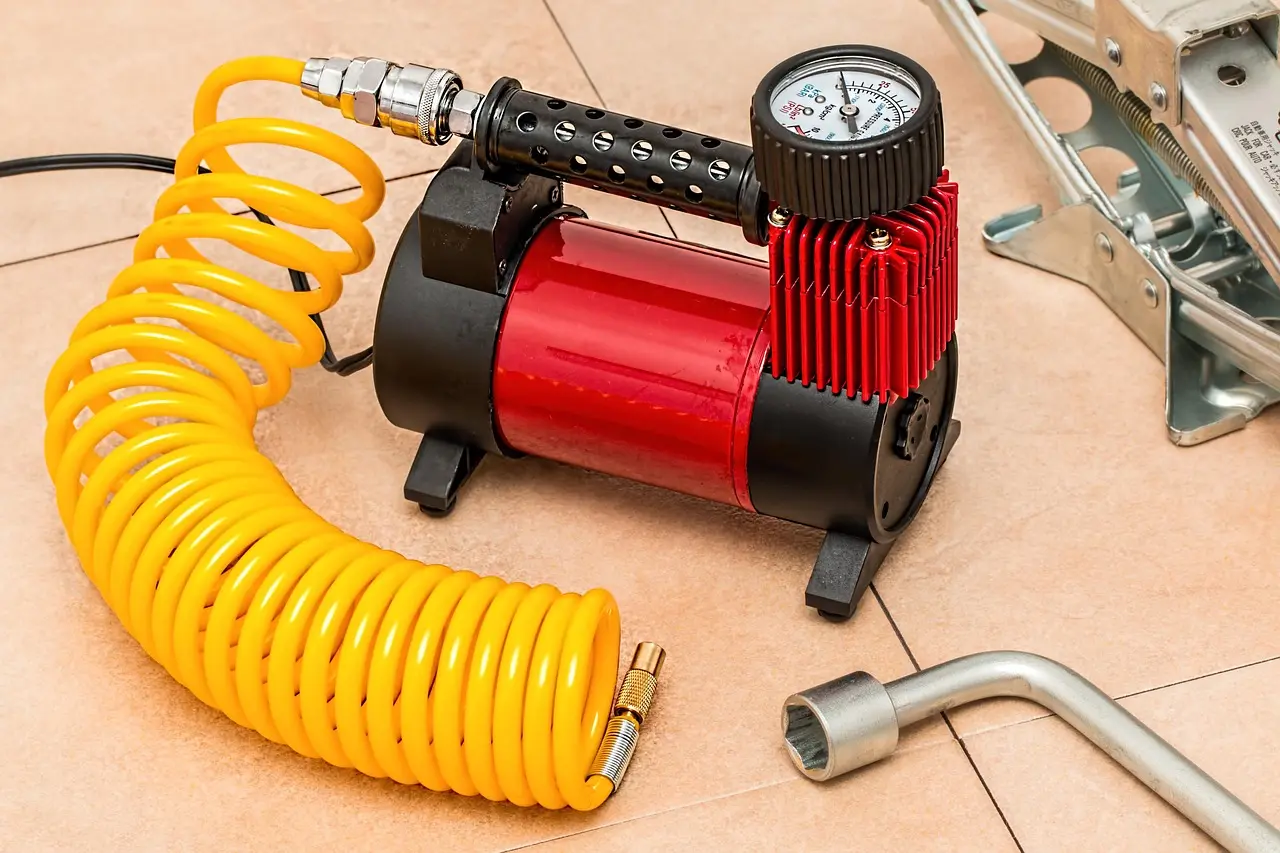
Check pressure before driving if you can. If that is not possible, wait until the tire has cooled enough for a cold reading, which means at least three hours parked. That is the cleanest way to avoid chasing a temporary hot reading.
Before your first drive of the day
This is the preferred timing. The tire has not been heated by rolling, braking, or highway speed, so the gauge shows a usable cold reading. Use that number to decide whether to inflate or deflate.
After a drive if you must wait
If you already drove, the reading can still help, but only for diagnosis. A short local drive may raise PSI a little; a highway trip can raise it more. Do not use that hot reading as the final target.
If the driver’s door sticker calls for a specific PSI, a warm tire after a commute may show a slightly higher reading on the gauge. That does not mean the tires should stay at 38. It means the tires are warm, and the final check should wait until they cool.
What to do with a hot reading
A hot reading is acceptable when you need to spot a leak, compare one tire to the others, or notice a problem that developed during the drive. It is not acceptable as the final inflation setting. Do not bleed off air just because a tire reads high when hot.
Heat from driving can distort the number enough to mislead you. A tire that is already underinflated may still read “okay” when hot, and a normal tire may read too high. That is why the final adjustment belongs on a cold tire.
Use it to spot a leak
If one tire reads several PSI lower than the others after similar driving, that can point to a slow leak or a valve issue. Compare all four tires plus the spare, then recheck cold before you add or remove air.
Wait to set the final PSI
Set pressure only after the tire has cooled. The final target should match the sticker, not the hot number from the gauge. If you must adjust now, remember that the reading is only temporary and may shift after the tire cools.
Before vs. after driving: what to do
This table gives the shortest usable rule for common situations. The goal is not to make every reading identical. The goal is to know when the number is good enough to trust, and when it is only a clue.
| Situation | Whether the reading is usable | Action to take |
|---|---|---|
| Before first drive of the day | Yes | Use it to set pressure to the door jamb sticker target. |
| After a short drive | Only partly | Use it to spot a problem, then recheck and set final PSI when cold. |
| After highway driving | No for final setting | Do not inflate or deflate to this number; wait until the tire cools. |
| After sitting in hot sun | Sometimes, with caution | Compare it with the others, but know sunlight can warm a parked tire. |
| After at least three hours parked | Yes | Use it as a cold reading and set pressure from that number. |
Rule: Inflate or deflate only to the cold target; if the tire is hot, recheck later before making the final change.
How to get the right PSI
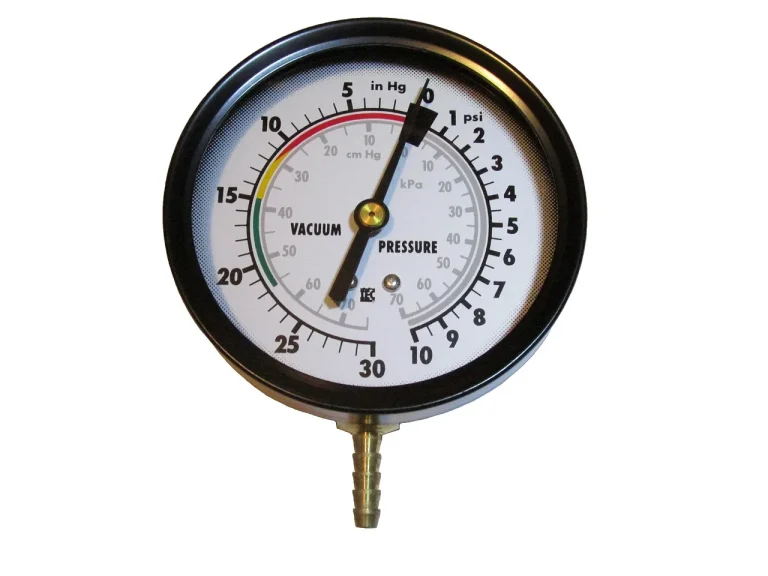
Use a tire pressure gauge to read the valve stem directly. It gives you a PSI number you can trust. Check all four tires and the spare. Do not guess by hand, and do not use the tire sidewall number as the inflation target.
The correct PSI is usually on the driver’s door jamb sticker. If the sticker is missing or unclear, the owner’s manual is the backup source. Some stickers list front, rear, and spare targets separately, and some vehicles call for different pressures front to back.
Most passenger vehicles land between 30 and 35 psi, but the exact number varies by vehicle. A compact temporary spare is different and is usually much higher, often around 60 psi.
-
Find the target PSI.
Check the driver’s door jamb sticker first. If it is missing or hard to read, use the owner’s manual. Use the listed front, rear, and spare values, because they may differ.
-
Measure each tire cold.
Remove the valve cap and press the gauge straight onto the valve stem. A brief hiss should not change pressure meaningfully. Read the number before any driving heats the tire.
-
Compare the reading to target.
If the tire is below the listed PSI, add air. If it is above the listed PSI, release air in small amounts and check again.
-
Repeat on the spare.
Do not skip the spare tire. It may need a much higher PSI than the road tires, and a low spare is useless when you need it most.
A common first-timer mistake is checking only the front tires because they look more worn. The rear tires and spare still matter. A single low tire can change handling, and a low spare can fail when you finally need it.
Temperature and pressure changes
Temperature affects pressure in both directions: it drops as ambient temperature falls and rises as it climbs. That is why a tire can look low on a cold morning and normal later in the day. It is also why a warm tire from driving should not be used as the final setting.
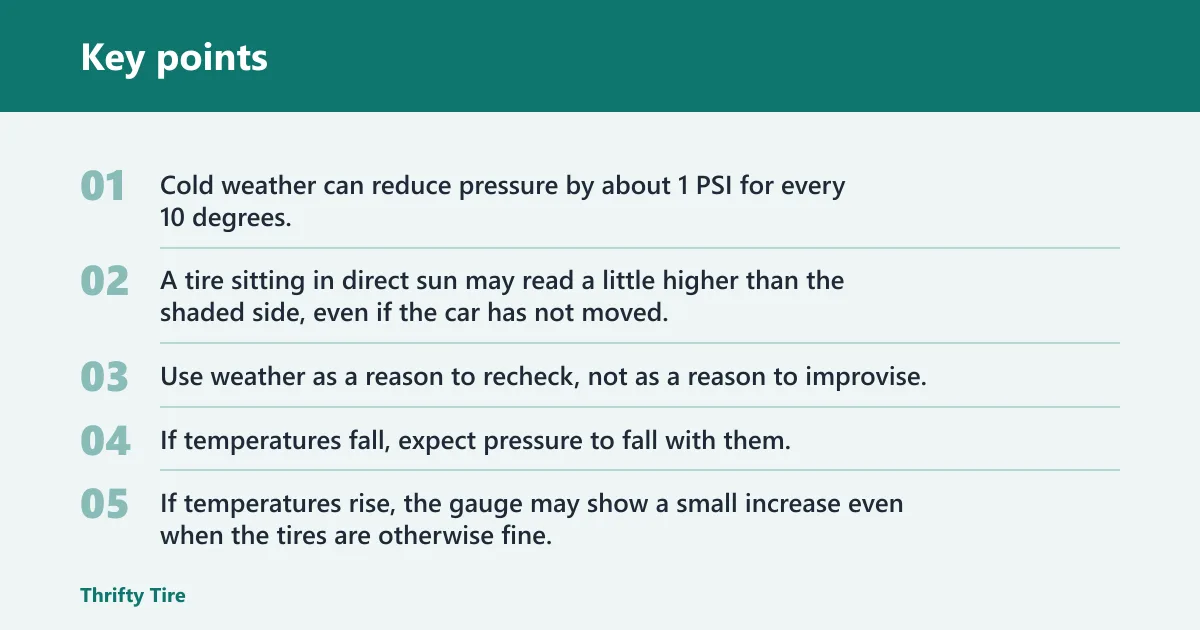
Cold weather can reduce pressure by about 1 PSI for every 10 degrees. That is not a substitute for the sticker number, but it helps explain why the same tire may read differently in October than in January.
Sunlight can also change a parked tire. A tire sitting in direct sun may read a little higher than the shaded side, even if the car has not moved. That is a smaller effect than driving heat, but it still argues for checking in the shade when you can.
How weather changes PSI
Use weather as a reason to recheck, not as a reason to improvise. If temperatures fall, expect pressure to fall with them. If temperatures rise, the gauge may show a small increase even when the tires are otherwise fine.
Why sunlight can affect a parked tire
Sunlight warms the air and rubber on one side of the vehicle. That can make a parked tire read slightly high compared with a shaded tire. If the difference is small, wait for a cool morning and compare again.
How often to check tire pressure
Check all four tires plus the spare once a month or before a long trip. Tires can gradually lose pressure even with no puncture, so a monthly check is worth the few minutes it takes. The spare deserves the same attention.
If the tires have been driven hard, stop and wait. If they have sat long enough to cool, use the reading. That rhythm keeps the numbers tied to the sticker instead of to road heat.
Frequently asked questions
Should you check tire pressure before or after driving?
Before driving is the better choice. That gives you a cold tire pressure reading, which is the basis for the vehicle’s recommended PSI. If you must check after driving, use the number only to spot a problem, then set the final pressure after the tire cools.
How long should you wait to check tire pressure after driving?
Wait at least three hours if you want a cold reading. That gives the tire time to cool back down after road heat. If you cannot wait that long, read it as a temporary diagnostic number only and recheck later before changing the PSI.
Can you check tire pressure after driving?
Yes, but the result is a hot tire pressure reading, not the final target. It can help you notice a leak or a big difference between tires. It should not be used to decide the final inflation level until the tires are cold.
Can you check tire pressure right after driving?
You can, but you should not treat that reading as the correct cold PSI. Right after driving, the tire is still warm and the pressure may read a bit higher from heat. Use that number for diagnosis only, then wait and recheck when the tire has cooled.
Should you check tire pressure before driving?
Yes. That is the simplest way to get a cold reading and match the door jamb sticker or owner’s manual. It also avoids the confusion that comes from heat buildup, especially after highway driving or a long summer trip.
How long should tires sit before checking cold pressure?
A practical rule is at least three hours parked. That is long enough for the tire to cool enough for a usable cold reading. If the car has been sitting in sun or cold weather, check in the shade and compare all four tires plus the spare.