Transmission Fluid: What It Does and When to Change It
Automatic transmission fluid cools the transmission, lubricates gears and bearings, and supplies the hydraulic pressure that applies clutches; change it at the vehicle maker’s interval, often about 30,000 to 60,000 miles for severe use or about 60,000 to 100,000 miles for lighter use. Ignore degraded fluid or use the wrong service, and you can end up with slipping, overheating, harsh shifts, and costly transmission damage. This guide covers what the fluid does, how it breaks down, how to check level and condition, and when to top off, change it, or get a diagnosis.
What does transmission fluid do?
In an automatic transmission, ATF handles three jobs at once: it carries hydraulic pressure for shifting, lubricates moving parts, and carries heat away from clutches and gears. Because automatic transmission fluid works inside self-shifting transmissions, its condition affects both shift feel and internal wear.
Hydraulic pressure and shift control
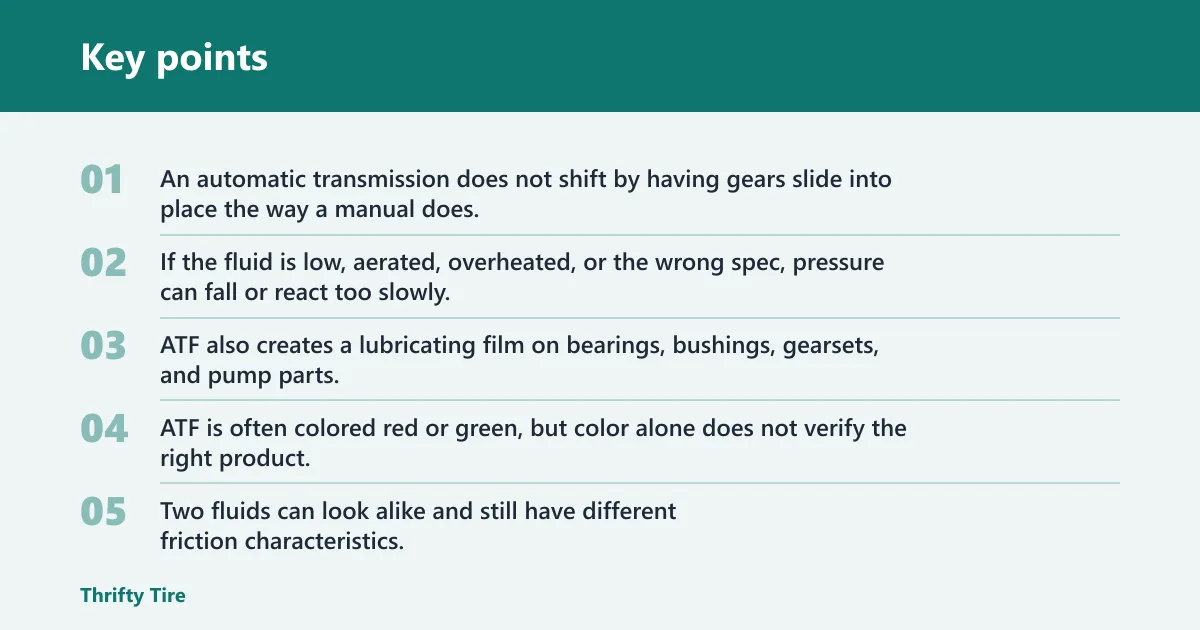
An automatic transmission does not shift by having gears slide into place the way a manual does. It relies on pressurized fluid to apply clutch packs and bands. That pressure has to build fast and stay predictable, so the correct ATF matters just as much as the fluid level.
If the fluid is low, aerated, overheated, or the wrong spec, pressure can fall or react too slowly. That is when drivers notice delayed engagement when shifting into Drive or Reverse, flare between gears, or harsh shifts.
Lubrication, friction control, and wear protection
ATF also creates a lubricating film on bearings, bushings, gearsets, and pump parts. It must limit wear without making clutch materials too slippery. That friction balance is why the owner’s manual specification matters more than the dye color in the bottle.
ATF is often colored red or green, but color alone does not verify the right product. Two fluids can look alike and still have different friction characteristics.
Heat transfer and cooling inside the transmission
Heat is hard on transmission fluid. The fluid pulls heat away from clutch packs, torque-converter components, and gearsets, then sheds that heat through the cooler circuit. Once the fluid oxidizes from repeated heat cycles, it thickens, loses part of its protective ability, and holds contamination more easily.
That is why service conditions matter more than mileage alone. A transmission used for towing in summer traffic ages its fluid differently than the same transmission used for steady highway commuting.
📊 Transmission fluid changes are usually recommended every 30,000-60,000 miles. Source: Wikihow.
Why transmission fluid goes bad
Heat, oxidation, and shear
Every shift creates heat and shear stress in the fluid. Over time, those forces wear down additives, darken the fluid, and cut its ability to control friction consistently. Repeated overheating speeds that breakdown.
Stop-and-go driving, mountain grades, heavy loads, high ambient heat, and repeated short trips all increase the thermal load. So does towing, especially when the converter spends more time multiplying torque.
Clutch material, metal particles, and contamination
Fluid also ages because it carries away byproducts. Small amounts of clutch material and fine metal particles are normal over time, but excessive debris points to wear. Moisture, dirt, and coolant contamination are bigger problems because they change how the fluid lubricates and builds pressure.
Healthy used ATF is still translucent. Once it turns opaque, sludgy, or gritty, the decision usually shifts from “monitor” to “service now.”
How driving conditions speed up fluid breakdown
Mileage-only advice misses the biggest variable: use. A transmission that spends its life in suburban traffic can need earlier service than one with higher odometer miles but mostly steady-speed highway driving.
Suppose an SUV tows a small camper on summer weekends and then crawls through city traffic during the week. Even if the mileage looks moderate, heat exposure and converter load make earlier inspection and service a sensible call.
When should transmission fluid be changed?
Change transmission fluid at the vehicle maker’s listed interval, and move sooner if the fluid is dark, burnt-smelling, contaminated, overheated, or linked to symptoms like delayed shifts. Generic mileage ranges help you plan, but fluid condition, vehicle use, and symptoms decide whether service is due now.
Start with the owner’s manual interval
Transmission fluid service is commonly planned around 30,000 to 60,000 miles in severe use and around 60,000 to 100,000 miles in lighter use, but some vehicles call for different intervals, so the owner’s manual controls the schedule. That manual is also the main source for the exact ATF specification, and that matters as much as the interval itself.
Many owners hear two broad planning ranges: 30,000 to 60,000 miles for severe use and around 60,000 to 100,000 miles for lighter service. Use those ranges as a starting point, not the final answer.
Adjust for severe service and heat
Move the interval up if the vehicle tows, carries heavy loads, spends time in stop-and-go traffic, climbs long grades, or runs in very hot weather. Those conditions raise fluid temperature and speed oxidation.
Repeated overheating is a real trigger even when the mileage is not high. If the transmission has run hot, inspect the fluid sooner rather than later.
Use condition and symptoms to move service sooner
Old fluid can cause shifting problems. Old fluid can make a vehicle sluggish or stall at stoplights. Those are not “wait until next oil change” symptoms when they show up with dark fluid, a burnt smell, or a low level.
Say your sedan has 42,000 miles, the fluid is still at the proper level, but it smells burnt and hesitates on the 2-3 shift after a long commute in summer traffic. Mileage alone says “maybe later.” Condition and symptoms say “service and diagnosis now.”
How often should you check transmission fluid?
Check transmission fluid at regular maintenance intervals and any time shifting changes, the transmission runs hot, or a leak is suspected. On many vehicles, transmission fluid can be checked with a dipstick, but many newer vehicles do not have one and require a different level-check procedure.
Vehicles with a transmission dipstick
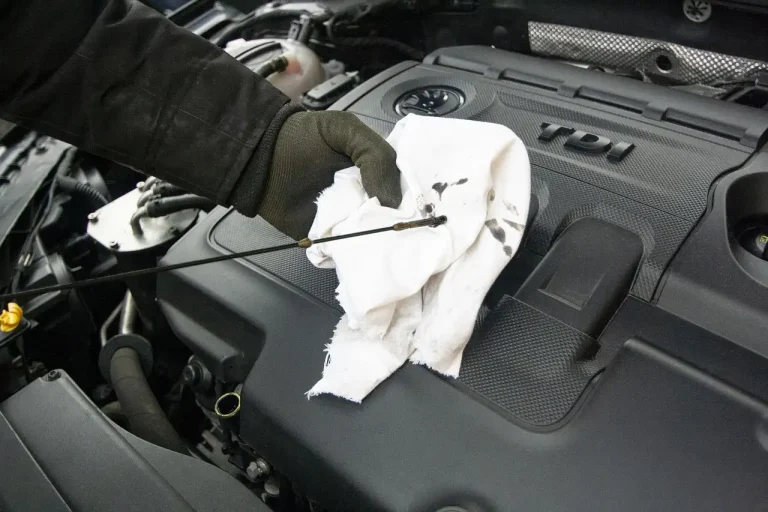
On most vehicles, transmission fluid can be checked with a dipstick. The dipstick usually has hot and cold ranges, and the reading should be checked with the engine running. The exact procedure varies, so follow the owner’s manual before treating a reading as low or full. (Wikihow)
- Park on level ground. Use a flat, even surface so the fluid settles correctly in the pan. A slight slope can skew the reading enough to make a healthy level look low or high.
- Warm the transmission. Drive long enough to reach normal operating temperature if the manual calls for a hot check. A cold check is only a rough reference on many vehicles.
- Leave the engine running. Many automatics require the engine running during the check because fluid is circulating through the converter and valve body. Shutting the engine off can change the sump level and mislead the reading.
- Cycle the gear selector. Move through each gear briefly, then return to Park if the manual specifies that step. This helps fill the hydraulic circuits before the final reading.
- Read the dipstick twice. Pull, wipe, reinsert, and read again so streaking does not look like the actual level. Check both level and condition at the same time.
Hot and cold readings and engine-running checks
Hot and cold marks are not interchangeable. A fluid level that looks low when cold may be correct when hot, and a level that looks fine after shutdown may mislead because fluid drains back differently. Read the stick only the way the manufacturer specifies.
A common first-timer mistake is checking a warm transmission with the engine off, then adding fluid because the stick looks low. On many vehicles, that can turn a correct fill into an overfill once the proper engine-running check is done.
Vehicles without a dipstick
Many newer automatics have no user dipstick. These units often use a fill plug, a standpipe, or a temperature-based level procedure. That does not mean the fluid is “lifetime” in any practical sense, it means checking it usually takes the right procedure and sometimes scan-tool temperature data.
What does dirty transmission fluid look and smell like?
Dirty transmission fluid usually looks dark, opaque, or sludgy instead of clean and translucent, and it may smell burnt. Discolored or sludgy fluid means a change is needed, while foam, metallic debris, or a sharp burnt odor suggests the vehicle may need both service and diagnosis.
Healthy fluid versus dark or sludgy fluid
Fresh ATF is often red or green, depending on the product. Used fluid does not need to stay bright to remain serviceable, but it should still look fluid, fairly clear, and free of sludge.
Discolored or sludgy fluid means a change is needed. If it is brown-black, opaque, or leaves heavy residue on the dipstick, that points to aged fluid or overheating.
What a burnt smell suggests
Burnt odor matters because smell can catch heat damage that color may not show early. A scorched smell often means the fluid has spent time too hot, which can change friction performance and shift feel even before heavy sludge forms.
Burnt-smelling fluid should not be ignored just because the level is correct. It may still need service, and if symptoms are present, the transmission should be checked for overheating or internal wear.
Foam, debris, and other contamination clues
Foamy fluid can point to overfill or air being whipped into the fluid. Visible metal flakes, milky fluid, or obvious grit are stronger warnings because they suggest wear, moisture, or external contamination.
Picture a crossover with a correct dipstick level but pinkish foam after a recent top-off. That is not a “looks fine” result. It calls for rechecking the fill level and finding out whether the fluid was overfilled or aerated by another problem.
Fluid condition decision matrix
| Mileage band | Fluid color/appearance | Smell | Level | Symptoms | Right action |
|---|---|---|---|---|---|
| Below manual interval | Red or green, translucent | Normal | Low | None | Top off with the exact specified ATF, then inspect for leaks and recheck. If fluid is clean but low, topping off may be enough. |
| Below manual interval | Darkening but still fluid | Normal | Full | None | Inspect more often and compare with the owner’s manual. No urgent action, but severe use may justify earlier service planning. |
| 30,000-60,000 miles | Dark, less translucent | Normal to slightly sharp | Full | None | Schedule a drain-and-fill or the manufacturer’s recommended service. Condition now matters more than waiting for a higher number. |
| 30,000-60,000 miles | Dark or brown | Burnt | Full or low | Delayed engagement, harsh shifts, sluggishness | Change fluid and have the transmission inspected for overheating or wear. Do not rely on a simple top-off. |
| Around 60,000-100,000 miles | Still clean and translucent | Normal | Full | None | Use the manual’s interval and service history to decide. If the manual allows the interval, monitor; if due, service now. |
| Any mileage | Sludgy, opaque, foamy, or contaminated | Burnt or abnormal | Any | Slipping, trouble shifting, stalling at stoplights, overheating | Urgent shop diagnosis. Old fluid can cause shifting problems, but contamination and symptoms may also signal internal faults. |
Should you top off, change, or flush?
A top-off makes sense only when the fluid is otherwise clean and the level is low; a fluid change is the usual choice when condition has declined; and a full exchange makes sense only when the manufacturer allows it and the transmission’s condition supports it. The right service depends on level, fluid condition, and symptoms together.
When a top-off is enough
If fluid is clean but low, topping off may be enough. That is the narrow case where the level has dropped, the fluid still looks healthy, and there are no signs of overheating, sludge, or contamination.
Low fluid still needs an explanation. A transmission is not supposed to consume fluid the way an engine can consume oil. Repeatedly adding ATF without finding the cause usually means a leak, a seep at a cooler line, or another fault is being ignored.
Drain-and-fill versus pan drop and filter service
A drain-and-fill replaces part of the old fluid. It is often the least invasive service and makes sense for routine maintenance when the fluid is aged but the transmission is behaving normally.
A pan drop removes the transmission pan for inspection and, where applicable, filter service. On many vehicles, the transmission pan is mounted to the bottom of the transmission and is usually attached with six to eight bolts. Some pans have a drain plug; some do not. If there is no drain plug, pan removal may be the only way to drain fluid.
Pan service can add useful information because debris in the pan tells a story that a bottle of fresh fluid cannot. If the filter is serviceable and the gasket is replaceable, this is often the right time to handle both.
When a full fluid exchange makes sense
A complete fluid exchange replaces more old fluid than a simple drain-and-fill. It can make sense when the manufacturer permits it, the correct machine or procedure is used, and the transmission is not already showing signs that point to internal damage.
It is neither automatically best nor automatically harmful. If the fluid is badly burnt, contaminated, or the transmission is slipping, the bigger need may be diagnosis before any machine exchange is chosen.
What happens if transmission fluid is low?
Low transmission fluid can reduce hydraulic pressure, delay engagement, and cause shifting problems. slipping or sluggishness, and increase heat inside the transmission. In some vehicles, old or low fluid can make the vehicle sluggish or stall at stoplights, and continued driving can speed up internal wear or trigger overheating.
Shifting, slipping, and delayed engagement
Hydraulic circuits need enough fluid volume to apply clutches firmly. When the level drops, the transmission may hesitate before moving, slip during an upshift, or flare between gears. The symptoms are often worse when hot because the fluid is thinner and the system has less margin.
Overheating and internal wear risk
Low fluid means less heat capacity and less stable pressure. That can start a cycle: low fluid raises heat, heat degrades the fluid, degraded fluid shifts worse, and poor clutch control creates even more heat.
Leaving that untreated costs more than early service. Even a basic fluid service is cheaper than wear caused by repeated slipping or overheating.
Why low fluid usually means a leak or another fault
Low level is a symptom, not a maintenance interval. Common causes include pan gasket seepage, cooler line leaks, axle-seal leaks on some designs, or a service fill that was never corrected.
If the level drops again after topping off, diagnosis should come before more guessing. Otherwise the transmission can end up both low and overfilled at different times, depending on how it is checked.
What to know before DIY service
Transmission pan layout and drain methods
Many automatics drain through the transmission pan area, either from a drain plug or by loosening the pan itself. Some units allow a simple drain-and-fill. Others require pan removal, gasket replacement, and possibly a filter change. That is why “Can the fluid be changed without replacing the pan and filter?” has two answers: sometimes yes, sometimes no.
Jack stands and safe vehicle support
Any under-vehicle inspection or service has to start with safe support. Safe under-car work requires jack stands or similar support, and the surface should be flat and even. A floor jack alone is not enough support for anyone working underneath.
- Verify the procedure. Check whether the vehicle uses a dipstick, a fill plug, a standpipe, or a temperature-based level check. This decides whether DIY service is realistic before any tools come out.
- Support the vehicle safely. Raise the vehicle only on a flat, even surface and place it securely on jack stands or equivalent supports. Stable support matters because transmission service often involves side access as well as under-pan work.
- Identify the drain method. Look for a drain plug first, then confirm whether the pan must be loosened to drain the unit. Some transmissions are messy to service because the pan has to be cracked loose before the fluid starts to spill.
- Match the fluid spec. Use only the ATF specification listed in the owner’s manual or service information. Universal fluid claims are not a substitute for the correct approval or specification.
- Set the final level correctly. Recheck the level by the exact hot or cold method the manufacturer calls for, often with the engine running. A wrong final level can cause many of the same symptoms as old fluid.
When pan and filter removal is required
If the transmission has no drain plug and the filter is meant to be replaced, pan removal is usually part of the job. If the transmission uses an internal or non-serviceable filter, a drain-and-fill may be the only routine maintenance step available without deeper disassembly.
For owners weighing cost and timing, the practical tradeoff is simple: early service based on condition is usually cheaper than waiting for symptoms to grow. Waiting can turn a fluid decision into a transmission repair decision.
Frequently asked questions
How often should transmission fluid be changed?
Many vehicles are discussed in the 30,000-60,000 mile range, especially for severe use, while some go longer. The correct answer comes from the owner’s manual, then gets adjusted for towing, stop-and-go driving, heat, fluid condition, and symptoms such as delayed shifts or burnt-smelling ATF.
What does dirty transmission fluid look like?
Dirty ATF usually looks dark, opaque, or sludgy instead of clean and translucent. It may also smell burnt, foam on the dipstick, or show visible debris. Discolored or sludgy fluid means a change is needed, while contamination or strong symptoms calls for diagnosis as well.
Should I top off transmission fluid or change it?
Top off only when the level is low and the fluid still looks clean, smells normal, and the transmission has no symptoms. Change the fluid when it is dark, sludgy, burnt-smelling, or due by interval. If symptoms are strong, diagnosis may matter as much as the fluid service itself.
Do I need to check the owner’s manual for transmission fluid service intervals?
Yes. The owner’s manual is the primary source for both the service interval and the exact ATF specification. Generic advice helps with planning, but some vehicles need longer intervals, some use sealed level-check procedures, and the wrong fluid specification can create shift problems even if the level is correct.
Can transmission fluid be changed without replacing the pan and filter?
Sometimes. Some transmissions allow a simple drain-and-fill through a drain plug, while others require pan removal because there is no drain plug or because the serviceable filter sits inside the pan. The correct approach depends on the transmission design and the manufacturer’s service procedure.