Brake Rotor Replacement Cost: What You Should Pay
A fair brake rotor replacement quote is often about $300 to $800 per axle, or about $600 to $1,600 for all four wheels, with higher prices commonly reported for heavy-duty trucks, performance brakes, and dealer labor rates. Approve a padded estimate and you can overpay hundreds. Approve an incomplete one and you may still end up with noise, pulsation, or uneven braking. This guide shows you how to judge a rotor quote by axle, parts tier, labor, and vehicle complexity.
The fastest way to compare two estimates is to put them on the same scope: same axle, same rotor tier, same pad material, same hardware, and the same taxes and fees assumptions. A price gap is often justified when one quote includes pads, parking brake labor, premium coated rotors, or dealer OEM parts. It is a red flag when the higher quote cannot explain those extra line items in plain language.
Typical cost range
Brake rotor replacement is usually billed as rotor parts, related brake parts if included, and labor, and the total means little until you separate rotor-only work from a full brake job. A national reference point from RepairPal is $574 to $698 total, with parts at $406 to $452 and labor at $168 to $247, and that estimate excludes taxes and fees.
Use the national range as a starting point, not a verdict
That RepairPal range helps because it splits the bill into parts and labor instead of giving one blended average. It helps less if you apply it to every quote without checking which axle is being serviced and whether pads are included.
A complete brake and rotor replacement often costs $250 to $500 per axle at an independent shop. That figure usually fits mainstream compact and midsize vehicles better than luxury models, trucks, or performance trims.
Rotor-only and pads-plus-rotors are different jobs
Many quotes blur that line. Rotor-only pricing can make sense when pads are nearly new and wearing evenly, but many shops quote pads and rotors as one package because new rotors paired with worn pads can create noise, uneven contact, or a poor bed-in.
If one estimate includes only rotors and labor while another includes rotors, pads, hardware, and a brake service, the lower quote is not automatically the better value. It may simply cover less work.
Taxes, fees, and related repairs change the real total
RepairPal’s estimate excludes taxes and fees. State sales tax, disposal charges, and shop-supplies lines can push the out-the-door total well above the parts-and-labor subtotal, so compare itemized quotes instead of headline numbers alone.
Related repairs can move the bill again. Rear brake work may include parking brake hardware or extra labor, and seized caliper hardware, wear-sensor replacement, or brake fluid service can raise the final total if they are needed and listed separately.
Is brake rotor replacement priced per rotor or per axle?
A rotor can be sold per wheel, but service is usually quoted and approved per axle. A quote may refer to one rotor, one axle, or both axles, so your first step is to confirm the pricing unit before you compare totals or decide a shop is overpriced.
Per-wheel parts pricing versus per-axle service pricing
Front axle refers to the two front wheels. Rear axle refers to the two rear wheels. In normal service writing, that means a front rotor job usually refers to replacing both front rotors, not just one.
Parts catalogs often list rotors one at a time. For example, one front rotor for a 2016 Honda Civic was listed at $19.31 to $48.89, and one front rotor for a 2018 Toyota Camry was listed at $23.89 to $65.79. Those figures are useful for parts sanity checks, but they are not labor-inclusive repair totals.
Why front and rear estimates often do not match
Front and rear can use different rotor sizes, hat depths, coatings, and brake package fitments. The rear may also involve a mechanical drum-in-hat parking brake or an electronic parking brake service procedure, and either one can raise labor time.
That is why comparing a front-axle quote from one shop to a rear-axle quote from another tells you very little. Compare front to front or rear to rear, then check whether the rotor design and pad material match.
How to compare all-four pricing
All-four pricing should still be broken out by axle. Some shops discount overlapping labor slightly when both axles are done together, while others simply add the front and rear totals.
Suppose one quote shows $780 for all four and another shows $920. If the first uses economy aftermarket blank rotors and semi-metallic pads, while the second uses coated premium rotors and ceramic pads, the higher total may be justified even before labor differences enter the picture.
What is included in a brake rotor replacement quote?
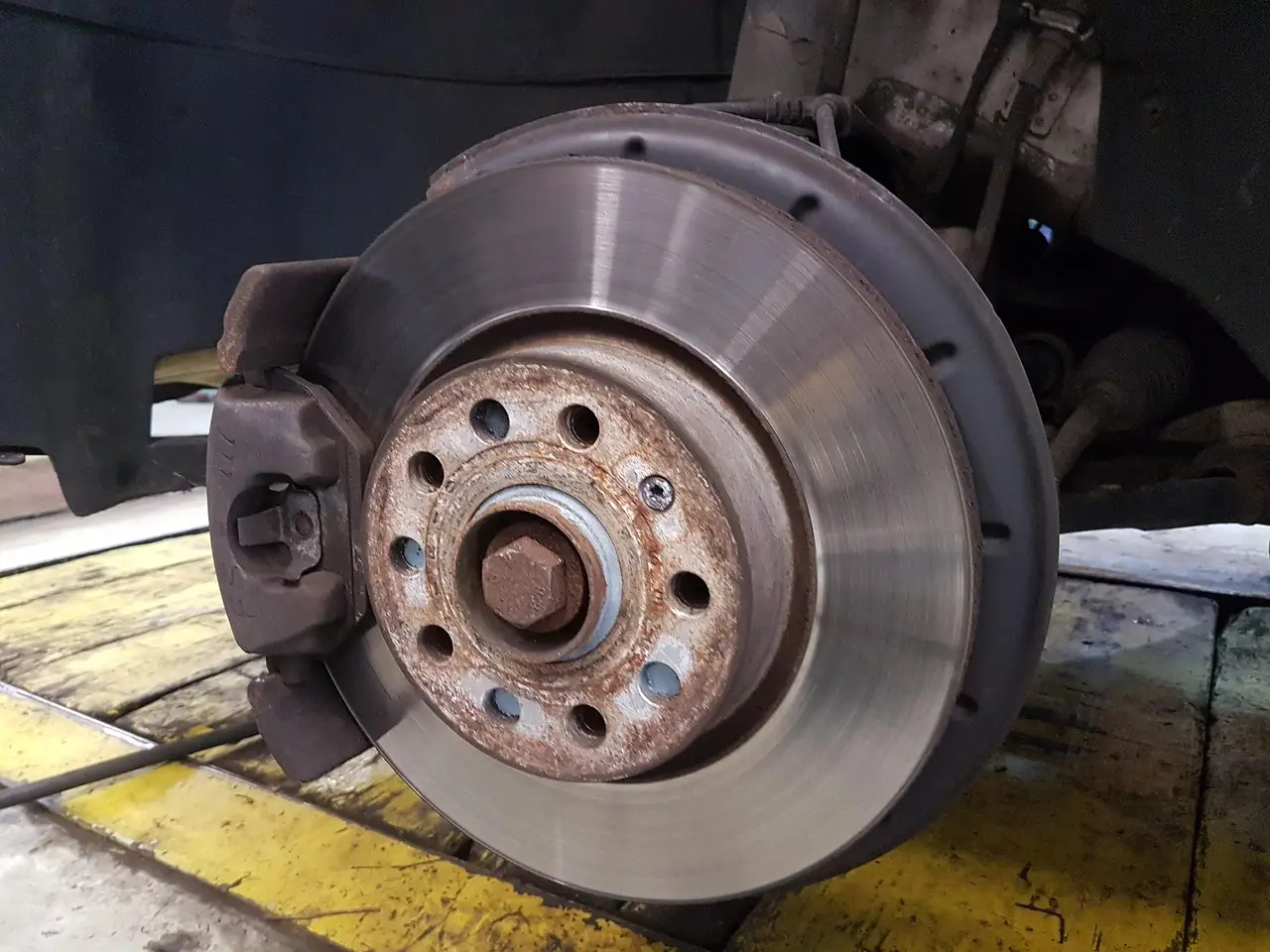
A proper brake rotor quote should identify parts, labor, and every extra charge that changes the final total. At minimum, you should expect to see the axle being serviced, the number of rotors, labor, and whether pads, hardware, fluid service, taxes, and shop fees are included or excluded.
Core parts and labor
The basic line items are the rotors themselves and the labor to remove the old parts, clean and prepare the hub surface, install the new rotors, and reassemble the brake system. If the estimate says only “brake service,” ask whether that includes two rotors on one axle or a full pads-and-rotors job.
Rotors must match the vehicle fitment and brake package. Trim level, engine, wheel size, and heavy-duty or performance brake packages can change rotor diameter, thickness, vane design, and price.
Pads, hardware, and related service items
Brake pads often appear on the same estimate as rotors. Ceramic pads are said to cost more upfront than semi-metallic pads, but material choice can also change dust, noise, and long-term rotor wear.
Hardware kits matter more than many drivers expect. Abutment clips, anti-rattle springs, shims, and pad retaining hardware can affect brake noise and pad movement. A shop that includes new hardware is often giving a more complete quote, not inflating one.
Fees, taxes, and small charges that move the total
Shop supplies, disposal, taxes, and occasional diagnostic fees can all be legitimate. The issue is transparency. If those charges show up as a vague lump sum, ask what each one covers and whether it is a fixed fee or a percentage.
Rotor quote decoder table
| Line item | What it usually means | What should be included | Red flag to watch for | Fair / question / push back |
|---|---|---|---|---|
| One rotor | Price for a single rotor at one wheel | Part description, brand or tier, and left/right or front/rear fitment where relevant | Service writer quotes one rotor price as if it covers the whole axle | Question |
| Axle pair | Two rotors for one axle | Clear note that front axle means two front wheels or rear axle means two rear wheels | Axle price shown, but labor or hardware is still listed for only one side | Fair |
| Pads plus rotors | Complete brake service for one axle | Two rotors, one pad set for the axle, labor, and pad material listed | Compared against a rotor-only quote without telling you the scope differs | Fair |
| Hardware | Clips, shims, springs, or retaining parts | New hardware for pad movement and noise control when the design uses it | Charged twice, or charged on rotor-only work with no explanation | Question |
| Machining or resurfacing | Cutting the rotor surface instead of replacing the rotor | Rotor thickness and condition should support resurfacing | Added on top of new rotor replacement on the same axle without a clear reason | Push back |
| Brake fluid | Brake fluid flush, bleed, or top-off | A reason, such as opening the hydraulic system or a scheduled fluid service | Automatic add-on during simple rotor work with no fluid issue noted | Question |
| Parking brake service | Adjustment, cleaning, hardware, or electronic parking brake service mode | Usually tied to rear brake work, drum-in-hat hardware, or electronic parking brake steps | Charged on a front-axle job, or listed with no rear parking brake connection | Question |
| Shop supplies | Cleaner, lubricant, rags, and other consumables | Modest, clearly shown charge | Large unexplained percentage or stacked with several vague misc. fees | Question |
| Diagnostic fee | Inspection time to trace a symptom such as pulsation or noise | Needed when the problem is not already identified as worn rotors | Charged after you approved a straightforward rotor-and-pad replacement quote | Push back |
Why is one rotor quote much higher than another?
A higher rotor quote is justified when it matches a heavier vehicle, a more complex rear brake setup, dealer OEM parts, or a better parts tier. It becomes suspect when the axle scope is unclear, line items are vague, or the shop is charging for extras that do not fit the job.
Vehicle class, trim, and brake package matter
Compact cars usually use smaller, less expensive rotors than full-size SUVs and trucks. Luxury models and performance trims often use larger rotors, coated hats, higher-spec pad materials, or brand-specific parts that raise both parts cost and labor time.
Brake package fitment matters as much as make and model. The same model line can have different front rotor sizes depending on engine, trim, wheel package, or towing package.
Rear parking brake complexity can add real labor
Rear brakes can cost more than expected because of parking brake design. Some systems use a small mechanical parking brake assembly inside the rotor hat. Others use an electronic parking brake that must be placed in service mode and reset after the work is done.
Picture a midsize SUV with rear electronic parking brakes. The rotors themselves may not look unusual, but labor can rise because the shop has to retract and reinitialize the rear system correctly. That is a valid reason for a higher rear-axle quote.
Dealer pricing, OEM parts, and aftermarket tiers
Dealer quotes often run higher because OEM rotors and dealer labor rates tend to carry more markup. Aftermarket rotors can cost less, but “aftermarket” covers everything from economy bare rotors to premium coated parts from established brake brands.
The key is whether the estimate states the parts tier. If one shop lists OEM rotors and ceramic pads and another lists house-brand economy rotors and unspecified pads, the higher quote may simply be the more detailed quote.
Which rotor type and parts tier should you pay for?
The right rotor choice depends on use, not marketing. Blank rotors are the normal OEM-style option for most daily drivers, slotted rotors make more sense for towing and repeated heavy braking, and drilled styles cost more while carrying tradeoffs that many commuters do not need to pay for.
Blank rotors: the default choice for daily driving
Blank rotors are described as OEM standard. For a commuter car, family crossover, or lightly used pickup, this is usually the right baseline against which every other quote should be judged.
Coated blank rotors often cost more than uncoated ones, but the coating can improve corrosion resistance on the hat and outer edges. That can be worth paying for in wet or salted-road areas, especially if the price jump is modest.
Slotted rotors: pay more only for repeated heat load
Slotted rotors are presented as better for towing and heavy braking. They can make sense on vehicles that descend grades with a trailer, carry heavy loads often, or see repeated hard stops.
For normal commuting, the added cost usually does not buy enough benefit to justify itself. Ask what problem the slotting is solving on your specific vehicle and use pattern.
Drilled and drilled-plus-slotted: mostly a cost increase for street cars
Drilled rotors are described as higher cost and stress-prone. Drilled-plus-slotted styles usually sit at the top of the price ladder and are easy for a shop to position as an upgrade even when the vehicle is used for ordinary road driving.
That added cost usually earns its keep only when the vehicle’s actual use supports it. Most daily drivers are better served by a quality blank rotor, or by a slotted rotor if towing and repeated heat are part of the job.
Do you need pads with new rotors, or can you replace rotors only?
Rotor-only replacement can be reasonable when the current pads are very new, evenly worn, and matched to the repair plan. In many other cases, pads and rotors are replaced together because the extra parts cost helps avoid noise, poor contact, and shortened rotor life from reusing worn friction material.
When rotor-only replacement is reasonable
If a rotor is damaged by rust scale, heat spotting, thickness variation, or a localized issue while the pads have very low wear and a clean contact pattern, rotor-only work can be defensible. The estimate should still explain why the pads are being reused.
Why shops often pair pads with rotors
New pads bed into new rotors more predictably. Reusing old pads on fresh rotor faces can create uneven transfer, noise, or vibration complaints that send the car back for rework.
A common first-timer mistake is comparing a rotor-only quote to a pads-and-rotors quote and assuming the lower number is the fair one. It may be fair only if the existing pads truly support reuse.
Ceramic versus semi-metallic pads
Ceramic pads are said to cost more upfront than semi-metallic pads. In return, many drivers choose them for lower dust and quieter operation, while semi-metallic compounds often cost less and can tolerate heat well but may bring more dust or noise depending on the vehicle.
Pad material also affects rotor wear. That is another reason to compare quotes on matched scope. A ceramic-pad quote and a semi-metallic-pad quote are not equal offers.
Is resurfacing cheaper than replacing brake rotors?
Resurfacing can lower the bill when the rotors are thick enough, evenly worn, and the shop still offers machining. It often does not make sense when replacement rotors are inexpensive, the rotor is already near minimum thickness, or the problem involves heat damage, rust, or runout that machining may not solve well.
When machining can make sense
If the rotor has enough material left and only needs a surface correction, resurfacing may cost less than replacement. That is more common when replacement rotors are expensive or when the vehicle uses a part that is still in good structural condition.
Why many modern estimates skip resurfacing
Many mainstream rotors are cheap enough that labor to machine them closes much of the gap. Shops also avoid resurfacing when they cannot be sure the finished rotor will remain above minimum thickness after the cut.
Say your front brakes on a compact sedan have light pulsation, and the shop quotes new rotors instead of machining. If the replacement rotors are low-cost blanks and machining labor is close to the same money, replacement can be the better value.
When to push back
If an estimate lists both new rotors and resurfacing on the same axle, ask for the reason immediately. In ordinary service, that combination rarely makes sense.
How to tell whether a rotor quote is fair
A rotor quote is fair when the price matches the axle scope, the parts tier, and the vehicle’s brake complexity. It is overpriced when the shop cannot explain the difference between rotor-only and full brake work, hides fees, or charges premium money for economy-grade parts without a clear reason.
A practical decision rule
Judge the estimate in this order:
- Match the axle. Confirm whether the quote is for one rotor, one axle, or both axles. Front axle means two front wheels, and rear axle means two rear wheels, so compare prices only on the same unit.
- Match the job scope. Check whether each quote is rotor-only or pads plus rotors. Include hardware, parking brake service, and any fluid work in that comparison so you are not judging an incomplete quote against a complete one.
- Match the parts tier. Read the rotor type, coating, OEM versus aftermarket status, and pad material. A blank aftermarket rotor with semi-metallic pads should not cost the same as OEM coated rotors with ceramic pads.
- Check complexity claims. Ask what makes the vehicle more expensive: heavy-duty brake package, luxury fitment, rear drum-in-hat parking brake, or electronic parking brake labor. If the shop cannot name the source of the extra labor or parts cost, treat the quote as suspect.
- Review fees last. Taxes, shop supplies, and disposal matter, but review them after parts and labor are clear. A small supplies line is normal. Stacked vague fees are where padding often hides.
When paying more is justified
Pay more when the quote clearly buys something real: OEM parts you specifically want, premium coated rotors in a rust-prone climate, slotted rotors for towing use, ceramic pads for lower dust, or extra rear-brake labor tied to a parking brake system.
Do not pay more just because the estimate uses upgrade language. For most road cars, premium pricing needs a plain explanation that connects directly to vehicle class, fitment, or use.
What to ask before approving
- Is this quote for one rotor, one axle, or all four wheels?
- Are the pads included, and if so, what material are they?
- Are the rotors blank, slotted, drilled, or drilled plus slotted?
- Are the rotors OEM, economy aftermarket, mid-tier, or premium coated aftermarket?
- Does the rear quote include parking brake labor or hardware?
- Which charges are taxes and fees, and which are actual repair items?
Frequently asked questions
How much should I pay for brake rotor replacement?
A fair starting range is $300 to $800 per axle, but the useful comparison is by scope. Compare like-for-like itemized quotes before judging the number.
Is rotor replacement priced per rotor or per axle?
Both appear in the market, which is why confusion is common. Parts catalogs often price one rotor at a time, but repair orders are usually written per axle because rotors are normally replaced in pairs on that axle. Confirm the unit before comparing totals.
Why is my brake rotor quote so much higher than another shop’s?
The common reasons are different scope, different parts tier, dealer labor rates, and rear brake complexity. A higher quote may include pads, premium coated rotors, ceramic friction, or electronic parking brake labor. It is a problem only when the shop cannot explain the difference clearly.
When is a brake rotor quote reasonable versus overpriced?
A reasonable quote matches three things: axle scope, parts tier, and vehicle complexity. An overpriced quote usually mixes units, hides fees, or charges premium money for basic parts. If two itemized quotes have the same scope and one is still much higher, ask the shop to justify each extra line.