Brake Rotor Replacement Cost for Beginners
Brake rotor replacement is often quoted around $250 to $600 per axle at a general repair shop, and it can run higher on larger or premium vehicles; if pads are worn too, the quote should include pads, hardware, and labor. Ignoring worn rotors can mean longer stopping distances, brake noise, and extra damage to pads or calipers. This guide breaks down what a quote includes, what changes the price, and when rotor replacement is actually necessary.
Brake rotor cost basics
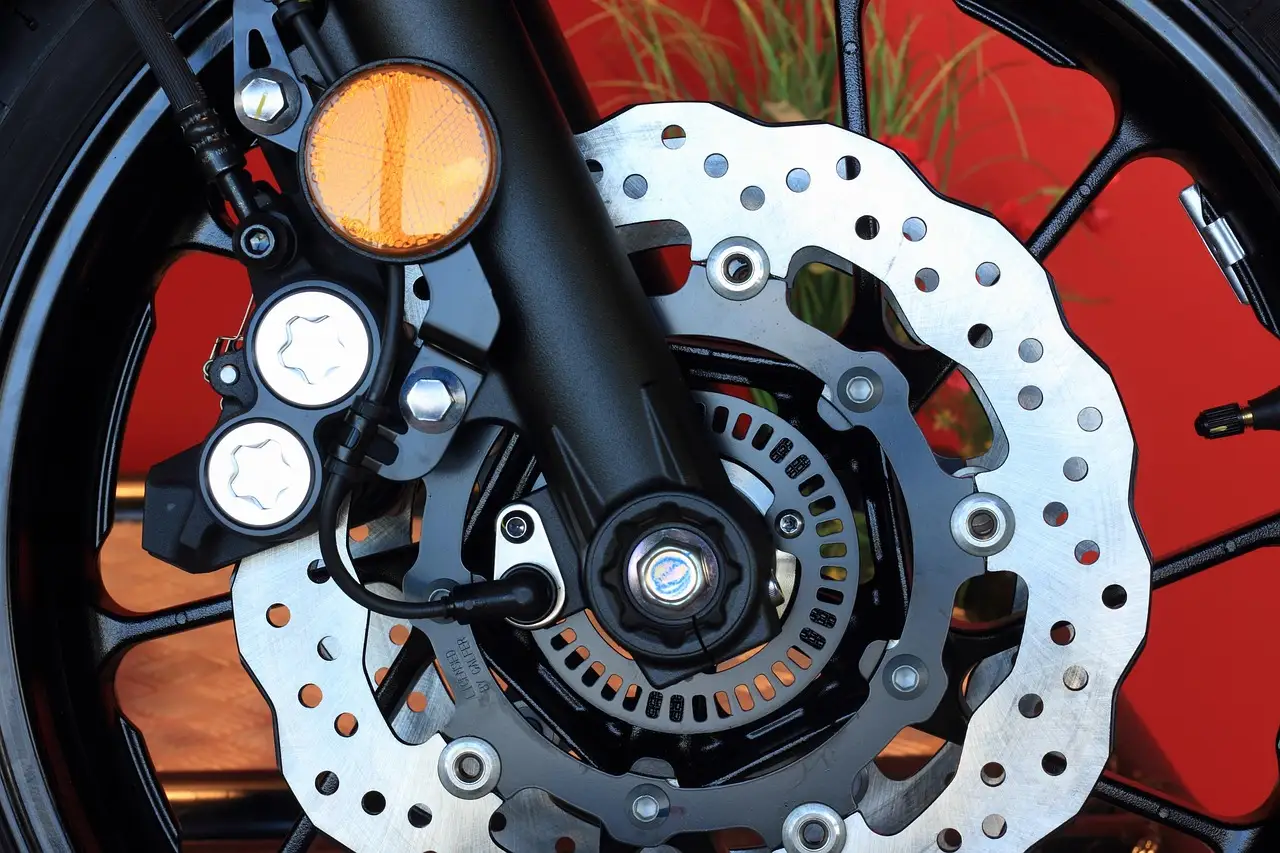
A brake rotor is the metal disc attached to a vehicle’s wheel hub. In a disc brake system, the rotor sits inside a caliper that holds brake pads on either side, and hydraulic pressure pushes pistons to squeeze the rotor when you press the brake pedal. The pads create the friction that stops the vehicle.
That setup is simple. The bill is not. First-time owners usually see a wide price range because a brake quote can cover parts, labor, pad condition, hardware, and sometimes brake-fluid or caliper work. Front and rear axles can also cost different amounts.
What a rotor quote includes
A clear estimate should separate the rotor itself from the rest of the brake job. At minimum, you should be able to see whether the shop is quoting resurfacing or replacement, which axle is being serviced, and whether the price includes pads, hardware, and inspection time.
A brake inspection is the best time to check rotor condition, and most rotors are hard to inspect properly without taking the wheels off. That is when a shop can decide whether the rotor can still be resurfaced or whether it has reached the minimum thickness and must be replaced.
| Quote item | What it covers | Typical first-time-owner range | What to ask before approving |
|---|---|---|---|
| Rotor parts | New rotors for one axle | $50 to $150 each | Are these standard, coated, or premium rotors? |
| Pad parts | Brake pads on the same axle | $75 to $200 per axle | Are the pads worn enough to replace now? |
| Labor | Removal, installation, and brake check | $100 to $250 per axle | Is labor charged by axle or by wheel? |
| Resurfacing | Machining rotors to smooth grooves | $15 to $50 per rotor | Are the rotors thick enough to resurface safely? |
| Hardware | Shims, clips, or related mounting parts | $10 to $40 per axle | Is replacement hardware included or extra? |
| Brake fluid or caliper work | Fluid service, stuck caliper repair, or related fixes | Varies by vehicle and finding | What exact problem requires the added work? |
Match the axle. Check whether the quote is for front, rear, or both axles. Front brakes often wear faster and may cost more because they handle more stopping load, especially on many passenger vehicles.
Separate parts from labor. Make sure the estimate lists rotor parts, pad parts, and labor as separate lines. That makes it easier to compare shops and spot when the quote is higher because of a parts upgrade rather than a larger repair.
Look for add-ons. Ask whether hardware, brake fluid, or caliper service is included. Those items are sometimes necessary, but they should be tied to a specific finding such as stuck hardware, contaminated fluid, or caliper wear.
Confirm the rotor decision. Ask whether the shop is recommending resurfacing or replacement, and why. A rotor below the manufacturer-required minimum thickness must be replaced, while a thicker rotor with grooves may sometimes be resurfaced.
Why brake quotes vary so much?
Brake quotes vary because the same problem can involve very different parts and labor. A smaller front axle on a common sedan will not cost the same as a larger rear brake setup on an SUV, and parts quality can swing the total as well. Labor rates also differ by shop and region.
Front axle vs rear axle
Front rotors often cost more than rear rotors because front brakes usually do more work. Most new cars have disc brakes on all four wheels or on the front only, while some vehicles use drum brakes in the rear instead of rotors. That changes both parts availability and labor time.
A common first-timer mistake is approving “all brakes” without asking which axle is actually worn. If only the front rotors need replacement, the rear axle may not need rotor work at the same visit.
Vehicle type and rotor size
Larger vehicles usually need larger, heavier rotors and sometimes more labor. Premium or performance vehicles can use rotors that cost more because of size, finish, or design. A heavier rotor also takes more time to remove and install, which can raise labor.
Suppose a compact sedan needs front rotor replacement and the estimate lands near the low end of the range. A midsize SUV with larger rotors and more expensive pads may come in much higher even when the repair is the same in principle.
Parts quality and shop labor rates
Some shops quote economy rotors, while others quote higher-grade parts with different coatings or materials. The same source rates also vary, and some shops bundle inspection time into the brake job while others list it separately. That is why two estimates can both be valid and still look far apart.
Do you need new pads too?
Not always, but pad condition matters. Brake pads sit on either side of the rotor, create friction to stop the vehicle, and can damage rotors when they are worn or contaminated. If the pads are still within spec and the rotor is serviceable, a shop may recommend rotor work without replacing pads.
When worn pads damage rotors
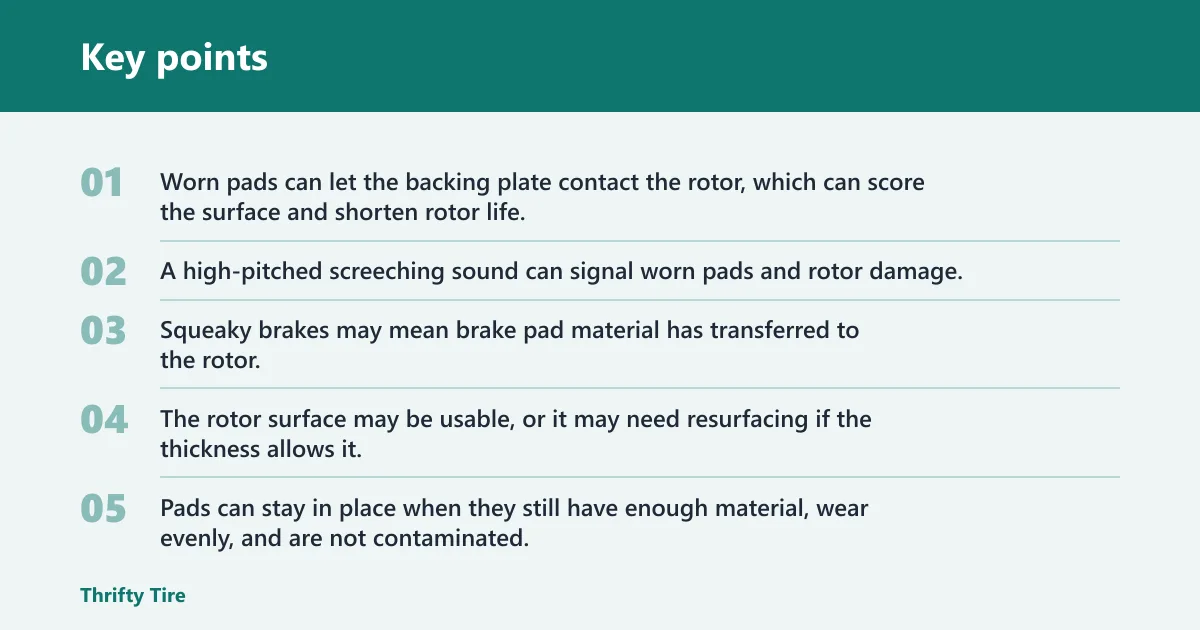
Worn pads can let the backing plate contact the rotor, which can score the surface and shorten rotor life. Once a rotor has grooves or heat damage from neglected pads, the repair often shifts from a simple pad change to rotor replacement or machining if the rotor is still thick enough.
A high-pitched screeching sound can signal worn pads and rotor damage. That sound is a reason to inspect sooner rather than wait for the noise to worsen.
Why pad material transfer can cause noise
Squeaky brakes may mean brake pad material has transferred to the rotor. That transfer can create noise without meaning the rotor is ruined, but it still deserves a brake inspection. The rotor surface may be usable, or it may need resurfacing if the thickness allows it.
When pads can stay in place
Pads can stay in place when they still have enough material, wear evenly, and are not contaminated. A shop may still recommend pad replacement if the lining is uneven, glazed, or too thin to last through the next rotor service. The key is whether the pads can safely match the new or resurfaced rotor.
Can rotors be resurfaced?
Yes, some rotors can be resurfaced instead of replaced. Most rotors can be resurfaced one or more times to extend life, and resurfacing removes material to smooth grooves. It is only an option if the rotor is still above the manufacturer-required minimum thickness.
When resurfacing is allowed
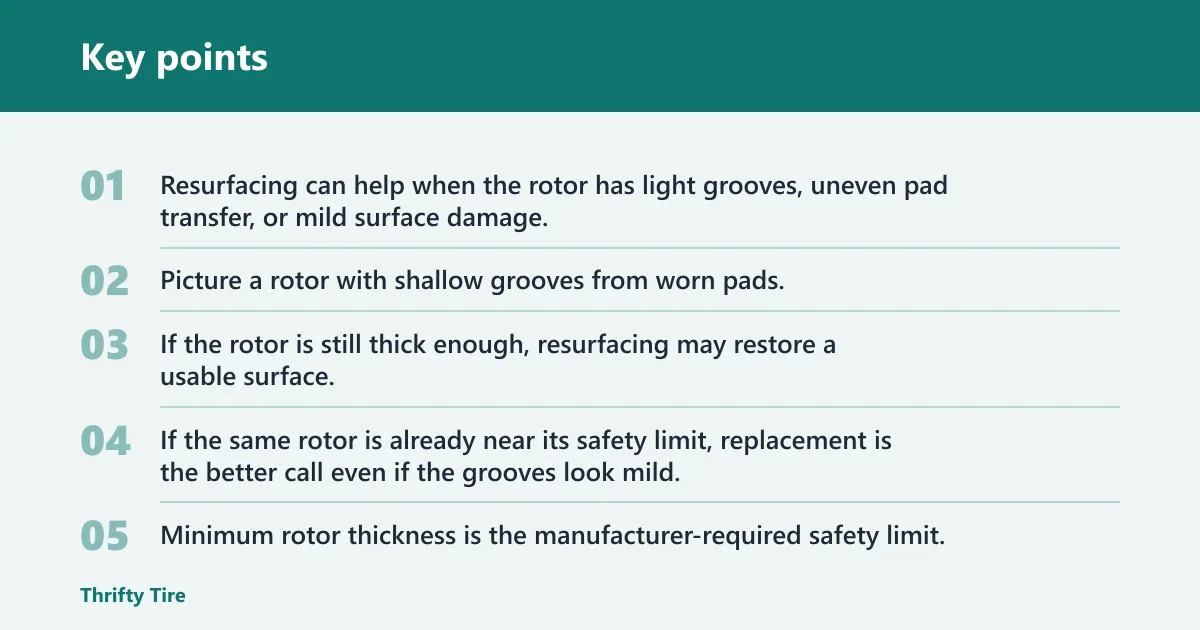
Resurfacing can help when the rotor has light grooves, uneven pad transfer, or mild surface damage. It is not a fix for every rotor. Each resurfacing makes rotors thinner, so the shop has to measure the rotor before deciding whether machining is still safe.
Picture a rotor with shallow grooves from worn pads. If the rotor is still thick enough, resurfacing may restore a usable surface. If the same rotor is already near its safety limit, replacement is the better call even if the grooves look mild.
Why minimum thickness matters
Minimum rotor thickness is the manufacturer-required safety limit. Mechanics must replace rotors worn below that limit. A rotor that is too thin cannot safely absorb and release heat the way it should, and it is no longer a safe candidate for resurfacing.
When replacement is the only safe option
Replacement is the only option when the rotor is below minimum thickness, cracked, severely heat-damaged, or too worn for another machining pass. Midas advises following the vehicle manufacturer’s recommendations when replacing rotors, which keeps the decision tied to the car’s own safety limits rather than a generic rule.
Rotor cost checklist
Use this checklist to read a quote before you approve it. The goal is to separate necessary brake work from optional add-ons so you know exactly what you are paying for.
| Check item | What to verify | Why it matters |
|---|---|---|
| Axle position | Front or rear, not just “brakes” | Front and rear costs can differ a lot |
| Rotor choice | Resurface or replace | The wrong choice can waste money or miss a safety limit |
| Pad condition | Thickness, wear pattern, and contamination | Worn pads can damage the rotor and should be addressed early |
| Hardware | Clips, shims, and mounting parts | Old hardware can cause noise or uneven pad movement |
| Brake fluid | Whether fluid service is included | Fluid work is separate from rotor replacement unless the shop found a related issue |
| Caliper findings | Sticking piston or uneven pad wear | A caliper problem can raise the bill and can damage new rotors |
| Thickness measurement | Rotor measured against the manufacturer limit | Below that limit, replacement is required |
How to spot worn or warped rotors
Vibration or jittery braking can point to warped rotors, and heat is a common contributor. Squealing or screeching can also show up when pads are worn or when rotor surfaces are damaged. These symptoms are not the only possible causes, but they are enough to justify an inspection.
Vibration or jittery braking
Warped rotor symptoms usually show up through the brake pedal, steering wheel, or the whole car shaking during braking. Heat can contribute to that feeling, especially after repeated hard stops or towing. If the vibration appears only while braking, the rotor is a likely suspect.
Squealing, grooves, and heat wear
Grooves in rotors may come from worn pads, foreign objects, or corrosion. Those grooves can sometimes be resurfaced if the rotor still has enough thickness. If the grooves are deep or the rotor is already thin, replacement is safer than machining.
What a brake inspection should confirm
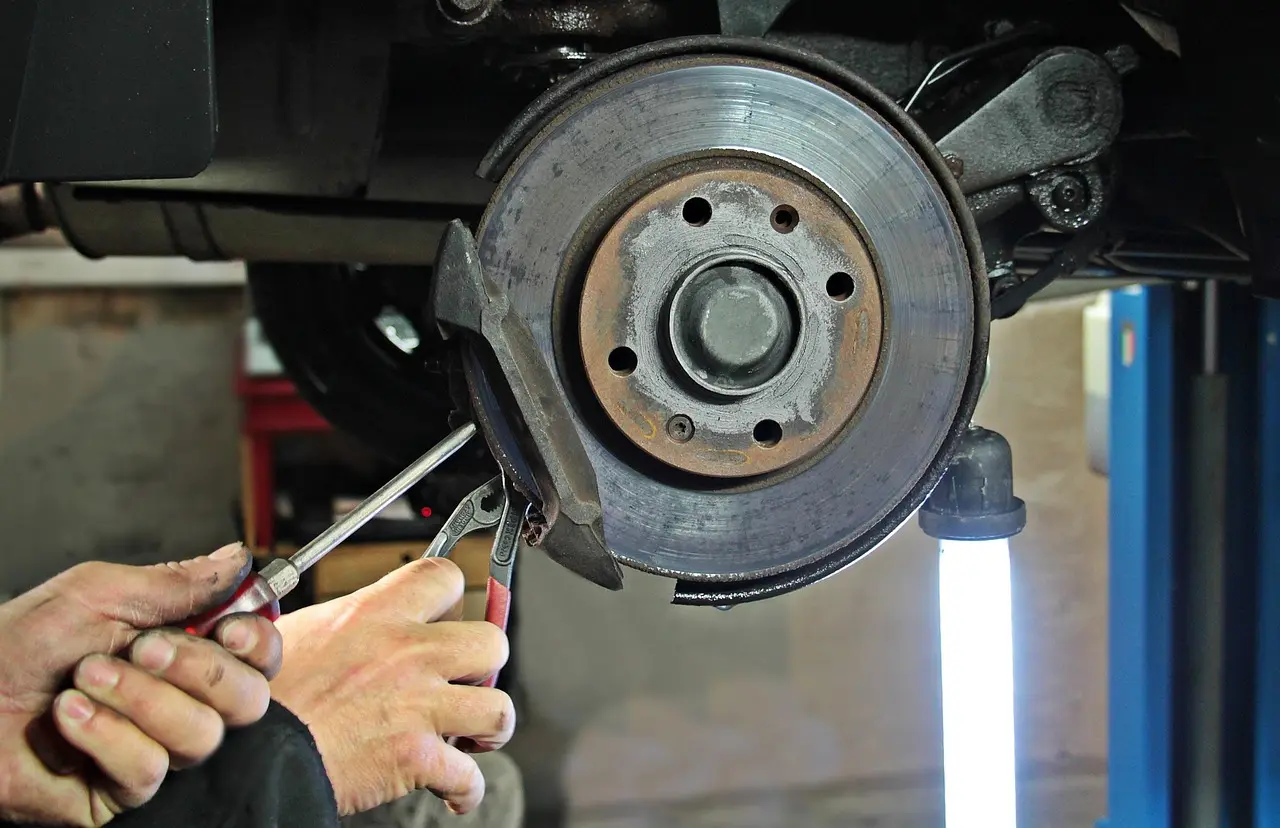
A brake inspection should confirm rotor thickness, pad wear, rotor surface condition, and whether the caliper is squeezing evenly. That is the right time to decide between resurfacing and replacement, because the technician can see the parts together instead of guessing from symptoms alone.
Say your compact car starts to vibrate at 45 mph only when braking downhill. That pattern points more toward brake heat and rotor condition than toward a tire issue, and it gives the shop a narrow problem to inspect.
How much does brake rotor replacement cost for a first-time car owner?
For first-time owners, rotor replacement is often quoted around $250 to $600 per axle at a general repair shop, with higher totals possible on larger or premium vehicles. That price can rise if you need pads, hardware, fluid service, or caliper work at the same time.
The quote is easier to judge when you ask what is actually included. A low estimate may be just rotors and labor, while a higher estimate may include pads, wear hardware, and related brake service. The cheaper quote is not always the better one if it ignores safety-related findings.
How long can you drive with bad rotors?
You should not treat bad rotors as a long-term driving issue. If the rotor is badly worn, below minimum thickness, or causing strong vibration, the car should be inspected soon. Waiting can lengthen stopping distance and can damage pads, calipers, or both.
Frequently asked questions
What is included in a brake rotor replacement estimate?
A solid estimate should list the rotor parts, labor, the axle being serviced, and any extra items such as pads, hardware, brake fluid, or caliper work. If the quote mentions resurfacing, it should also state whether the rotor is thick enough for machining and why that option is being chosen.
Do I need to replace brake pads with the rotors?
Not always. Pads can stay in place if they still have usable material, wear evenly, and are not contaminated. If the pads are worn, glazed, or damaged, replacing them with the rotors is often the safer and more economical choice because worn pads can damage the new rotor surface.
How do I know if my rotors are warped or too worn?
Warped rotor symptoms often show up as vibration, jittery braking, or pulsation during stops. A rotor may be too worn if a mechanic measures it below the manufacturer-required minimum thickness. That measurement matters more than appearance, since a thin rotor can still look acceptable from the outside.
Can rotors be resurfaced instead of replaced?
Yes, if they are still above minimum thickness and the damage is limited to grooves, light scoring, or surface transfer. Resurfacing removes material, so it shortens rotor life each time. If the rotor is already thin or damaged beyond correction, replacement is the safer option.
Why do brake quotes vary so much from shop to shop?
Quotes can vary because of axle position, rotor size, vehicle type, labor rates, part quality, and add-on findings. A shop that finds worn pads, stuck hardware, or caliper trouble will quote more than one that is only replacing rotors. Different inspection findings can make both estimates correct.
How can I check if my car has disc brakes or drum brakes?
Most new cars have disc brakes on all four wheels or on the front only, and some vehicles use drum brakes in the rear instead of rotors. Your owner’s manual or a brake inspection can confirm the setup. That matters because rear drum service is priced and repaired differently from rear disc work.